
Suit Size Estimator & Fit Guide
Enter your measurements to see your recommended suit size.
The Quick Essentials: What Your Size Actually Means
Before you head into a shop or browse online, you need to know what those numbers mean. A suit size isn't a one-size-fits-all; it's a blueprint. When you see a size like '42R,' the '42' refers to the chest measurement in inches, and the 'R' stands for Regular length.In the Irish market, you'll mostly encounter three main length categories. Short (S) is generally for guys under 5'8", Regular (R) fits most men between 5'8" and 6'0", and Long (L) is for those 6'1" and above. If you pick the wrong length, the jacket will either look like a dress or end too high, exposing your belt and shirt in a way that looks accidental rather than stylish.
| Size Label | Chest Circumference | Typical Height Range | Fit Characteristic |
|---|---|---|---|
| 38S | 38 inches | Under 5'8" | Shorter torso and sleeves |
| 40R | 40 inches | 5'8" to 6'0" | Standard proportions |
| 42L | 42 inches | Over 6'1" | Extended jacket length and sleeves |
How to Measure Yourself Without a Professional
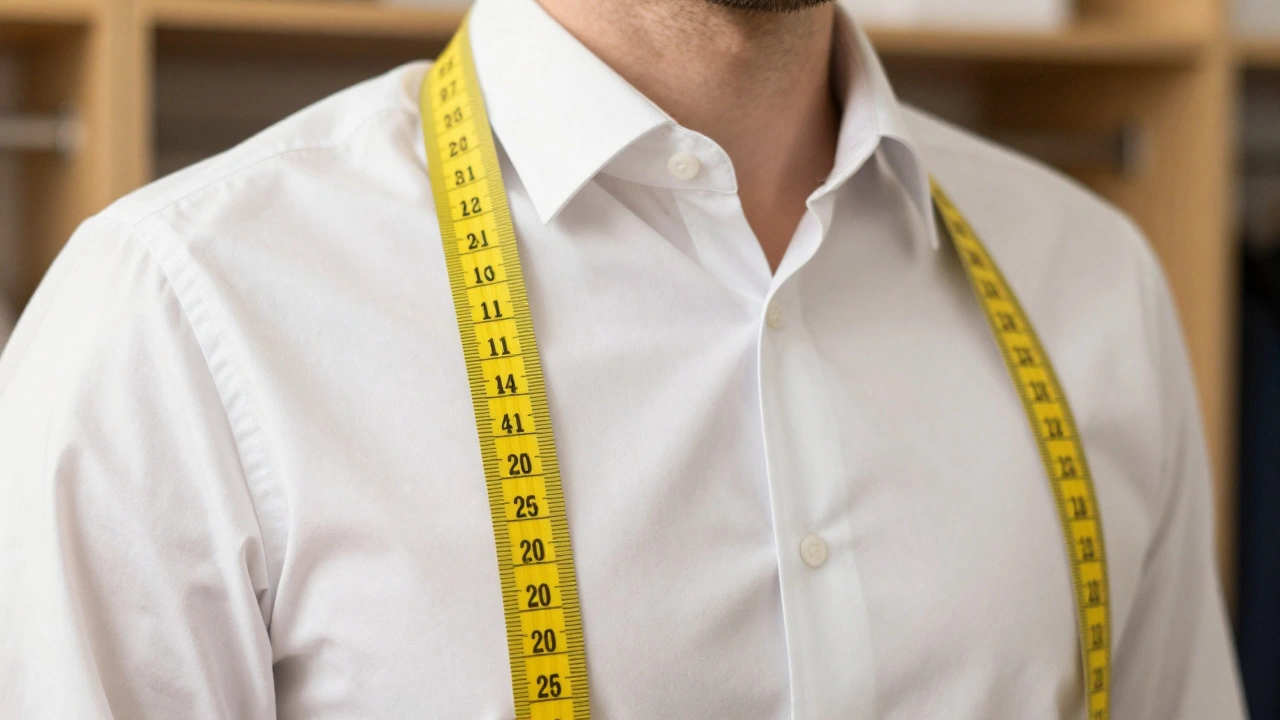
You don't always have a tailor on speed dial. If you're ordering from a brand like Brown Thomas or a local boutique online, you'll need a flexible measuring tape. If you don't have one, a piece of string and a ruler will work in a pinch.- The Chest: Wrap the tape around the fullest part of your chest, keeping it parallel to the floor. Don't pull it too tight-leave enough room to breathe. If you're between sizes, always go for the larger one; it's way easier for a tailor to take a suit in than to let it out.
- The Waist: Measure where you actually wear your trousers. For most men, this is just above the hip bone. If you're wearing a belt, measure over the belt line.
- The Inseam: This is the distance from your crotch to the bottom of your ankle. To get this right, wear a pair of shoes you'd actually wear with the suit. If you want a 'break' (the fold where the trouser hits the shoe), leave an extra half-inch.
- Sleeve Length: Measure from the shoulder seam down to the base of your thumb. A perfect sleeve should end just where your wrist meets your hand, allowing about half an inch of your shirt cuff to show.
Dealing with 'The Drop' and Fit Types
One thing that trips up a lot of guys is the "drop." This is the difference between the jacket size and the trouser waist. Most standard suits have a "drop 6," meaning if you buy a 40R jacket, the trousers will be a 34-inch waist.But let's be real: not everyone's body fits a standard drop. If you've spent your weekends hiking the Wicklow Mountains and have a more athletic build with bigger thighs, or if you're leaner, a standard off-the-rack suit might not work. This is where Fit Types come in. Fit types define the silhouette of the suit, ranging from generous cuts to highly tapered shapes.
- Slim Fit: Closest to the body. It has narrower shoulders and a tapered waist. This is the go-to for a modern look at a Dublin cocktail party, but be careful-if it's too tight, you'll see "X" creases across your stomach when you button the jacket.
- Tailored Fit: The middle ground. It's shaped to the body but offers more room than a slim fit. It's a safe bet for most Irish men and works well for corporate environments.
- Classic Fit: The most relaxed. It provides maximum comfort and room. While it's less trendy, it's often the best starting point for those who plan to take the suit to a professional tailor for custom adjustments.
The 'Golden Rules' of a Proper Fit
Even if you have the right size on the label, the suit can still look wrong. You need to look for these specific markers to know if the size is actually correct for your frame.First, check the shoulders. The shoulder pads should end exactly where your natural shoulder ends. If they overhang, you look like you're wearing armor; if they're too short, the sleeve will bunch up. Second, the "handshake test." Button the jacket and hug yourself. If the fabric feels like it's about to rip across your back, the jacket is too small.
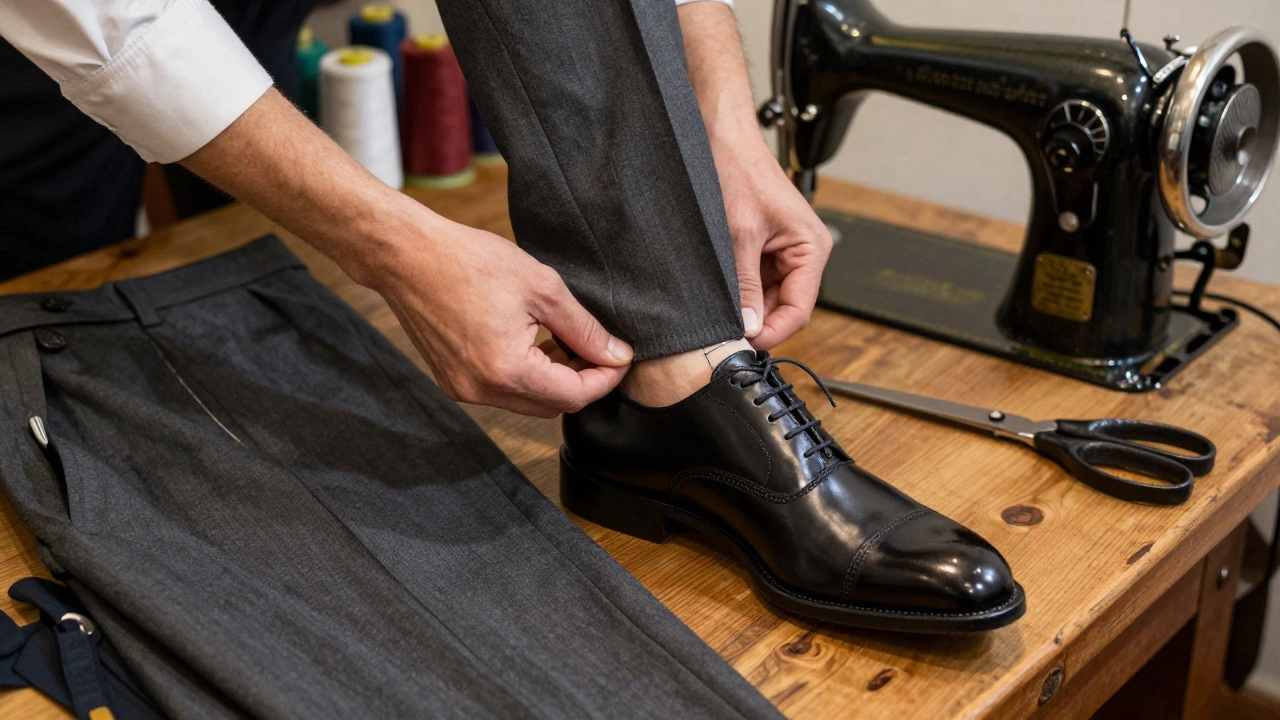
For the trousers, consider the break. A "full break" is a deep fold of fabric over the shoe, which can look a bit dated. A "half break" is a slight bend and is the standard for business. A "no break'" means the trouser just barely touches the shoe-very modern, but it requires a perfect measurement because there's no room for error.
Local Tips for the Irish Shopper
Shopping for suits in Ireland has its own quirks. Depending on whether you're visiting a high-street giant or a specialized tailor on Grafton Street, the sizing might vary slightly. Always ask if the suit is a "European Cut" or a "British Cut." British cuts tend to be more structured in the shoulders, while European styles often lean more towards a slim, tapered silhouette.Also, remember the weather. If you're buying a suit for an outdoor event-like a summer wedding in Galway-opt for a slightly looser fit in a breathable fabric like linen or a wool-silk blend. A tight slim-fit suit in the humidity can become a sauna very quickly. Conversely, for a winter event, a heavier tweed or wool suit will feel thicker, so you might want to size up slightly in the jacket to allow for a thermal layer underneath.
When to Stop Guessing and Call a Tailor
Let's be honest: almost nobody fits a store-bought suit perfectly. The secret to looking like a million euros is the alteration. If the jacket fits your shoulders but the waist is too boxy, or if the trousers fit your waist but are three inches too long, don't try to find a different size. Buy the size that fits your largest part (usually the shoulders or waist) and take it to a tailor.In Ireland, you can find great independent tailors in almost every town. They can handle "tapering" (making the legs narrower), "hemming" (shortening the length), and "taking in the waist." These small changes, which usually cost a few dozen euros, make a generic suit look like it was made specifically for you.
What should I do if I'm between two jacket sizes?
Always go with the larger size. It is significantly easier and cheaper for a tailor to take a jacket in at the waist or shorten the sleeves than it is to try and expand a jacket that is too small. A slightly larger jacket can be tailored to fit your body perfectly, whereas a too-small jacket will always look tight and restrictive.
Does my height affect my suit size letter (S, R, L)?
Yes, absolutely. The letter refers to the length of the jacket and the sleeves. If you are under 5'8", you'll likely need a Short (S). If you're between 5'8" and 6'0", Regular (R) is standard. If you're 6'1" or taller, Long (L) ensures the jacket doesn't look like a cropped top and the sleeves reach your wrists.
How can I tell if my suit trousers are too long?
Look at the "break"-the fold of fabric where the bottom of your trousers hits your shoe. If the fabric is bunching up heavily or touching the floor, they are too long. A standard look is a slight fold (half break). If the fabric is hovering above the shoe without touching, they are too short.
What is the 'drop' in a suit?
The drop is the difference between the chest size of the jacket and the waist size of the trousers. A standard 'drop 6' means a 40-inch jacket comes with 34-inch trousers. If you have a very athletic build or a larger stomach, you may need to buy "separates" (jacket and trousers sold individually) to get the right fit for both.
Should I wear a shirt under my suit when measuring?
Yes. Always measure yourself or be measured while wearing a collared dress shirt. You wouldn't wear a suit over a t-shirt, so measuring over a shirt ensures the suit has enough room for the layers you'll actually be wearing.
Next Steps for a Better Fit
If you're just starting your suit journey, don't rush into a three-piece set immediately. Start by getting a high-quality navy or charcoal two-piece suit. These colors are the most versatile for anything from a job interview in Cork to a funeral or a formal event. Once you've nailed the basic sizing and found a tailor you trust, you can experiment with bolder colors, patterns like windowpane or pinstripe, and different fabrics.If you're still unsure, spend an afternoon in a department store. Try on three different sizes-one smaller, one larger, and one you think is right. Pay attention to how the shoulders sit and where the jacket ends. Once you have a feel for the physical fit, the numbers on the tag will make much more sense.