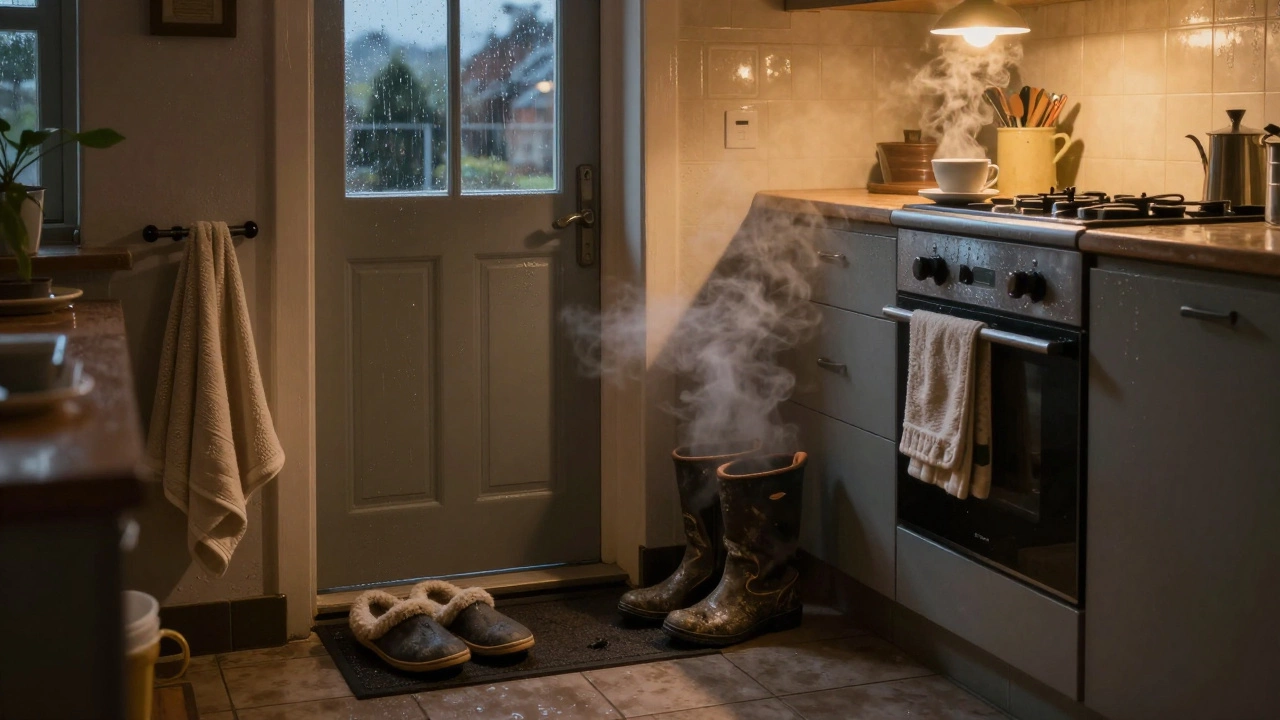
Living in Ireland means you spend a lot of time indoors-especially between October and March. Rain doesn’t just fall here; it seeps into your bones. The damp chill that rolls off the Atlantic doesn’t vanish when you step through the door. That’s why finding good slippers in Ireland isn’t about style-it’s about survival. You need something that keeps your feet dry, warm, and supported after a long day of walking through puddles, muddy lanes, or wet cobblestones in Galway, Cork, or even Dublin’s inner city.
What Makes a Slipper ‘Good’ in Ireland?
In most countries, slippers are a luxury. In Ireland, they’re a necessity. A good pair here has to handle three things: damp floors, cold tiles, and the occasional muddy boot track from the back door. The best slippers for Irish homes aren’t the fluffy, decorative ones you see in magazines. They’re sturdy, lined with insulation, and have a grip that won’t turn your kitchen into an ice rink.
Look for materials like wool, fleece-lined cotton, or brushed microfibre. Avoid thin synthetic soles-they’re useless on wet tile. Instead, choose slippers with rubber or textured EVA soles. Brands like Clarks a UK-based brand widely available in Irish retail chains like Dunnes Stores and Boots and Birkenstock known for contoured footbeds and durable soles, sold in independent Irish boutiques and online have models designed for damp climates. You’ll find them in Limerick’s Brown Thomas, Belfast’s Harvey Nichols, or even the larger SuperValu stores.
Where to Buy Slippers in Ireland
You don’t need to order from overseas. Ireland has plenty of local options that understand the climate.
- Dunnes Stores carries a wide range of affordable, practical slippers year-round. Their winter collection often includes wool-lined options from Irish suppliers like Mannings a Dublin-based brand offering hand-sewn wool slippers with non-slip soles, sold in their own outlets and online.
- Boots stocks slip-ons with memory foam and water-resistant uppers-ideal for people with sore feet or arthritis, common concerns among older Irish residents.
- Supervalu and Tesco often have budget-friendly slippers near the checkout, especially in the colder months. Don’t dismiss them. Some are made by the same factories as premium brands, just with simpler branding.
- Independent Irish shops like The Irish Slippers Company based in Kilkenny, handcrafting wool and leather slippers using traditional techniques offer higher-end options. These are pricier, but they last longer and are made for Irish winters.
- Online: Sites like IrishHome.ie a local e-commerce platform specializing in home goods for Irish climates curate slippers tested in real Irish homes, with filters for warmth level, sole grip, and size.
What to Avoid
Not all slippers are created equal-and some are downright dangerous in an Irish home.
- Flat, smooth-soled slippers (like those with velvet or satin bottoms) are a slip hazard on tiled or polished floors. You’ll see them in holiday rentals in Killarney or Galway-and they’re why so many tourists end up with bruised knees.
- Overly fluffy slippers that trap moisture. If your feet sweat inside them, they’ll stay damp all day. That’s not cozy-it’s a recipe for fungal infections, especially in damp homes without proper heating.
- Slippers without arch support. Many Irish adults over 50 suffer from plantar fasciitis. Slippers that collapse underfoot make it worse. Look for ones with a slight heel cup and a contoured footbed.
Real Irish Homes, Real Slippers
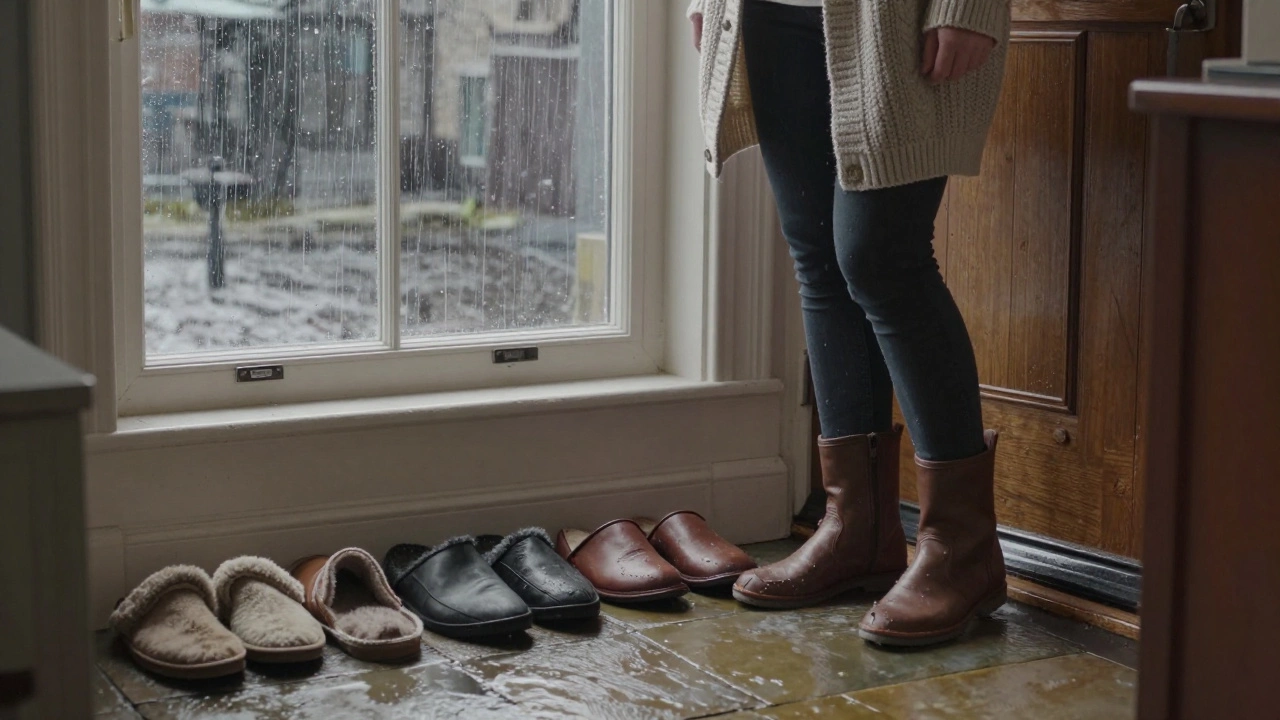
Walk into any house in County Clare or Donegal on a rainy Tuesday, and you’ll notice a pattern. Near the back door: a pair of well-worn slippers, often with a patch on the toe, sitting beside a towel rack. These aren’t just footwear-they’re part of the ritual. You take off your boots, dry your feet, and slip into something warm. It’s a quiet act of self-care.
My neighbour in Dublin 8 swaps her slippers every season. In winter, she wears Mannings wool slippers with a rubber sole. In spring, she switches to a lightweight, quick-dry pair from Clarks. She says, "If you’re going to be in your house for 14 hours a day, your feet deserve better than a plastic flip-flop from a supermarket sale."
Slippers for Different Irish Lifestyles
Your needs depend on your home and your life.
- For older adults or those with mobility issues: Choose slip-ons with wide openings and non-slip soles. Brands like Dr. Scholl’s available in Irish pharmacies and approved by the HSE for home care offer models with extra cushioning and heel support.
- For families with kids: Look for machine-washable, durable pairs. Ugg a global brand with strong Irish retail presence, known for its sheepskin slippers that kids love makes kids’ versions with reinforced toes-perfect for muddy play.
- For people with heated floors: Avoid thick insulation. Opt for thinner, breathable slippers made from bamboo or merino wool. Toms offers a lightweight, eco-friendly slipper line sold in Dublin’s Liffey Valley and other Irish malls.
- For renters or shared spaces: Choose neutral colours and simple designs. You don’t want to be the one who leaves bright pink slippers by the hallway. Stick to navy, grey, or brown.
How Long Should Slippers Last in Ireland?
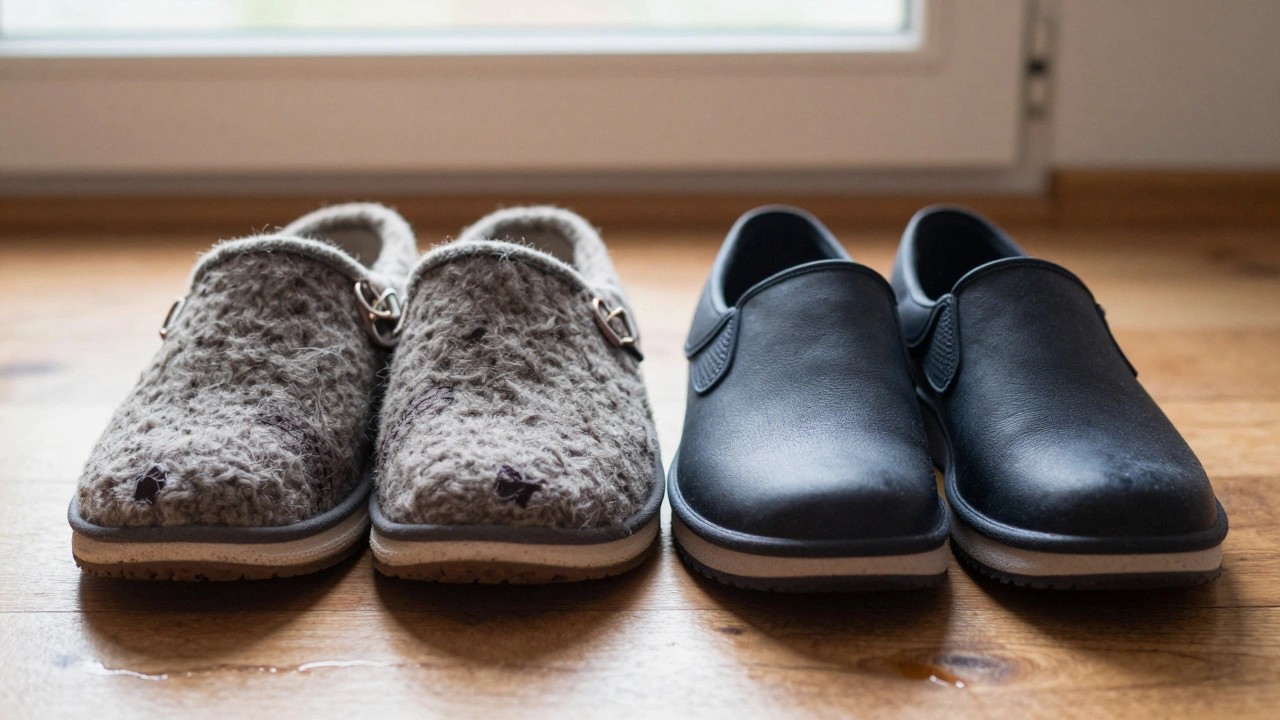
Don’t expect a cheap pair to last a year. In Ireland’s wet climate, slippers wear out faster than you think. The soles crack from constant damp. The lining matts down from sweat and moisture. A good pair should last 12-18 months with daily use. If your slippers start smelling like a wet dog or the sole peels away from the upper, it’s time to replace them.
Pro tip: Rotate two pairs. One for indoors, one for near the back door. This gives each pair time to dry out and extends their life.
Why This Matters More Than You Think
Good slippers aren’t a luxury. They’re part of keeping your body warm and your joints healthy. In a country where 1 in 5 adults over 65 suffer from chronic foot pain (according to the Irish Podiatry Association), the right footwear at home can reduce falls, ease arthritis, and even improve sleep. Your feet are your foundation. If they’re cold and damp all day, your whole body feels it.
And let’s be honest-there’s nothing better than stepping into warm, dry slippers after coming in from a drizzly walk in Phoenix Park or a chilly stroll along the River Lee. It’s a small comfort, but in Ireland, small comforts are everything.
Are Ugg slippers good for Irish winters?
Yes, but only if you choose the right model. Ugg’s classic sheepskin slippers are warm and cozy, but their smooth soles aren’t ideal for wet tiles. Look for Ugg’s "Tasman Slip-On" or "Scuffette" with rubber soles-they’re available in Dunnes Stores and Boots in Ireland and offer better grip. Avoid the plush indoor-only versions if you’re walking on damp floors.
Can I wear slippers outside in Ireland?
Only if they’re designed for it. Most slippers aren’t built for outdoor use. But some brands like Mannings and Irish Home Slippers make hybrid models with reinforced soles and water-resistant uppers. These are perfect for stepping out to the bin, checking the mail, or walking the dog on a short errand. Don’t wear fluffy slippers to the corner shop.
What’s the best material for slippers in Ireland?
Wool and fleece are top choices. They’re naturally moisture-wicking and retain heat even when damp. Merino wool is especially good-it doesn’t smell and dries faster than cotton. Avoid cotton-only slippers unless they’re lined with synthetic insulation. Leather uppers with wool lining are durable and breathable, ideal for Irish weather.
Do I need to buy expensive slippers in Ireland?
No, but you shouldn’t go too cheap. A €20 pair from a supermarket will fall apart in a few months. A €40-€60 pair from Dunnes, Boots, or an Irish brand like Mannings will last two winters. Think of it as an investment in comfort and safety. You wouldn’t buy cheap boots for walking in Irish rain-don’t do it with slippers either.
Are there Irish-made slippers I can support?
Yes. The Irish Slippers Company in Kilkenny handmakes wool and leather slippers using traditional techniques. Mannings, based in Dublin, has been making footwear for Irish homes since 1982. Buying local means better quality, fewer imports, and support for small businesses that understand the Irish climate.
Final Tip: Test Them Before You Buy
Always try slippers on in-store if you can. Walk on the floor. Stand up. Wiggle your toes. Check if the heel stays put. If you’re buying online, pick retailers with free returns. Ireland’s weather changes fast-and so should your footwear. Don’t settle for slippers that feel good for five minutes. Find the ones that feel like home.