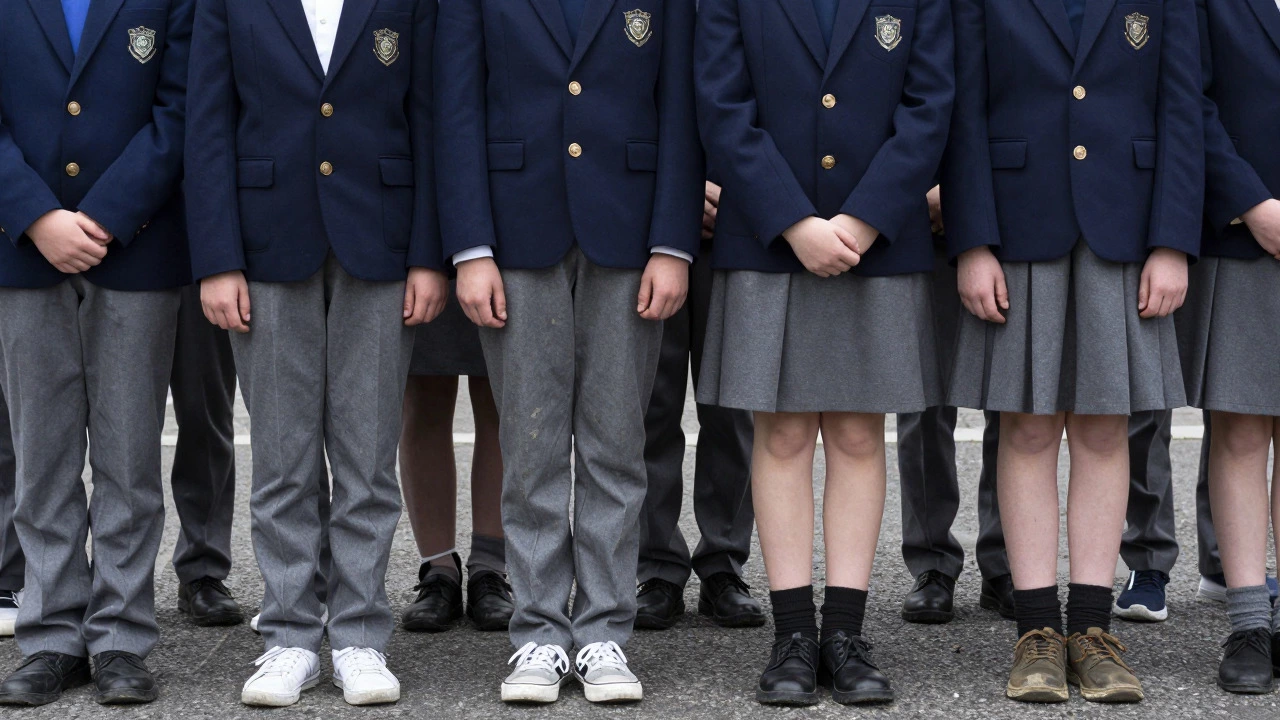
School Bullying Impact Simulator
🏡Rural Primary School
Small community school with limited budget awareness. Parents concerned about costs.
Cost Sensitive Close Community🏙️Urban Secondary School
Large city school with diverse student body. High social pressure and brand consciousness.
High Pressure Diverse Student Body🇮🇪Gaelscoil (Irish-Medium)
Modern approach with relaxed uniform policy. Focus on comfort and practicality over strict codes.
Flexible Policy Progressive ApproachYou’ve heard the claim a thousand times. Parents, principals, and policymakers in Ireland argue that school uniforms are the silver bullet for stopping bullying. The logic seems sound on paper: if everyone looks the same, no one can be picked on for wearing the wrong brand of sneakers or the latest fast-fashion top. But does the reality match the theory? After spending years observing classrooms from Dublin to Donegal, the answer is messy. Uniforms change the *type* of bullying, but they don’t necessarily stop it.
The Myth of Equality
Let’s look at the core argument first. Proponents say uniforms create a level playing field. In a secondary school in Cork or a primary in Galway, removing visible markers of wealth should theoretically reduce social stratification. To an extent, this is true. You won’t see students mocked for wearing hand-me-downs versus designer labels from Brown Thomas or Zara.
However, human nature finds a way to create hierarchy. When you remove clothing as a status symbol, kids shift their focus to other things. I’ve seen this play out in countless year groups. The bullying doesn’t disappear; it mutates. Students start judging each other based on:
- The condition of their uniform (is it faded? stained?)
- Accessories (smartphones, watches, jewelry)
- Physical appearance (haircuts, body type)
- Social capital (who sits with whom at lunch)
In fact, some studies suggest that because uniforms are mandatory, deviations from the dress code become targets themselves. A girl in Limerick might get teased for having her skirt slightly too short, while a boy in Belfast could be ridiculed for untucked shirts. The uniform becomes a tool for enforcement rather than protection.
What the Data Actually Says
If we look at the hard numbers, the picture isn’t clear-cut. Organizations like Anti-Bullying Organisation Ireland (ABOI) have tracked trends for years. They note that while physical bullying has decreased across the board due to better reporting and awareness, verbal and relational bullying remain persistent issues.
A key insight comes from looking at where bullying happens. Most bullying occurs during unstructured time-on the bus, in the playground, or online after school. Uniforms only cover the hours inside the classroom and immediate school grounds. Once the bell rings, the uniform comes off, and the social dynamics resume. If a child is being bullied because of their accent, their family background, or their interests, a navy blazer won’t fix that.
| Bullying Type | Impact of Uniform Policy | Reason |
|---|---|---|
| Clothing-Based Mockery | Significant Reduction | Removes brand/status visibility |
| Verbal Abuse | No Change | Focus shifts to personality/traits |
| Cyberbullying | No Change | Occurs outside school hours/uniform context |
| Relational Exclusion | Minimal Impact | Social dynamics persist regardless of attire |

The Irish Context: Cost and Compliance
In Ireland, the conversation around uniforms often gets tangled up with cost. For families in rural areas or those struggling with the rising cost of living, buying specific branded uniforms from suppliers like John Donnelly or specialized school outfitters can be a significant burden. This financial stress can inadvertently create new divisions.
When parents can’t afford the full kit, children may wear second-hand uniforms or older styles. While schools try to be inclusive, peer pressure is relentless. A child in Sligo might face subtle exclusion because their socks aren’t the current regulation color. This creates a different kind of inequality-one based on economic compliance rather than fashion choice.
Furthermore, the strictness of enforcement varies wildly between schools. Some Gaelscoileanna (Irish-medium schools) have relaxed policies focusing on comfort and practicality, while others maintain rigid codes reminiscent of decades past. This inconsistency means there’s no national standard to measure against, making broad claims about effectiveness difficult.
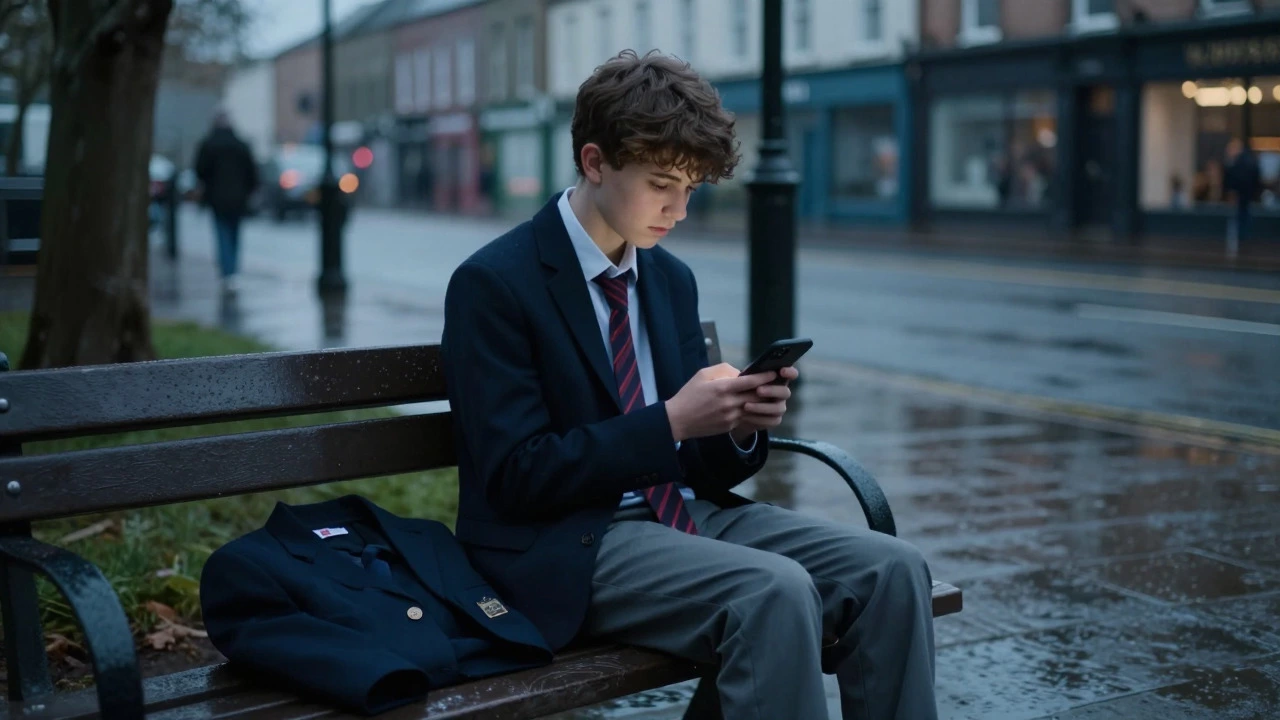
Shifting the Focus: What Actually Works?
If uniforms aren’t the cure, what is? Experts agree that culture eats strategy for breakfast. A school with a terrible anti-bullying culture will still have high rates of harassment, even if every student wears a pristine tie. Conversely, a school with strong pastoral care can thrive without uniforms.
Effective strategies include:
- Early Intervention: Training teachers to spot subtle signs of exclusion before it escalates.
- Student Voice: Allowing students to help shape behavior policies makes them more invested in following them.
- Digital Literacy: Teaching kids how to navigate online spaces safely reduces cyberbullying.
- Community Engagement: Involving parents and local organizations in creating a supportive environment.
Schools like St. Patrick’s College in Maynooth or various community schools in Dublin have implemented programs that focus on empathy and conflict resolution. These initiatives address the root causes of bullying-fear, insecurity, and lack of empathy-rather than just the symptoms.
The Verdict for Irish Parents
So, do school uniforms prevent bullying? Not entirely. They eliminate one avenue for teasing but open others. For parents in Ireland deciding whether to support a uniform policy, consider these points:
- Uniforms simplify morning routines and reduce decision fatigue for kids.
- They foster a sense of belonging and school identity.
- They do not replace the need for active anti-bullying education.
- Cost should never be a barrier to inclusion; schools must have robust second-hand schemes.
The real solution lies in building a school culture where kindness is valued over conformity. Until then, uniforms remain a band-aid on a deeper wound. As we move forward, Irish schools need to focus less on what students wear and more on how they treat each other. That’s a lesson no blazer can teach.
Do school uniforms actually stop bullying in Ireland?
Uniforms reduce clothing-based bullying but don't stop verbal or relational bullying. They shift the focus of teasing to other factors like accessories or behavior.
Why do Irish schools still enforce strict uniform policies?
Tradition, ease of identification, and fostering a sense of community are key reasons. Many schools believe uniforms promote equality and discipline.
How much do school uniforms cost in Ireland?
Costs vary widely, ranging from €100 to over €500 per year depending on the school's requirements and supplier. Second-hand options can significantly reduce this expense.
What are the best ways to prevent bullying besides uniforms?
Effective methods include early intervention by staff, student-led peer support programs, digital literacy education, and fostering a positive school culture focused on empathy.
Are there schools in Ireland without uniforms?
Yes, some private schools and newer educational models in Ireland have adopted casual dress codes or no-uniform policies, focusing instead on personal expression and responsibility.