Irish Suit Fit & Budget Planner
Step 1: Find Your Cut
The article suggests that 'skinny' often fails for larger frames, while 'regular' adds bulk. Select your typical frame to get a precise recommendation.
Step 2: True Cost Calculator
Buying off-the-peg rarely fits perfectly. Add the essential alteration costs mentioned in our guide to find the real price of a good look.
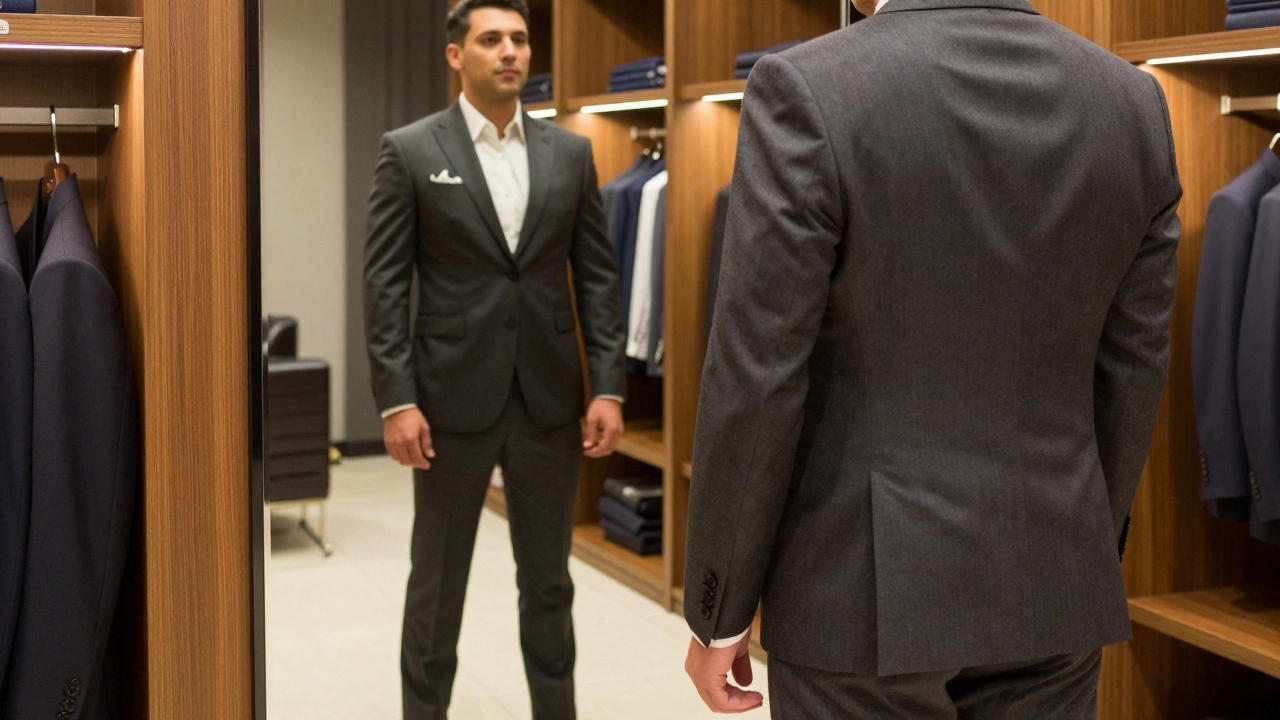
You stand in front of the mirror in your fitting room at Dunnes Stores, a major Irish department store chain known for affordable fashion basics. The salesman offers you a jacket labelled "regular fit," but you know it makes your torso look like a tent. You ask for something slimmer, and he hesitates, moving toward the rack of sizes where the fabric pulls tight across the back. It is a frustrating scene many larger men know well. The short answer is yes, absolutely. Larger gentlemen in Ireland can and should wear slim-fit suits without feeling squeezed into a box.
The confusion usually comes down to what people actually mean by the word "slim." In the high-street fashion world, especially during events like the Galway Arts Festival or a busy wedding season in Kildare, terms get mixed up. Many assume slim means skin-tight, designed for someone running marathons. That is not the reality of modern tailoring. When you talk about a fit that flatters a bigger frame, you are really talking about proportion control. You want the shoulder pad to end right at your natural shoulder line, the sleeve length to show a bit of shirt cuff, and the trousers to taper slightly so they don't swallow your shoes.
Understanding the Fit Categories
To shop effectively in Ireland, you need to stop looking for "Large" tags and start looking at cut descriptions. Retailers here often hide their better cuts behind confusing labels. Standard fits have extra fabric everywhere, hiding weight but adding visual bulk. Skinny fits are risky for anyone outside a very specific athletic build because the seams restrict movement when you sit down for lunch in Temple Bar.
The sweet spot is Tailored Fit or Modern Cut. This style follows the body's lines without constricting it.
| Suit Style | Shoulder Width | Chest Room | Waist Taper | Best For |
|---|---|---|---|---|
| Classic Regular | Wide | Very Loose | Minimal | Comfort over aesthetics; older styles. |
| Slim Fit (True) | Natural | Slight Ease | Moderate | Athletic builds; needs alteration for larger frames. |
| Tailored/Modern | Padded | Balanced | Defined | Larger frames; balances proportions. |
If you walk into a shop on Grafton Street looking for a jacket, prioritize the fabric structure. Heavier wool blends often used in Irish autumn jackets hold shape better than light linen. If the fabric is too light, any wrinkles around the stomach will show instantly. Look for a mid-weight worsted wool. It smooths out imperfections while offering that sharp, streamlined silhouette you want.
Where to Shop in Ireland
Finding stock is half the battle. Most high-street chains carry slim fit up to size 44. Once you step past that into size 46, 48, or 50, options vanish quickly. You might find yourself browsing aisles in Doncaster or other large UK-based retailers that stock in Ireland, but the selection online can be deceptive regarding measurements.
The best strategy for men based in Dublin or Cork involves visiting specialist tailors who sell ready-made clothes. Places like O'Connor Suits (the Irish heritage brand) often have collections built for broader builds that still respect the clean lines of a slim cut. Similarly, visiting Hackett in Merrion Centre or similar boutiques gives access to Italian sizing systems where "Slim" is standard across larger chest measurements.
Do not ignore Mark Murphy or similar department stores. While not always premium, their off-the-rack selections in "Modern Fit" are often better suited to larger bodies than the aggressive skinny cuts offered by trend-focused younger brands. Always check the inside label. If it says "Made in UK" or refers to British sizing, expect standard blocky cuts. Look for European manufacturers; they tend to run narrower in the leg and more tapered at the waist.
The Power of Alterations
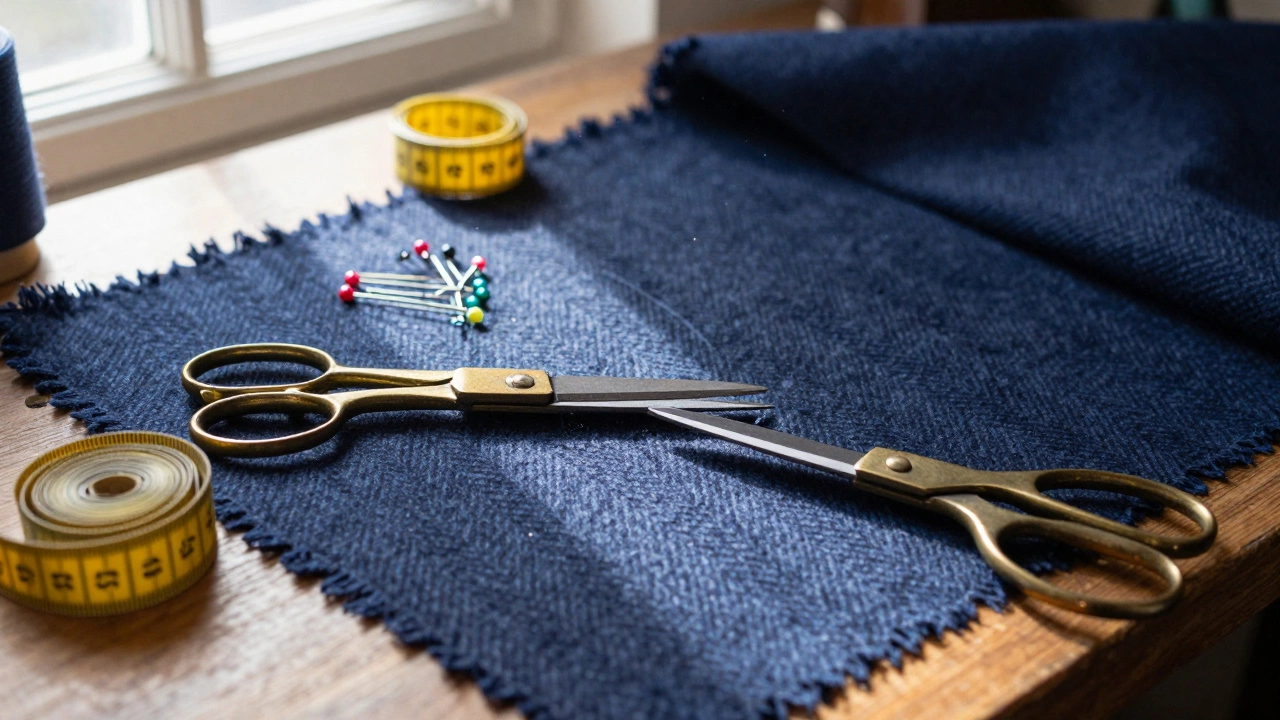
This is the most critical piece of advice for anyone living in Ireland. You will rarely find a suit that fits perfectly off the peg in a store, regardless of your budget. Buying a jacket that fits your shoulders is step one. Buying a pair of trousers that fits your waist is step two. Putting them together is the job of a tailor.
In Dublin, a good tailor isn't hard to find. Areas like Mary Street or near Dublin Castle are full of workshops. Pay for a custom adjustment service. Tell them you want a "gentleman's taper." This means narrowing the waist of the jacket to define your V-shape, then opening it slightly at the bottom hem so the jacket doesn't pull when you reach for your car keys. A skilled tailor in Kilmainham or even a small shop in Clondalkin can execute this work better than big-box dry cleaners.
Expect to spend between €40 and €60 on these adjustments. It sounds steep compared to buying cheap clothes, but think of it as insurance for the outfit's life. A poorly fitted suit looks tacky after one day of wear. A well-fitted suit, even on a bigger body type, elevates your presence in meetings at Leinster House or dinners in Ballsbridge.
Material Matters in Our Climate
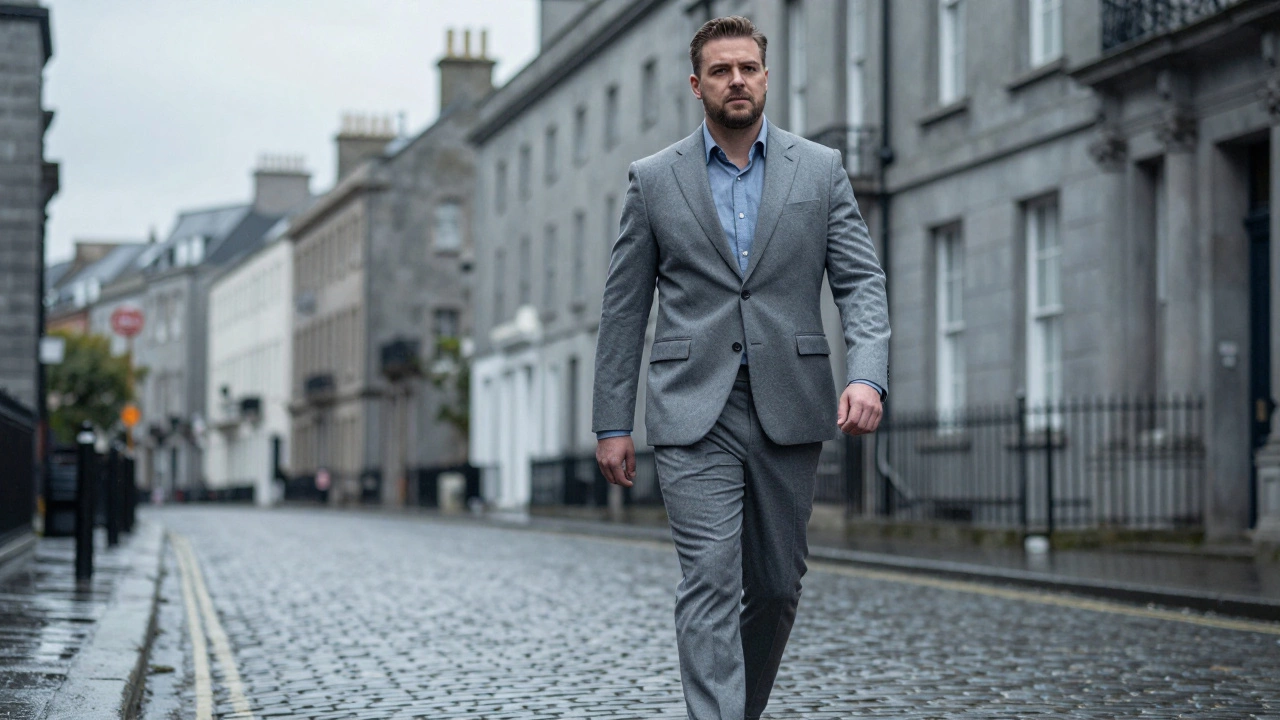
Ireland has a reputation for damp chill, even in the spring. If you are buying a suit for year-round use, consider the weave. Flannel is heavy and holds its shape well against wind, but pure cotton can crease badly on a rainy commute from Malahide. A mix of Tropical Wool is excellent for summer weddings (when the sun manages to break through), but for October onwards, you want a heavier cloth that drapes rather than clings.
Pattern also plays a role in visual perception. Loud checks and stripes on a larger frame can sometimes exaggerate bulk. Subtle textures like herringbone or a solid charcoal grey allow the eye to travel straight down your body line without interruption. Keep accessories simple. A pocket square helps draw the eye up to your face, which balances the wider silhouette of the jacket.
Common Pitfalls to Avoid
There are specific mistakes larger men make when trying the slim look. Avoid double-breasted jackets entirely unless you are getting them fully bespoke. They add layers across the midsection that can be bulky. Stick to single-breasted with two or three buttons. The third button position is usually safer for creating a vertical line.
Another trap is ignoring the sleeves. If the jacket sleeves are rolled up to fit your height, the shoulders are wrong. Shoulders dictate the fit. If the shoulder pads extend past your arm bone, the whole jacket will look cheap. Conversely, if they collapse inward, you look dishevelled. Buy to the shoulder, let the rest be fixed.
Finally, watch out for trouser length. Baggy pants ending in a pile of fabric above your shoe ruins the sleek illusion. Opt for a "break" where the pant leg just touches the front of the shoe. This keeps the line clean from hip to ankle.