Safety Footwear Checker for Irish Workplaces
This tool helps you determine if you're legally required to wear steel-toe shoes in your job based on Irish workplace safety regulations. Answer the questions below to get your result.
Job Details
Your Result
Answer the questions above to see if steel-toe shoes are required for your job.
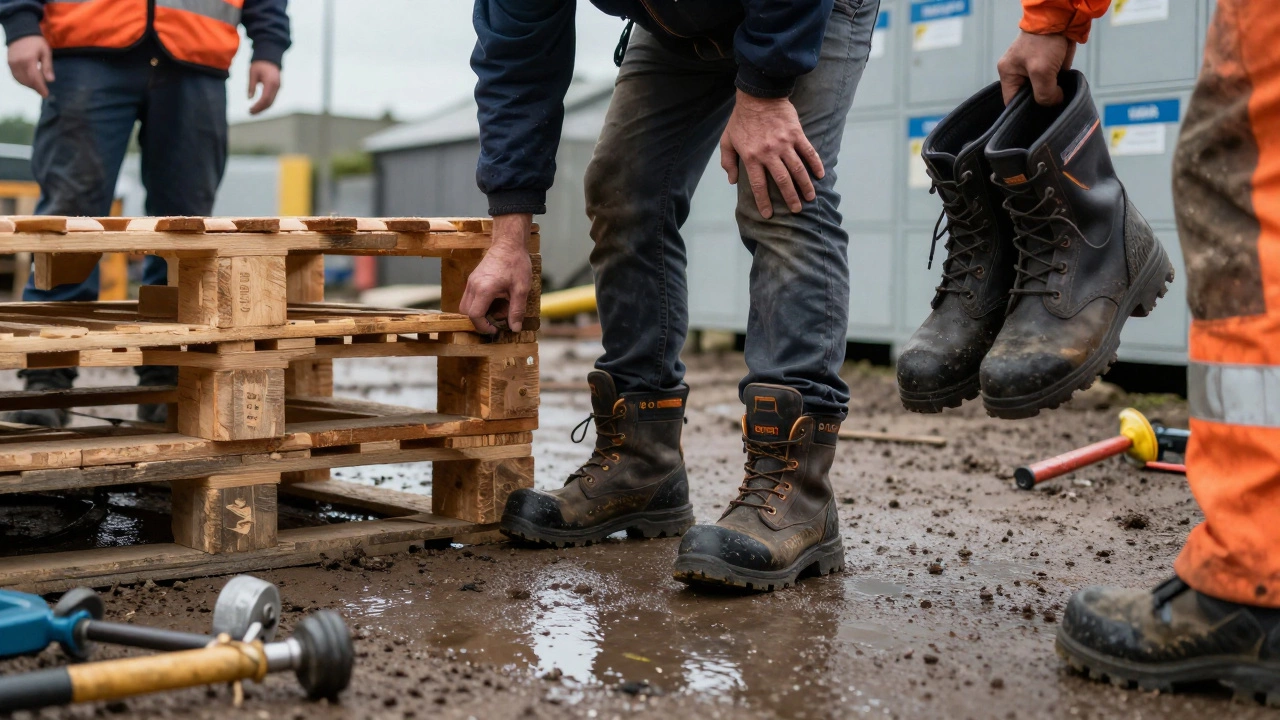
In Ireland, workplace safety isn’t just a rulebook-it’s a shared responsibility. Whether you’re working on a construction site in Cork, handling heavy machinery in Limerick, or loading cargo at Dublin Port, your employer has the right-and often the legal duty-to require you to wear steel-toe shoes. But what does that actually mean for you? Can they force you? And what happens if you refuse?
Yes, They Can-But Only If It’s Necessary
Under Irish law, employers must provide a safe working environment. That’s not a suggestion-it’s written into the Safety, Health and Welfare at Work Act 2005. If your job involves risks like falling objects, heavy loads, or sharp materials, then steel-toe boots aren’t optional. They’re part of Personal Protective Equipment (PPE), and your employer can legally require you to wear them.
Think about it this way: if you’re stacking pallets at a warehouse in Galway, and a 50kg sack slips off a forklift, steel-toe boots could mean the difference between a bruise and a broken foot. Companies like McHugh Logistics in Tallaght or Irish Steel in Waterford don’t just ask for safety gear-they enforce it. Refuse to wear it, and you could be sent home without pay until you comply.
It’s Not Just About Steel-Toes
Steel-toe shoes are just one type of safety footwear. In Ireland’s damp, uneven terrain-especially on farms in County Clare or roadworks along the N7-you’ll often see workers wearing composite-toe boots, which are lighter and non-metallic. These are just as effective and often preferred in places where metal detectors are used, like at Shannon Airport or in certain manufacturing plants.
Employers in Ireland must supply safety footwear at no cost to you. That’s a key point. You can’t be asked to pay for your own steel-toe boots if they’re required for the job. If your boss says, “Buy your own,” that’s a violation of Section 19 of the 2005 Act. You can report this to the Health and Safety Authority (HSA) without fear of retaliation.
What If You Have a Medical Reason?
Some workers have conditions like diabetes, arthritis, or neuropathy that make rigid footwear painful or dangerous. In those cases, you’re not off the hook-you just need to work with your employer to find an alternative.
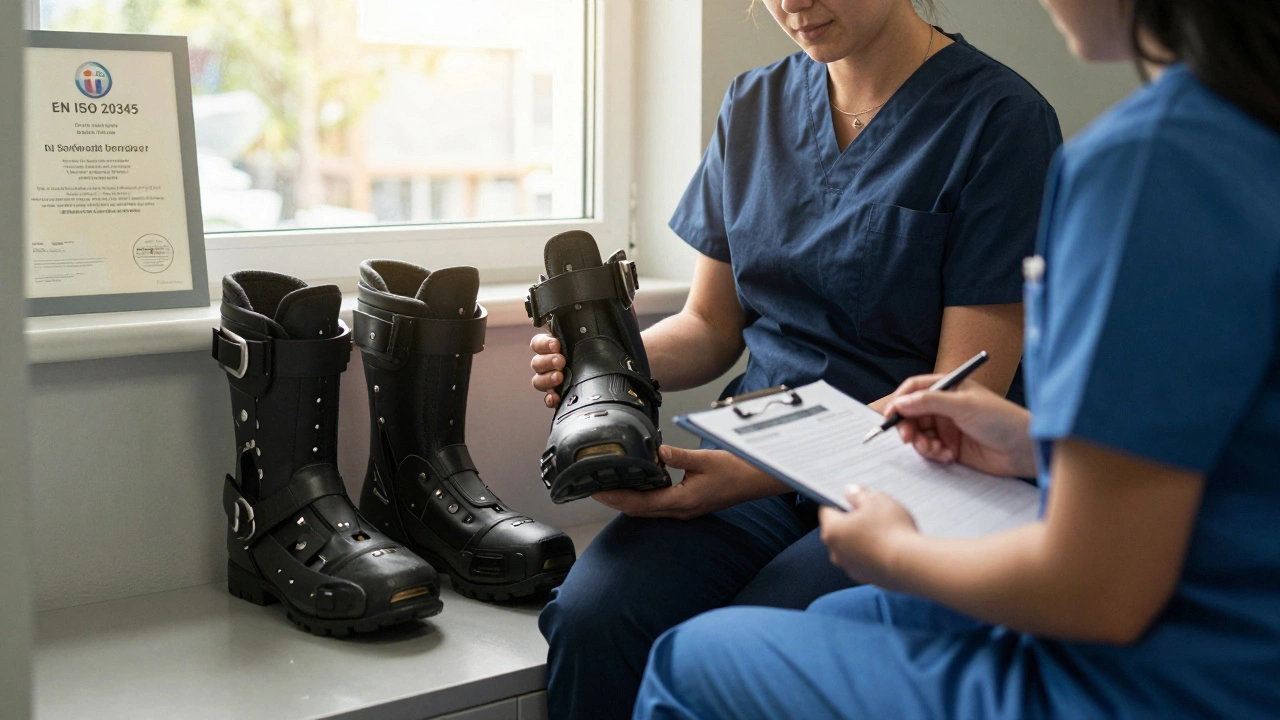
For example, a warehouse worker in Limerick with diabetic foot ulcers might be issued with custom orthopaedic boots that meet EN ISO 20345 safety standards. These aren’t just regular shoes-they’re certified protective footwear with reinforced toes and slip-resistant soles, approved for industrial use. Your GP or occupational therapist can help get the right equipment approved. Employers in Ireland are legally required to make reasonable adjustments under the Employment Equality Acts.
Real-Life Scenarios in Ireland
Let’s say you work for CRH at their concrete plant in Kildare. You’re expected to wear safety boots every shift. One day, you show up in canvas sneakers. Your supervisor doesn’t yell-they hand you a pair of approved boots from the on-site locker and tell you to change. If you still refuse, you’re sent home. No drama. No fanfare. Just policy.
Or imagine you’re a new hire at ESB’s substation in Athlone. You’re given a safety induction. The trainer doesn’t say, “You should wear steel-toe shoes.” They say, “You won’t be allowed on site without them.” That’s because a single slip or dropped tool can cause permanent injury. In Ireland’s tight-knit trade communities, word gets around fast. If you’re known as the one who skips safety gear, you won’t get called back for future jobs.
What Kind of Boots Are Required?
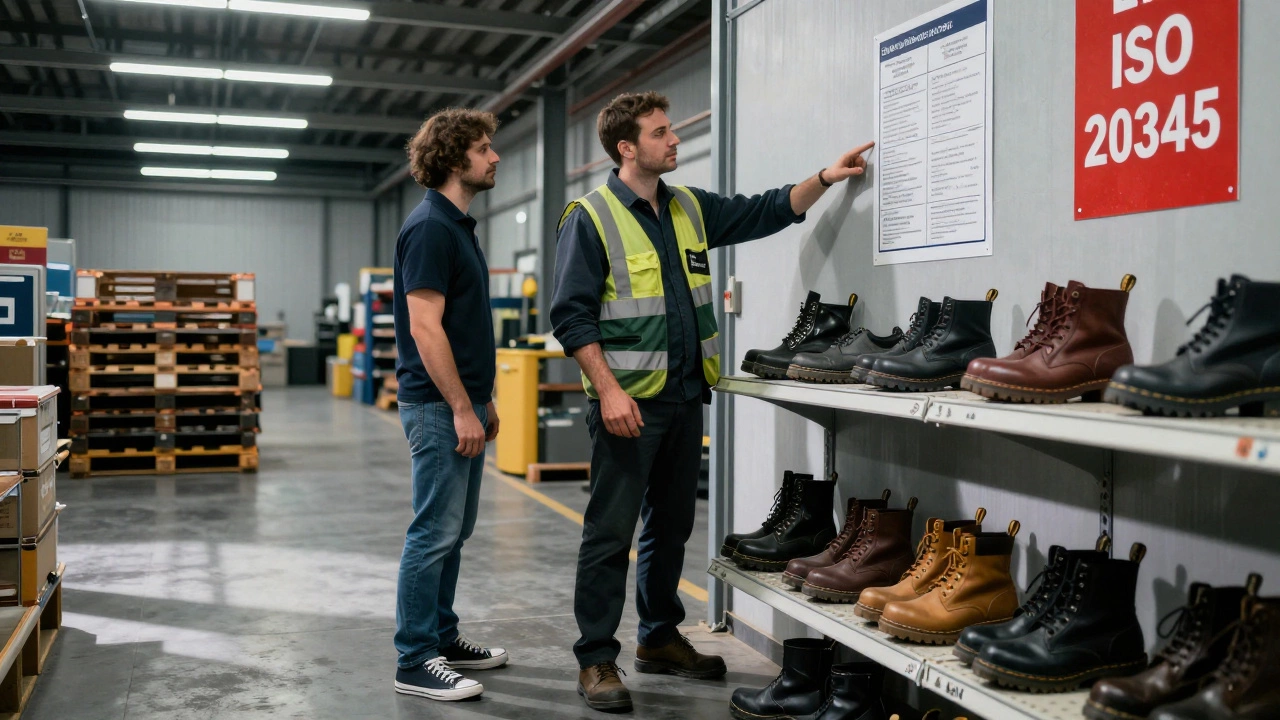
Not all boots are created equal. In Ireland, safety footwear must meet the EN ISO 20345 standard. That means:
- Steel or composite toe cap (minimum 200 joules impact resistance)
- Anti-slip sole (tested on wet and oily surfaces)
- Resistance to penetration (from nails or sharp debris)
- Water-resistant or waterproof materials
Brands like Clarks Work, Dr. Martens Work, and Red Wing are common on Irish job sites. Local suppliers like Workwear Ireland in Limerick or Safety Gear Direct in Dublin stock certified gear. You’ll often see these brands in the vans of trade suppliers who deliver to building sites across the country.
What If You’re Asked to Wear Them Outside Work Hours?
Here’s where things get tricky. Your employer can’t demand you wear steel-toe boots while commuting, shopping, or on your day off. That’s a boundary. But if you’re on a company vehicle, attending a site meeting, or working overtime on-site-even if it’s after hours-you’re still under their safety rules.
A real example: a roofer in Belfast (though technically Northern Ireland, the principle applies across the island) was told to wear his safety boots during a company training session held in a pub car park. He refused, saying it wasn’t “real work.” The employer didn’t fire him-they just rescheduled the session indoors. The message? If you’re representing the company, you follow the rules.
What Happens If You Refuse?
Refusing to wear required PPE isn’t just risky-it’s grounds for disciplinary action. In Ireland, employers must follow a fair process. That means:
- Verbal warning
- Written warning
- Final warning
- Dismissal (only if repeated and documented)
But here’s the catch: if you’re dismissed for refusing safety gear, you can’t claim unfair dismissal if the requirement was reasonable and clearly communicated. The Labour Court in Dublin has upheld dozens of such cases. One 2023 ruling involved a warehouse worker in Sligo who repeatedly refused steel-toe boots. The court sided with the employer-saying the risk was “clear, present, and preventable.”
Know Your Rights-and Your Responsibilities
You don’t have to like wearing heavy boots. But in Ireland’s working culture, safety isn’t about comfort-it’s about survival. The same people who queue for the Dublin Bus at 6 a.m., who fix the water pipes in Galway during winter storms, or who stack pallets in a freezing shed in Donegal-those are the people who know the value of a good pair of boots.
If you’re unsure whether your job requires them, ask your supervisor or check your contract. If you’re given a pair and they’re uncomfortable, don’t just quit wearing them-ask for a replacement. Many Irish employers now offer fit assessments through occupational health services.
And if you’re ever told you have to pay for your own safety footwear? Say no. Then call the HSA. They’re there to help. Not to punish. Not to lecture. Just to make sure you go home at the end of the day with both feet intact.
Can my employer in Ireland make me wear steel-toe shoes even if I’ve never had an accident?
Yes. Accidents don’t have to happen before safety rules kick in. Employers in Ireland are required to prevent harm, not just respond to it. If your job involves heavy lifting, machinery, or falling objects-even if you’ve been lucky so far-you’re still required to wear protective footwear under the Safety, Health and Welfare at Work Act 2005.
Do I have to pay for my own steel-toe boots in Ireland?
No. Under Irish law, your employer must provide required safety footwear at no cost to you. If they ask you to buy your own, that’s a breach of Section 19 of the 2005 Act. You can report this to the Health and Safety Authority (HSA) without fear of retaliation.
Are composite-toe boots as safe as steel-toe boots in Ireland?
Yes. Composite-toe boots meet the same EN ISO 20345 safety standard as steel-toe boots. They’re lighter, non-metallic, and often preferred in places like Shannon Airport or food processing plants where metal detectors are used. In Ireland’s damp conditions, many workers choose composite for comfort and compliance.
What if I have a medical condition that makes steel-toe boots painful?
You’re entitled to reasonable adjustments under the Employment Equality Acts. Your employer must work with you to find certified safety footwear that suits your needs-like orthopaedic boots with reinforced toes. A letter from your GP or occupational therapist is usually enough to trigger this process.
Can I be fired for refusing to wear steel-toe shoes in Ireland?
Yes-if you’ve been warned, the requirement is reasonable, and you’ve repeatedly refused. The Labour Court in Ireland has upheld dismissals for safety violations. But your employer must follow a fair disciplinary process: verbal warning, written warning, final warning, then dismissal. Skipping steps could make the dismissal unfair.