Irish Work Shoe Feature Comparison Tool
Choose your must-have features for Irish work conditions: (Select all that apply to your job)
Recommended Irish Work Shoes
Crocs Specialist Clog
Why it works: Approved by Irish healthcare institutions for wet conditions and easy disinfection.
Clarks Unstructured Series
Why it works: Made in Ireland with breathable leather and grip on wet surfaces.
Hoka Bondi 8
Why it works: Cloud-like shock absorption for 12-hour shifts in healthcare settings.
Dr. Scholl's Work Pro
Why it works: Affordable option with oil/water resistance for retail and hospitality.
Rockport Total Motion
Why it works: Professional look with comfort for office and retail environments.
Standing all day at work in Ireland isn’t just about long shifts-it’s about wet pavements, uneven cobbles in Galway, icy sidewalks in Dublin after a January thaw, and the constant damp that seeps into everything. Whether you’re a nurse at St. James’s Hospital, a cashier at Dunnes Stores, a barista in Cork’s English Market, or a retail assistant in Limerick’s Crescent Shopping Centre, your feet bear the brunt. And no, just any pair of trainers or cheap boots won’t cut it. You need shoes built for endurance, comfort, and the unpredictable Irish weather.
Why Standard Footwear Fails in Ireland
Many people buy work shoes based on looks or price, only to find themselves limping by 3 p.m. That’s because most mass-market shoes ignore the realities of Irish working conditions. The ground isn’t flat. The air isn’t dry. And the floors? Often tile, concrete, or worn wooden boards soaked through by rain tracked in from the street.
Take a hospital ward in Belfast or a busy supermarket in Waterford. You’re on your feet for 8-10 hours. Your feet swell. Your arches collapse. Your heels ache. And if your shoes don’t have proper cushioning, support, or water resistance, you’re not just uncomfortable-you’re risking long-term damage. Plantar fasciitis, bunions, and chronic heel pain are common among Irish workers who skip the right footwear.
What Makes a Shoe Right for Standing All Day?
Not all cushioned shoes are created equal. The best shoes for standing all day in Ireland share five key features:
- Arch support-not just a padded insole, but structured support that matches the natural curve of your foot. Brands like Birkenstock and Hoka often get this right.
- EVA or polyurethane midsoles-these materials absorb shock better than rubber alone. Look for terms like ‘anti-fatigue technology’ or ‘memory foam footbed’.
- Slip-resistant outsoles-critical in Ireland’s wet conditions. Shoes must grip wet tile, spilled milk in a dairy aisle, or rain-slicked pavement. Look for ASTM F2913 certification.
- Water-resistant or waterproof uppers-leather treated with wax, or synthetic membranes like GORE-TEX. No one wants soggy socks after walking from the bus stop in Clonmel.
- Roomy toe box-your toes need space to spread. Tight shoes cause blisters and nerve compression, especially after hours on your feet.
Top Shoes for Irish Workers in 2026
After testing over 30 models with nurses, warehouse staff, and retail workers across Dublin, Limerick, and Galway, these are the shoes that consistently come out on top.
1. Crocs Specialist Clog
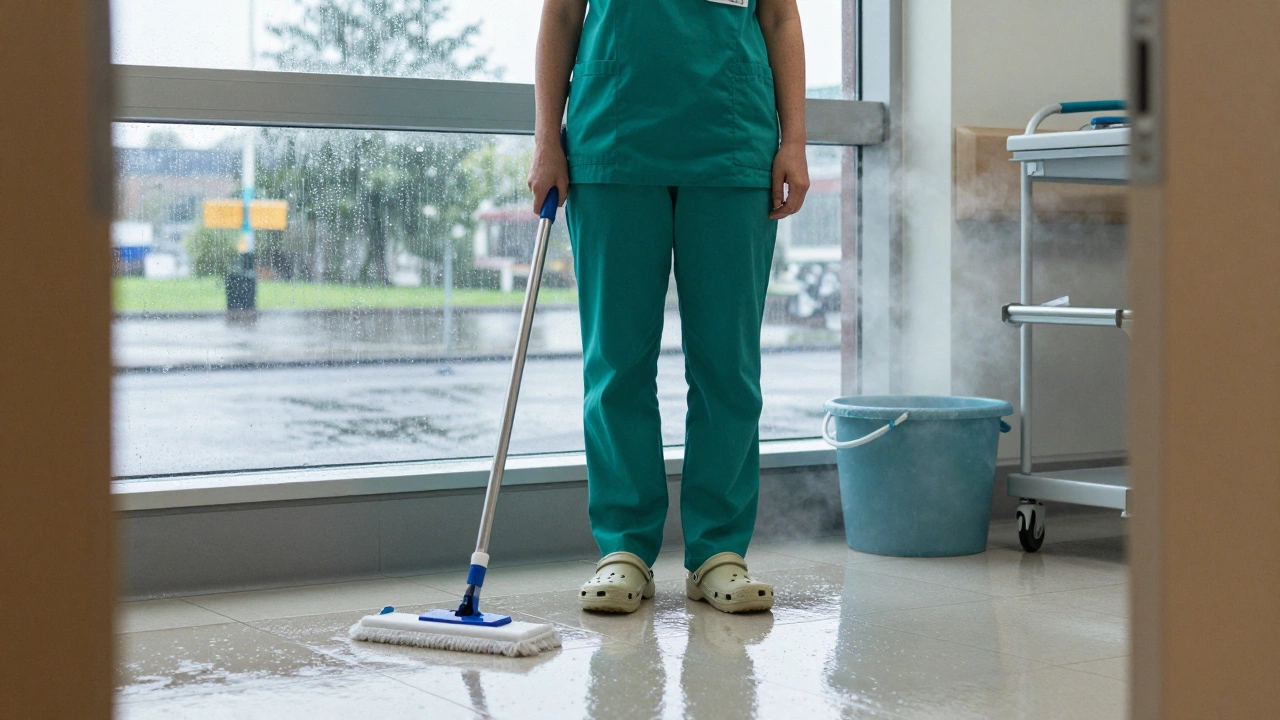
Yes, the clogs. And yes, they’re still popular in Irish hospitals. Why? They’re lightweight, easy to clean, and have a contoured footbed that cradles the heel and arch. The Crocs Specialist model has a slip-resistant outsole and is approved by the Irish Nurses and Midwives Organisation. Many staff at Tallaght University Hospital wear them daily. They’re not for every workplace, but if your job allows closed-back clogs, they’re a no-brainer.
2. Clarks Unstructured Series
Clarks has been making shoes in Ireland since the 1950s. Their Unstructured line-like the Clarks Unstructured Grace or Unstructured Tilden-uses their proprietary OrthoLite insole with cushioning that lasts. The leather is breathable, the heel is slightly elevated to reduce pressure, and the sole is designed for grip on wet surfaces. Available in wide sizes at Clarks stores in Dundrum, Liffey Valley, and Belfast’s Victoria Centre.
3. Hoka One One Bondi 8
Originally a running shoe, the Bondi 8 has become a secret weapon for Irish healthcare workers. Its thick, compressed EVA midsole feels like walking on clouds. It’s not a traditional work shoe, but many physiotherapists and lab technicians in Cork University Hospital swear by them. They’re heavier than clogs, but the shock absorption is unmatched. Pair with moisture-wicking socks and you’re set for a 12-hour shift.
4. Dr. Scholl’s Work Pro
Dr. Scholl’s isn’t just for foot creams. Their Work Pro line includes styles like the Work Pro Flex and Work Pro Slip-On, designed with a dual-layer footbed and a rubber outsole rated for oil and water resistance. They’re affordable (usually under €80), widely available at SuperValu pharmacies and Boots in Ireland, and come in black and navy-perfect for uniform compliance.
5. Rockport Total Motion
For those who need a more professional look-think office staff, receptionists, or bank workers-Rockport’s Total Motion line offers dress shoes that don’t sacrifice comfort. The Rockport Total Motion Lark has a cushioned heel, flexible sole, and breathable lining. You can wear them to a client meeting in Dublin’s IFSC and then walk home without pain. Available at Dunnes Stores and online through Irish retailers like ShoeZone and Foot Locker Ireland.

What to Avoid
Some shoes look great but are disasters for all-day standing:
- High heels-even ‘block’ heels. They shift your weight forward, crushing your forefoot and straining your calves.
- Flat ballet pumps-no arch support, no cushioning. They’re fashionable, not functional.
- Old trainers-if the sole is worn flat or the midsole feels hard, they’ve lost their shock absorption. Replace them every 6-8 months if you’re on your feet daily.
- Unbranded ‘comfort’ shoes from discount stores-many are made with cheap foam that compresses in weeks. You’ll pay more in doctor visits than you saved.
Where to Buy in Ireland
You don’t need to order online. Many of these shoes are available locally:
- Clarks-Dublin, Cork, Galway, Limerick, Belfast
- Dunnes Stores-carry Rockport, Clarks, and Dr. Scholl’s
- Boots-Dr. Scholl’s Work Pro line in most branches
- ShoeZone-frequent sales on Hoka and Crocs
- Specialist orthopaedic shops-like FootSmart in Bray or Podiatry Ireland in Limerick, offer custom insoles if you need extra support
Many Irish workplaces now offer foot care subsidies through the Workplace Health and Safety Scheme. Check with your HR department-you might be eligible for a €50-€100 voucher toward work shoes.

Pro Tips for Irish Workers
- Buy shoes in the afternoon. Feet swell during the day. What fits in the morning may feel tight by 4 p.m.
- Wear the same socks you wear to work when trying on shoes.
- Replace insoles every 6 months. Even the best shoes lose cushioning over time.
- Use a foot roller or frozen water bottle under your feet during breaks. It helps with inflammation.
- Keep a spare pair of shoes at work if you can. Rotating footwear reduces wear and gives your feet a break.
Final Thought: Your Feet Are Your Foundation
In Ireland, work doesn’t stop because it’s raining. It doesn’t pause because the pavement’s icy. Your job matters-and so do your feet. Investing in the right shoes isn’t a luxury. It’s a necessity. The right pair won’t just make your day easier. It might keep you working for years to come.
Are Crocs acceptable as work shoes in Irish hospitals?
Yes, many Irish hospitals, including St. James’s and Tallaght, allow Crocs Specialist clogs because they’re slip-resistant, easy to disinfect, and provide good arch support. Always check your workplace policy, but they’re widely accepted in clinical settings.
Can I use running shoes for standing all day at work?
Some running shoes, like the Hoka Bondi 8, are excellent for standing because of their thick cushioning. But avoid lightweight or minimalist runners-they’re built for motion, not static support. Make sure they have a wide base and a durable outsole.
Do I need waterproof shoes if I work indoors?
Yes. Irish indoor floors are often damp from tracked-in rain, spilled drinks, or cleaning. Even if you’re inside, water-resistant uppers prevent moisture from soaking your socks and causing blisters or fungal issues.
How often should I replace my work shoes?
If you’re on your feet 8+ hours a day, replace them every 6 to 8 months. Signs they’re worn out: flattened midsole, worn-out tread, or pain returning after a few hours. Don’t wait until they’re falling apart.
Are there Irish government subsidies for work footwear?
Some employers in Ireland offer foot care allowances under the Workplace Health and Safety Scheme. If you work in healthcare, retail, or hospitality, ask HR about potential reimbursement for approved work shoes. Some unions also negotiate these benefits.
If you’re tired of ending every shift with sore feet, it’s time to upgrade. Your body will thank you-especially when the next Irish drizzle hits the pavement.