
Work Footwear Suitability Checker (Ireland)
Verdict
Select your sector and footwear to see the compliance verdict.
Quick Takeaways for the Irish Workforce
- Healthcare: Widely accepted in wards (specialized versions), but check your specific HSE trust guidelines.
- Hospitality: Generally a no-go for front-of-house; potentially okay for back-of-house depending on the floor surface.
- Industrial/Trade: Absolutely not acceptable unless they are the certified safety-toe variants.
- Office: Only in very casual "creative" environments; usually too informal for corporate Dublin hubs.
The Comfort Factor vs. The Safety Risk
We all know the appeal. When you're spending ten hours on your feet, the cushioning provided by Croslite (the material Crocs use) feels like a cloud. But in a professional setting, comfort can't come at the expense of safety. The biggest issue is the "hole" design. While great for ventilation, those holes are essentially open invitations for spills. Imagine a hot coffee spill in a busy café in Galway or a chemical splash in a lab; if your shoes have holes, that liquid goes straight onto your skin. Then there is the grip. While standard clogs have a textured sole, they aren't always designed for the slick, waxed floors common in many Irish offices or the wet tiles of a commercial kitchen. A slip-and-fall accident isn't just a personal injury; in a business context, it's a Health and Safety Authority (HSA) nightmare. If you're working in a role where you're moving quickly, you need footwear that locks your foot in place. The loose fit of a standard clog can lead to "tripping hazards," which is a phrase Irish safety officers love to use.Industry Breakdown: Where They Work and Where They Don't
Not all workplaces are created equal. Let's look at how different sectors in the Republic and Northern Ireland generally view these shoes.| Sector | Acceptability | Reasoning | Recommended Alternative |
|---|---|---|---|
| Healthcare (HSE/Private) | High (Specialist Models) | Ease of cleaning, comfort for long shifts. | Professional Leather Clogs |
| Hospitality (Front of House) | Very Low | Doesn't meet professional aesthetic standards. | Polished Black Loafers |
| Retail (Casual) | Moderate | Depends on the brand's "vibe" and safety rules. | Clean White Sneakers |
| Construction/Warehousing | Zero | Lack of impact protection and ankle support. | Steel-Toe Safety Boots |
| Corporate Office | Low | Too informal for client-facing roles. | Oxford Shoes or Flats |
The Healthcare Loophole: Why Nurses Love Them
If you walk through the corridors of Mater Misericordiae University Hospital, you'll see a lot of rubber clogs. For Nurses and healthcare assistants, these shoes are a godsend. The ability to wipe them clean with a disinfectant wipe after a messy incident is a huge practical advantage. However, there's a big difference between the ones you buy at a shopping center and the "Work" line. The Crocs Work range removes the holes from the top of the shoe. This is non-negotiable in a clinical setting to prevent needles, medication, or bodily fluids from hitting the foot. If you're entering the medical field in Ireland, don't just buy the classic clog; look for the closed-toe, slip-resistant professional versions. They provide the same arch support without the liability of a hole in the toe.
The Professional Image in the Irish Market
Ireland has a bit of a unique professional culture. We're generally more relaxed than the UK or US, but there's still a strong emphasis on "looking the part." In the tech hubs of the Silicon Docks in Dublin, you can get away with a lot-hoodies, sneakers, and even the occasional pair of clogs if you're a developer who never leaves their desk. But once you move into client-facing roles, the perception changes. If you're representing a company to an international client, wearing foam clogs can come across as too casual, potentially signaling a lack of professionalism. It's not about the price of the shoe, but the intention. A clean pair of leather shoes or a smart trainer suggests you've put effort into your appearance, which often translates to how clients perceive your attention to detail in your work.Legal and Safety Implications: The HSA Perspective
From a legal standpoint, employers in Ireland have a duty of care under the Safety, Health and Welfare at Work Act 2005. This means they must ensure that the equipment and clothing provided (or permitted) are safe. If an employer allows staff to wear standard Crocs in a kitchen and someone slips, the employer could be held liable for negligence. This is why many Irish businesses have a strict "closed-toe shoe" policy. A closed-toe shoe protects against falling objects and spills. If you're working in a warehouse in Ballycolgraigan or a garage in Cork, your feet are exposed to heavy machinery and chemicals. In these environments, a foam shoe offers zero protection. You need a shoe with a reinforced toe cap and a puncture-resistant sole.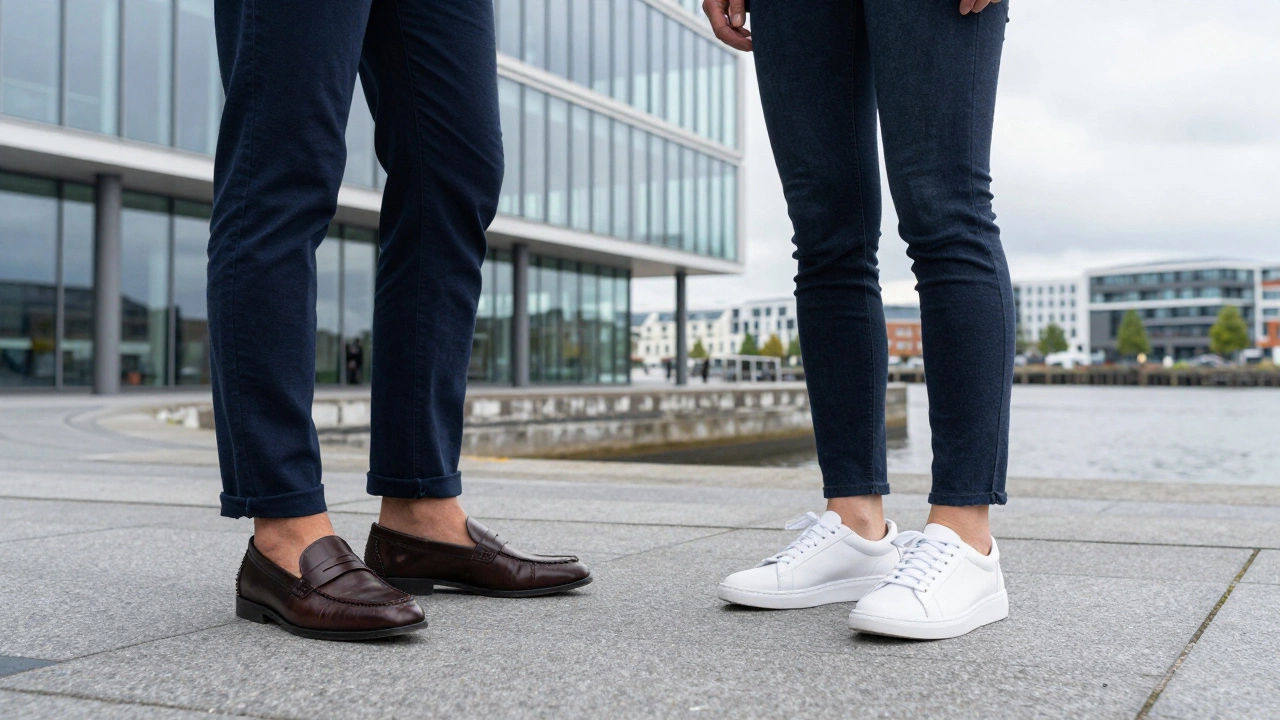
How to Transition if You're Hooked on the Comfort
If you've grown accustomed to the ease of Crocs but need to level up your work wardrobe, you don't have to suffer through blisters in stiff dress shoes. There are ways to get that "clog feel" without looking like you're headed to the beach. First, look for "Comfort Technology" in professional brands. Many modern office shoes now use memory foam or EVA midsoles that mimic the bounce of foam clogs. Second, consider a hybrid shoe. There are professional clogs made of high-quality leather that offer the same wide toe box and ease of slip-on entry but look appropriate for a medical or professional setting. Lastly, remember the rule of the "First Day." When starting a new job in Ireland, always lean toward the more formal side of the dress code. It's much easier to dress down after a week once you see what your colleagues are wearing than it is to be called into the manager's office on day one because your shoes are too casual.Are Crocs allowed in Irish hospitals?
Generally, yes, but with a catch. Most hospitals prefer or require the "Work" version of Crocs, which has no holes in the top. This is essential for hygiene and safety to prevent spills or sharps from contacting the skin. Always check your specific department's policy.
Can I wear Crocs in a retail job on Grafton Street?
It depends on the store. High-end boutiques will almost certainly forbid them. However, in some very casual or youth-oriented stores, they might be acceptable. The safest bet is to wear smart sneakers until you've confirmed the dress code with your manager.
Do Crocs meet HSA safety standards for warehouses?
No. Standard Crocs do not provide the impact protection or ankle stability required for industrial environments. For warehouse work, you must wear certified safety footwear with steel or composite toe caps to comply with Irish health and safety laws.
Are there specific Crocs models made for work?
Yes, the Crocs Work line is designed specifically for professionals. These models usually feature a closed-toe design and "Crocs Grip" slip-resistant treads, making them more suitable for kitchens and clinics than the classic leisure clogs.
Will wearing Crocs to a corporate office in Dublin look bad?
In most corporate settings, yes. Even in "business casual" environments, Crocs are often seen as too informal. Unless you are in a highly creative or technical role where the culture is explicitly relaxed, stick to loafers, flats, or clean trainers.