Irish Sneaker Weather Checker
Select your Air Jordan model to see how it holds up against the notorious damp Irish climate.
Material Analysis
Irish Climate Impact
Recommended Care Routine
Select a model and click "Check Suitability" to see detailed analysis.
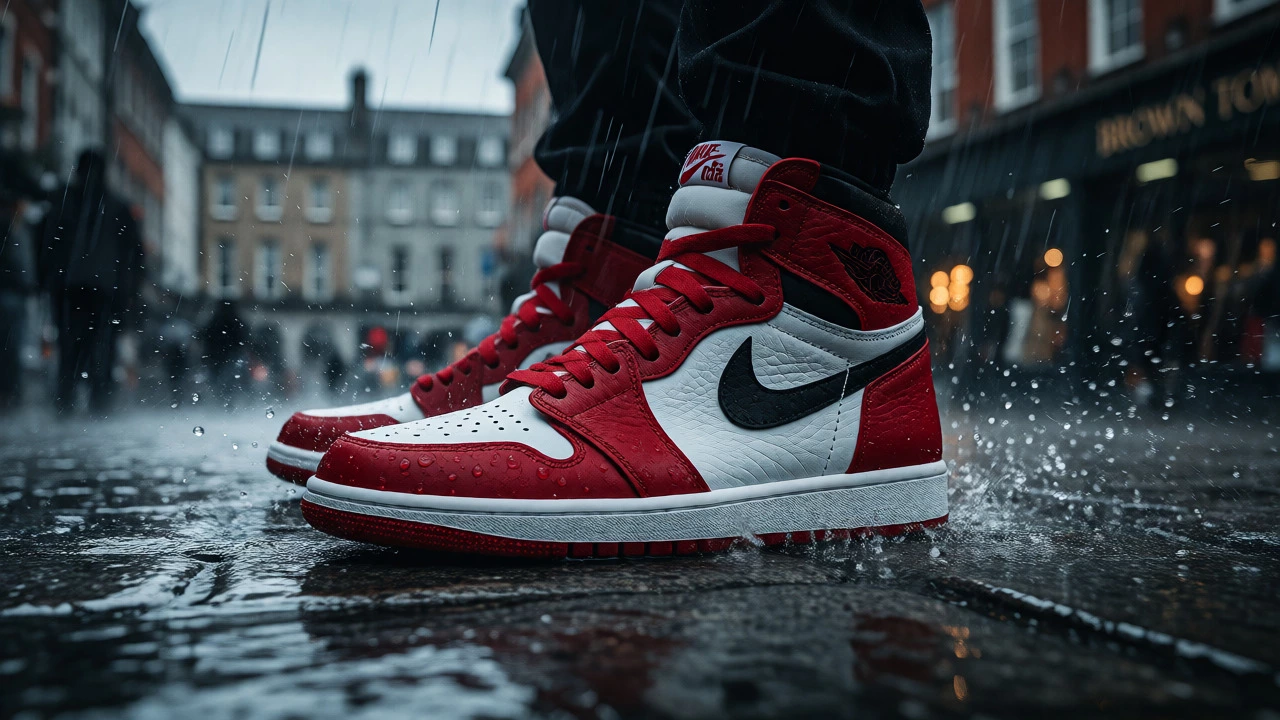
You’re standing outside Brown Thomas on Grafton Street in Dublin, the rain is doing that sideways thing it does when you’ve just bought new shoes, and you’re staring at your fresh pair of Air Jordan 1s. They look pristine. But are they actually leather? And if they are, will this damp Irish weather ruin them before you even get home?
It’s a question that pops up constantly in sneaker forums from Cork to Belfast: Air Jordans are often assumed to be all-leather, but the reality is way more nuanced. The answer depends entirely on which model you buy, where you buy it, and what year it was made. For anyone living in Ireland, understanding the material composition isn’t just about style-it’s about survival against our notorious damp climate.
The Short Answer: It Depends on the Model
No, not all Air Jordans are made of leather. While the original Air Jordan 1 did use genuine leather, modern iterations mix things up significantly. Some models use synthetic polyurethane (PU), others use nubuck, suede, or textile mesh. If you’re looking for pure durability against Irish rain, you need to know exactly what you’re buying.
Here’s the breakdown by common models found in Irish retailers like JD Sports or Nike.com:
| Model | Primary Upper Material | Irish Weather Suitability |
|---|---|---|
| Air Jordan 1 High OG | Genuine Leather (Tumbled) | High - Durable but needs protection |
| Air Jordan 4 Retro | Mix of Leather, Mesh, and Synthetic | Medium - Mesh absorbs water quickly |
| Air Jordan 11 Low | Patent Leather and Ballistic Nylon | High - Patent leather repels water well |
| Air Jordan 1 Mid | Often Synthetic PU or Coated Leather | Medium - Less breathable, can crack |
| Air Jordan 3 | Nubuck and Elephant Print (Synthetic) | Low - Nubuck hates rain |
Why the Material Matters in Ireland
In Dublin or Galway, you don’t have the luxury of dry summers that American sneakerheads take for granted. Our average rainfall is high, and humidity stays consistent year-round. Genuine leather is tough, but it’s porous. If left untreated, it absorbs moisture, leading to mold inside the shoe and cracking on the outside.
Synthetic materials, like those found in many Air Jordan 1 Mids, might seem better because they don’t absorb water as easily. But here’s the catch: synthetics don’t breathe. In a crowded pub or on a packed Luas tram, your feet will sweat. That trapped moisture attacks the glue holding the sole together, causing delamination-the bane of any sneaker collector.
Then there’s nubuck. Think of the soft, brushed texture on an Air Jordan 3. It looks incredible in photos. But one splash from a passing car on the M50, and you’ll have dark stains that are nearly impossible to remove without professional cleaning.
How to Spot Fake Leather vs. Real Leather
With the resale market booming in cities like Dublin and Cork, fake Jordans are everywhere. Sellers at flea markets or online groups might claim their pairs are "real leather," but they could be using cheap vinyl. Here’s how to check before you hand over your cash:
- The Smell Test: Genuine leather has a distinct, earthy scent. Synthetics smell like plastic or chemicals. If it smells like a new car dashboard, it’s likely fake or low-grade PU.
- The Pore Check: Look closely at the surface. Real leather has natural imperfections and pores. Synthetic leather often has a uniform, stamped pattern that repeats perfectly.
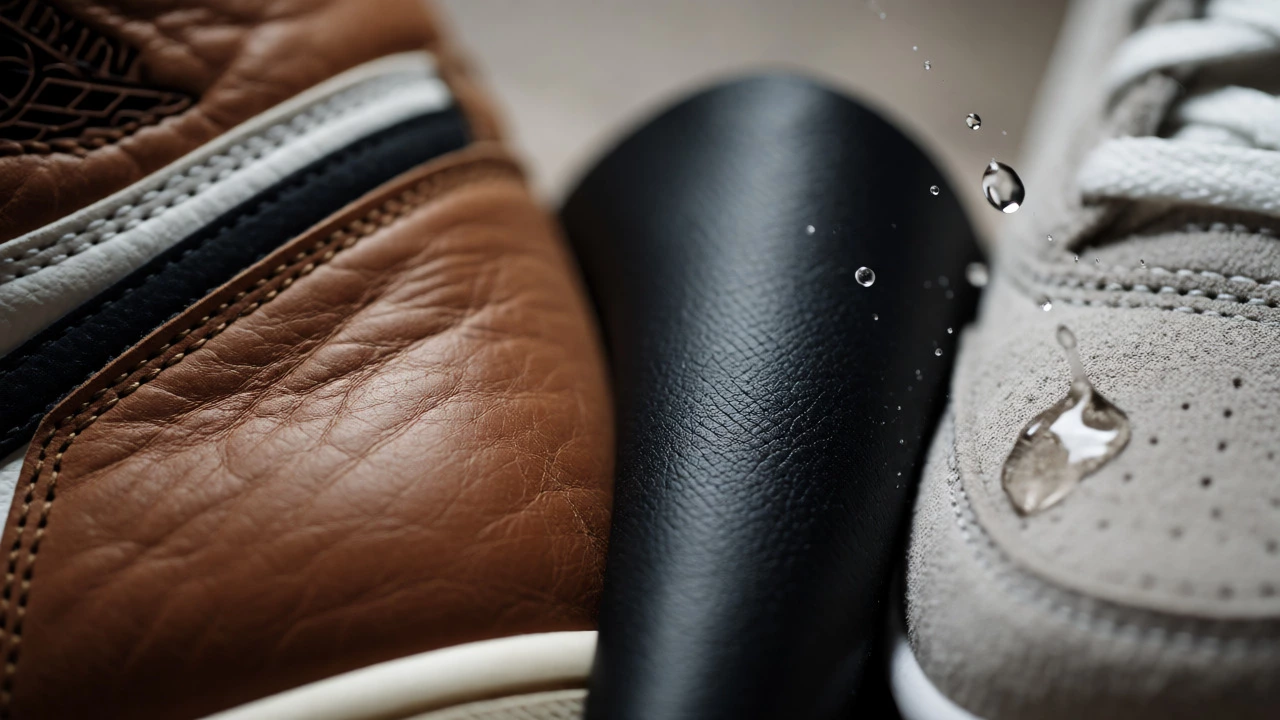
- The Water Drop: Place a tiny drop of water on an inconspicuous area. On real leather, it will slowly soak in and darken the spot. On synthetic, it will bead up and sit on the surface.
- The Crease Pattern: When you bend the toe box, real leather creates fine, irregular wrinkles. Synthetic materials tend to crease in large, sharp folds or crack along stress lines.
Caring for Your Jordans in the Irish Climate
If you live in Ireland, owning leather Jordans means accepting a maintenance ritual. You can’t just throw them in the washing machine-please don’t. Here’s a practical routine used by collectors in the city:
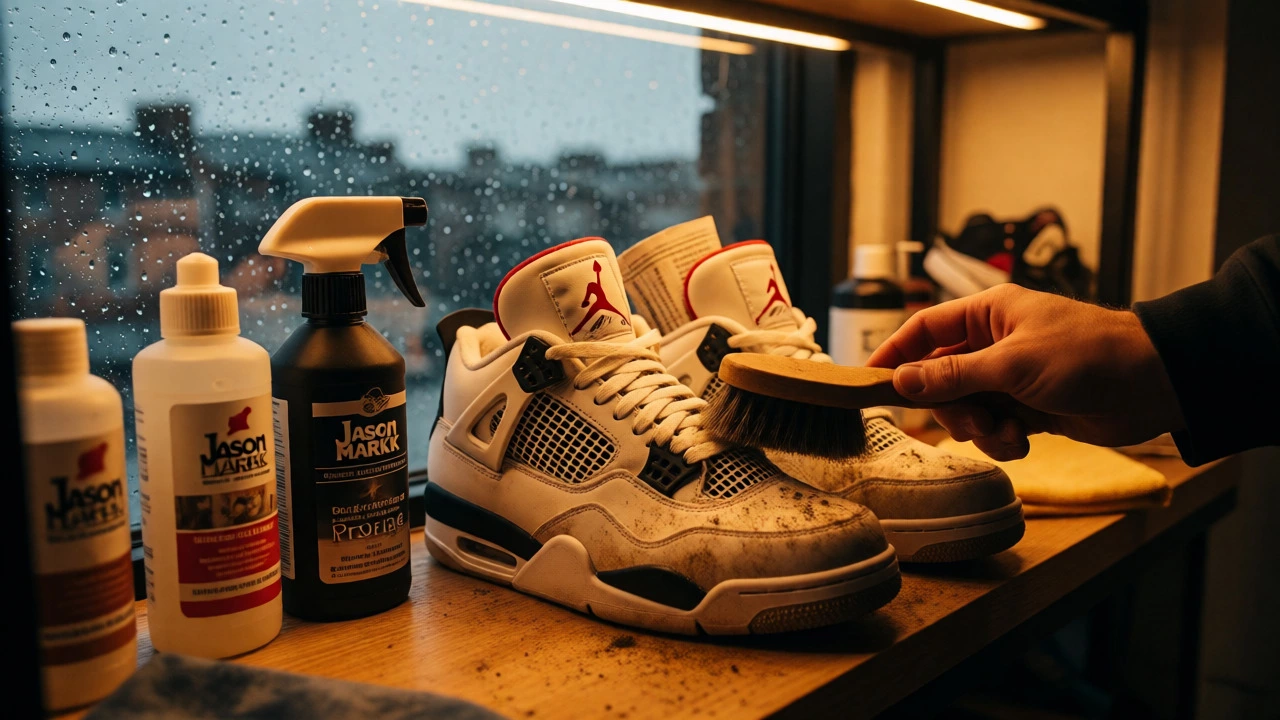
- Waterproof Immediately: As soon as you unbox them, apply a silicone-free waterproof spray. Brands like Jason Markk or Crep Protect are widely available in Irish sports stores. Spray in a well-ventilated area, let it dry for 24 hours, then repeat. This creates a barrier against the damp air.
- Dry Properly: If your shoes get soaked walking from Trinity College to the bus stop, stuff them with newspaper. Do not put them on a radiator. The direct heat will warp the rubber sole and crack the leather. Let them air-dry at room temperature.
- Clean Regularly: Use a mild soap and a soft brush. For leather, follow up with a conditioner every few months to keep the material supple. Dry leather cracks; conditioned leather lasts years.
- Rotate Your Pairs: Don’t wear the same pair two days in a row. Give them 24 hours to air out. This reduces bacterial growth and keeps the shape intact.
Where to Buy Authentic Jordans in Ireland
Finding legit pairs can be tricky. Counterfeits are sophisticated now. Stick to authorized retailers to avoid headaches. In Dublin, Brown Thomas and JD Sports on Henry Street are reliable. For rarer drops, check out independent boutiques like Sneaker Lab in Dublin City Centre.
Online, Nike.com ships directly to Ireland with clear return policies. Be cautious with third-party resellers unless they offer authentication services. If you’re buying second-hand, ask for close-up photos of the stitching and the tongue label. Authenticity cards aren’t always included in older releases, so rely on the physical details.
The Environmental Angle
There’s a growing conversation in Ireland about sustainable fashion. Many younger buyers prefer vegan options. Interestingly, some newer Jordan collaborations use recycled materials or plant-based leathers. These alternatives perform differently-they’re often lighter and less durable than traditional cowhide, but they’re kinder to the environment. If sustainability matters to you, check the product description for terms like "vegan leather" or "recycled polyester."
However, durability is also sustainability. A pair of genuine leather Jordans that lasts five years is arguably greener than three pairs of cheap synthetics that fall apart in eighteen months. Consider the long-term value when making your choice.
Frequently Asked Questions
Are all Air Jordan 1s made of leather?
No. While the original Air Jordan 1 High OG uses genuine tumbled leather, many mid-tier versions like the Air Jordan 1 Mid use synthetic polyurethane (PU) or coated canvas. Always check the product tag or description for specific material details.
Can I wear Air Jordans in the rain in Ireland?
You can, but you must protect them first. Apply a quality waterproof spray designed for leather or suede. Avoid wearing suede models (like the AJ3) in heavy downpours, as water stains are difficult to remove. Patent leather models (like the AJ11) handle wet conditions best.
How do I clean muddy Air Jordans?
Let the mud dry completely first. Then, use a stiff brush to remove loose dirt. Follow up with a specialized sneaker cleaner solution and a soft-bristle brush. Wipe with a microfiber cloth. Never submerge leather shoes in water, as this damages the adhesives and structure.
Is synthetic leather worse than real leather?
Not necessarily. Synthetic leather is more resistant to water and easier to clean initially, but it lacks breathability and tends to crack faster than genuine leather. Real leather ages better and develops a patina, but requires regular conditioning to prevent drying out in indoor heating during Irish winters.
Where can I find authentic Jordans in Dublin?
Authorized retailers include Nike stores, JD Sports, Brown Thomas, and Flannels. For limited editions, consider reputable consignment shops like Sneaker Lab or verified sellers on platforms like StockX that authenticate products before shipping to Ireland.