Slimming Dress Calculator
Find Your Perfect Slimming Dress
Based on Ireland's climate, lighting, and cultural preferences
Recommended Silhouette
Best Colors for Ireland
Ideal Fabrics
Irish Style Tip
What Type of Formal Dress Makes You Look Slimmer in Ireland?
In Ireland, where autumn rains turn city pavements into mirrors and winter nights call for warmth without bulk, the right evening dress doesn’t just make you look good-it helps you feel confident in spaces where style meets practicality. Whether you’re heading to a Galway arts gala, a Dublin wedding at the Clayton Hotel, or a winter soirée at the National Gallery, the goal isn’t just to dress up-it’s to dress slimming in a way that works with Ireland’s damp chill, uneven lighting, and understated elegance.
Forget the over-the-top sparkle of American red carpets. Irish formal events lean toward muted tones, structured silhouettes, and fabrics that hold their shape without clinging. You don’t need to look like you’re on the cover of Vogue. You need to look like you belong-comfortable, put-together, and effortlessly elongated.
Why Fit Matters More Than Fabric in Ireland
Many assume that a stretchy, clingy dress will hug curves and make you look sleek. But in Ireland’s dimly lit pubs turned event spaces-where candlelight flickers off stone walls and overhead lights are either too harsh or too soft-a dress that hugs too tightly can create unflattering bulges. Instead, the secret lies in structure.
Look for dresses with vertical seams. These aren’t just decorative. They create a visual line that draws the eye upward and downward, making your frame appear longer. Brands like Clare O’Leary an Irish designer known for tailored evening wear with hidden structure and Browns of Donegal a Cork-based label that blends traditional wool textures with modern evening cuts build dresses with internal boning and darted seams that shape without squeezing.
Even in Dublin’s trendiest boutiques like St. Stephen’s Green Boutique or The Dressmaker on Grafton Street, the most popular evening pieces have a defined waistline that sits just above the natural waist-not too high, not too low. This placement creates an optical illusion: the torso appears shorter, the legs longer.
Best Silhouettes for a Slimmer Look
Not all evening dresses are created equal. Here are the three silhouettes that consistently work best in Ireland’s climate and culture:
- Empire Waist - A high waistline just below the bust lifts the torso and flows gently over the midsection. It’s ideal for those who want to minimize the stomach area without compression. Look for styles in dark navy, charcoal, or deep burgundy-colours that absorb light and vanish in low-light settings like the Gaiety Theatre or a Wicklow manor.
- Fit-and-Flare - This is the Irish woman’s go-to. It skims the hips, then flares just below the knee, creating a balanced, A-line shape. It hides the thighs and adds movement without bulk. Brands like Liam & Co. a Belfast-based label offering structured fit-and-flare gowns with hidden stretch panels use this cut in 80% of their winter collections.
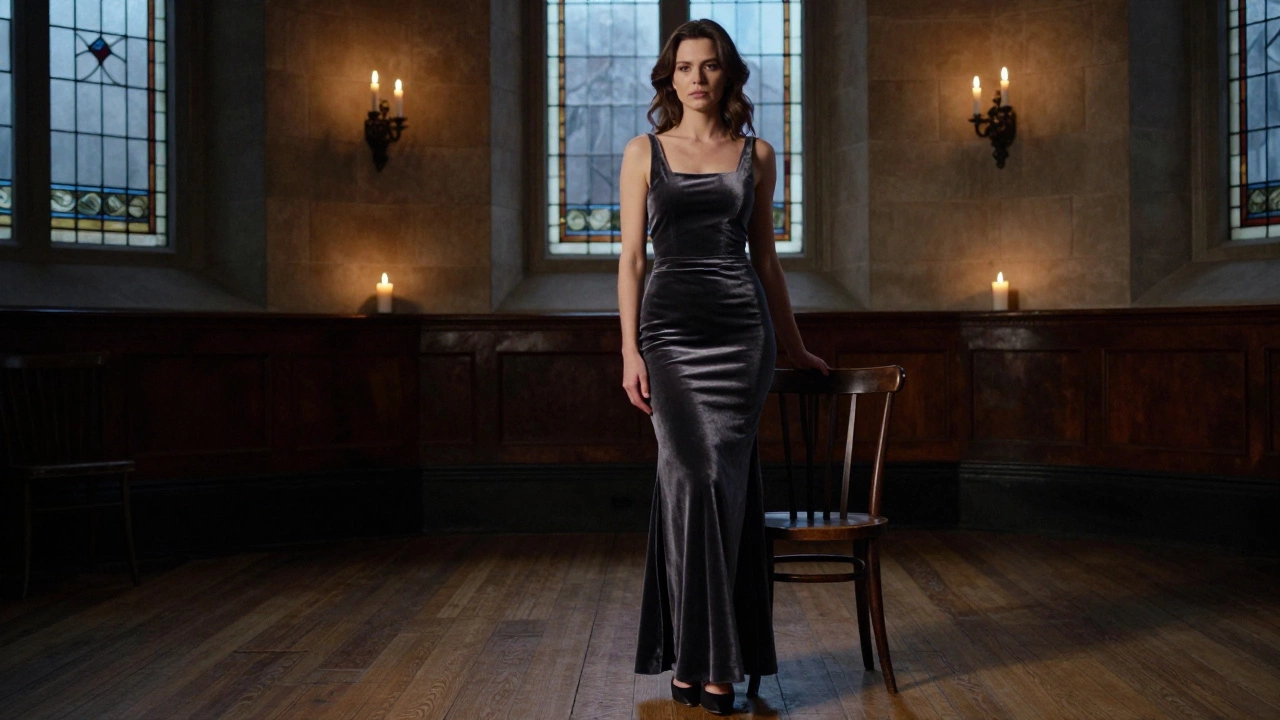
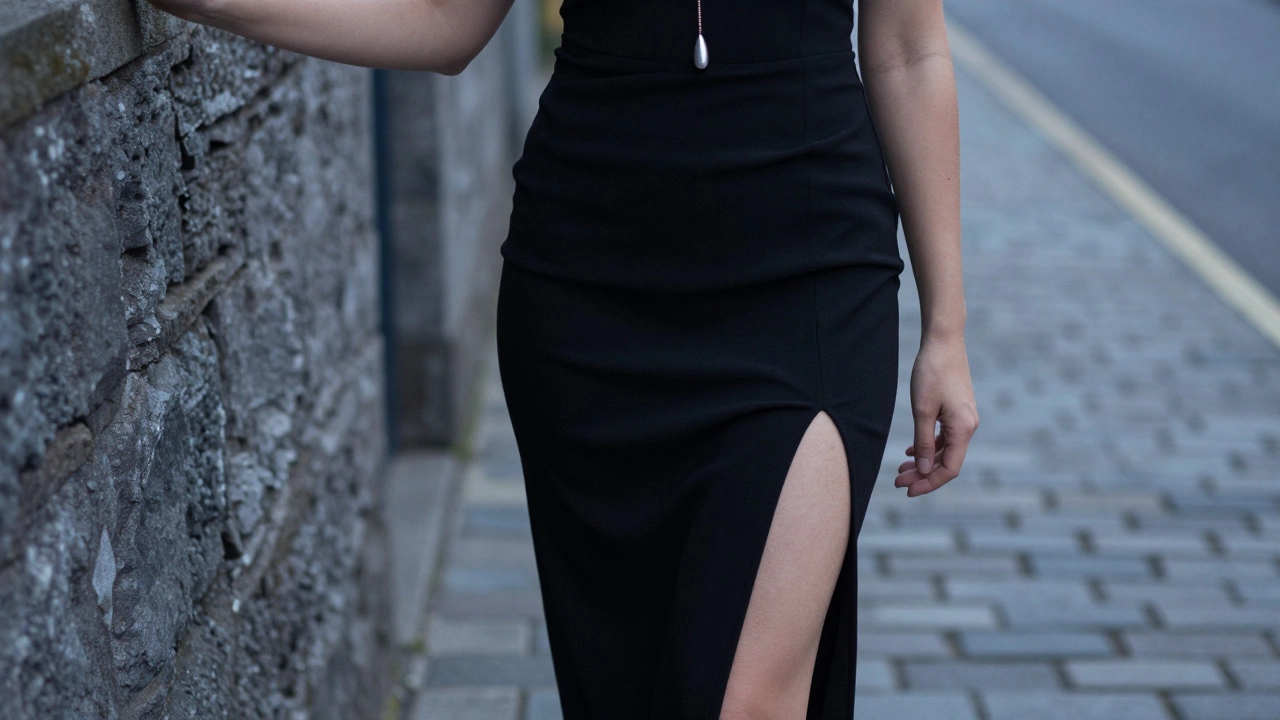
- Sheath with Side Slit - A sleek, body-hugging sheath dress with a thigh-high slit on one side adds length and subtle sex appeal without tightness. The slit draws attention downward, elongating the leg. Choose one in a matte fabric like crepe or velvet-not shiny. Shine catches the light and highlights every bump. Matte absorbs it.
Colour, Texture, and the Irish Light
Irish weather doesn’t just affect your coat-it affects how fabric behaves. Bright white or pastel dresses look washed out under grey skies. Darker shades are your allies.
Stick to:
- Black - Always works, but only if the cut is sharp. A poorly fitted black dress looks like a sack.
- Deep green - A nod to Ireland’s landscape. Think forest, not emerald.
- Charcoal - Less harsh than black, more sophisticated than grey.
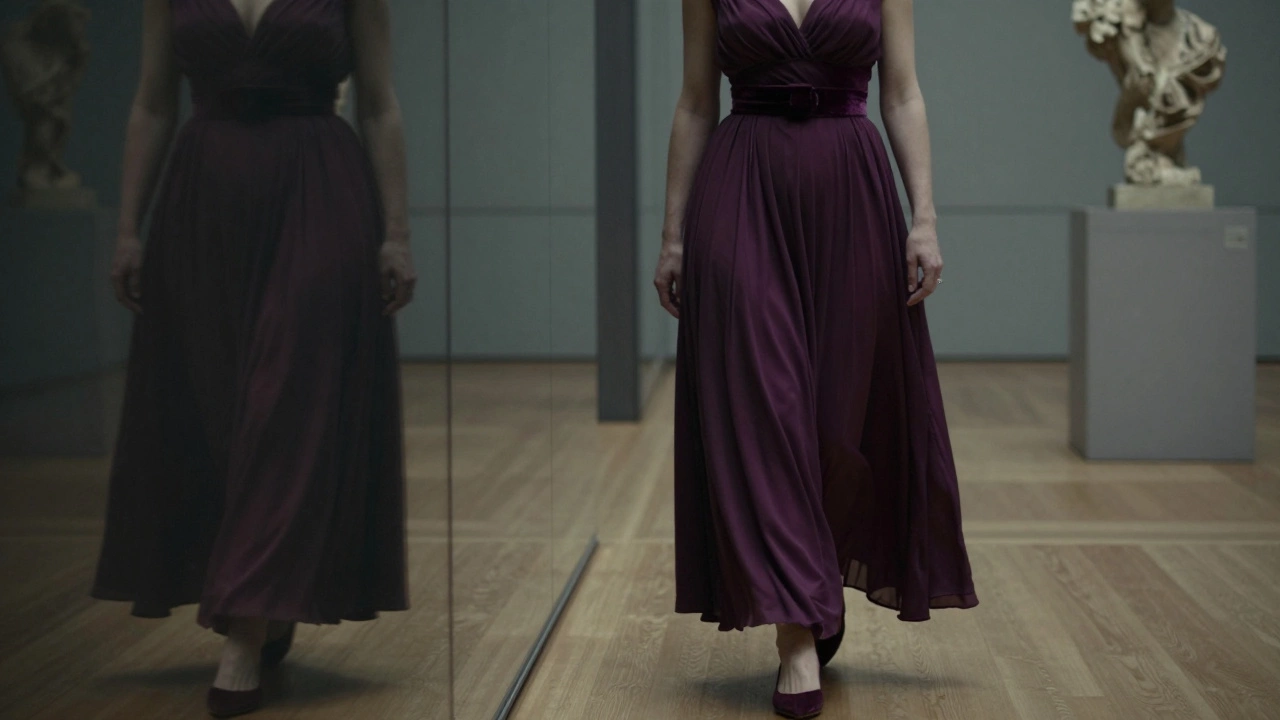
- Plum - A rich, unexpected choice that flatters most skin tones under candlelight.
Avoid shiny fabrics like satin or sequins unless you’re attending a New Year’s Eve party in Cork. In most Irish formal settings, a matte finish is preferred. It doesn’t catch the light, so it doesn’t highlight problem areas. Velvet, wool-blend crepe, and structured jacquard are your best friends.
Necklines and Sleeves: What to Choose
Irish winters mean layering-even indoors. But that doesn’t mean you have to hide.
Opt for:
- Off-the-shoulder - Draws attention upward to the collarbones and shoulders, slimming the waist by contrast.
- Deep V-neck - Creates a vertical line that elongates the torso. Keep it modest-no plunging below the sternum. In Ireland, elegance is in restraint.
- Three-quarter sleeves - Perfect for chilly nights. A fitted sleeve ending just below the elbow adds structure without bulk. Avoid puffy sleeves-they add width.
Avoid turtlenecks or high necklines unless paired with a bold statement necklace. They cut the neck and make the head look heavier.
Shoes and Accessories: The Final Touch
Even the best dress can be undone by the wrong shoes. In Ireland, you’ll likely walk on cobblestones, wet grass, or uneven stone paths. A 2.5-inch heel is the sweet spot: enough to lengthen the leg, not enough to sink into a Dublin puddle.
Choose:
- Pointed-toe pumps in black patent or matte leather
- Strappy sandals with thin ankle straps-these visually extend the leg
- Flat embellished loafers for garden parties or coastal weddings (yes, they’re acceptable)
Accessories should be minimal. A single statement piece-a long pendant, a slim cuff bracelet-works better than layered necklaces. Too much detail around the neck or shoulders breaks the vertical line.
Where to Shop in Ireland
You don’t need to fly to Milan. Ireland has quietly built a reputation for well-made, body-conscious evening wear:
- Clare O’Leary (Dublin) - Known for structured gowns with hidden corsetry.
- Browns of Donegal (Donegal) - Uses locally woven wool blends in dark tones.
- Liam & Co. (Belfast) - Focuses on fit-and-flare designs for Irish body types.
- The Dressmaker (Grafton Street, Dublin) - Offers custom fittings. Bring your measurements and a photo of the venue.
- Claremont Boutique (Galway) - Specialises in dark, textured fabrics for autumn events.
Many of these stores offer in-person fittings. Don’t skip this. A dress that fits perfectly on the rack can look completely different when you’re standing on a stone floor in a drafty ballroom.
Real Irish Examples
Last winter, at the Galway Film Fleadh, attendees wore dresses that looked like they’d been designed for rainy nights. A woman in a charcoal fit-and-flare gown with a side slit walked into the Town Hall without a single comment-because it moved with her, didn’t cling, and vanished in the low light. Another wore a deep plum empire waist dress with a velvet belt. No one noticed her waistline-they noticed her confidence.
These aren’t fashion show pieces. They’re practical, beautiful, and designed for real life in Ireland.
Final Rule: It’s Not About Hiding-It’s About Highlighting
Slimming doesn’t mean shrinking. It means guiding the eye. A dress that works in Ireland doesn’t try to erase curves-it enhances your natural shape with structure, shadow, and smart lines. It lets you walk into a room without adjusting your hem, without worrying about how the light hits your stomach, without second-guessing your silhouette.
When you choose the right cut, the right colour, and the right fabric, you don’t look slimmer-you look like yourself, just more at ease. And in Ireland, that’s the most elegant thing you can wear.
Can I wear a long dress to an Irish formal event?
Yes, but keep the hemline above the floor unless you’re at a black-tie gala. In Ireland, floor-length dresses often drag on wet pavement or cobblestones, especially in Dublin or Galway. A slight train or a slit helps. Most formal events here are cocktail or semi-formal, so a tea-length or midi dress is more practical and stylish.
Are dark colours really better in Ireland?
Absolutely. Ireland’s natural light is soft and diffused, especially from October to March. Light-coloured dresses can look washed out or make you appear larger under grey skies. Dark tones absorb light and create depth, which naturally slims the silhouette. Think of it as wearing shadow-it doesn’t hide you, it frames you.
Should I avoid lace in Ireland?
Not entirely, but be selective. Fine lace over a solid lining works well. But bulky lace, especially in cream or white, can add visual bulk and catch the light in unflattering ways. If you love lace, choose it in black or deep green, and make sure it’s layered over a smooth underlayer.
What’s the best fabric for Irish winters?
Wool blends, crepe, and structured jacquard are ideal. They hold shape, resist wrinkles, and provide warmth without bulk. Avoid thin chiffon or stretchy jersey-they cling when damp and lose structure in cool air. Velvet is excellent for winter events-it’s rich, warm, and matte.
Do I need to spend a lot on a slimmer dress in Ireland?
Not necessarily. Brands like Clare O’Leary and Liam & Co. offer pieces between €250-€500 that last for years. Many Irish boutiques also have sample sales in January and September. A well-cut dress doesn’t need to be designer-it needs to be tailored to your body. A good tailor can transform a €150 dress into something that looks like €800.
When you’re ready to choose your next evening dress, remember: in Ireland, the best look isn’t the flashiest-it’s the one that lets you move through the world without a second thought.