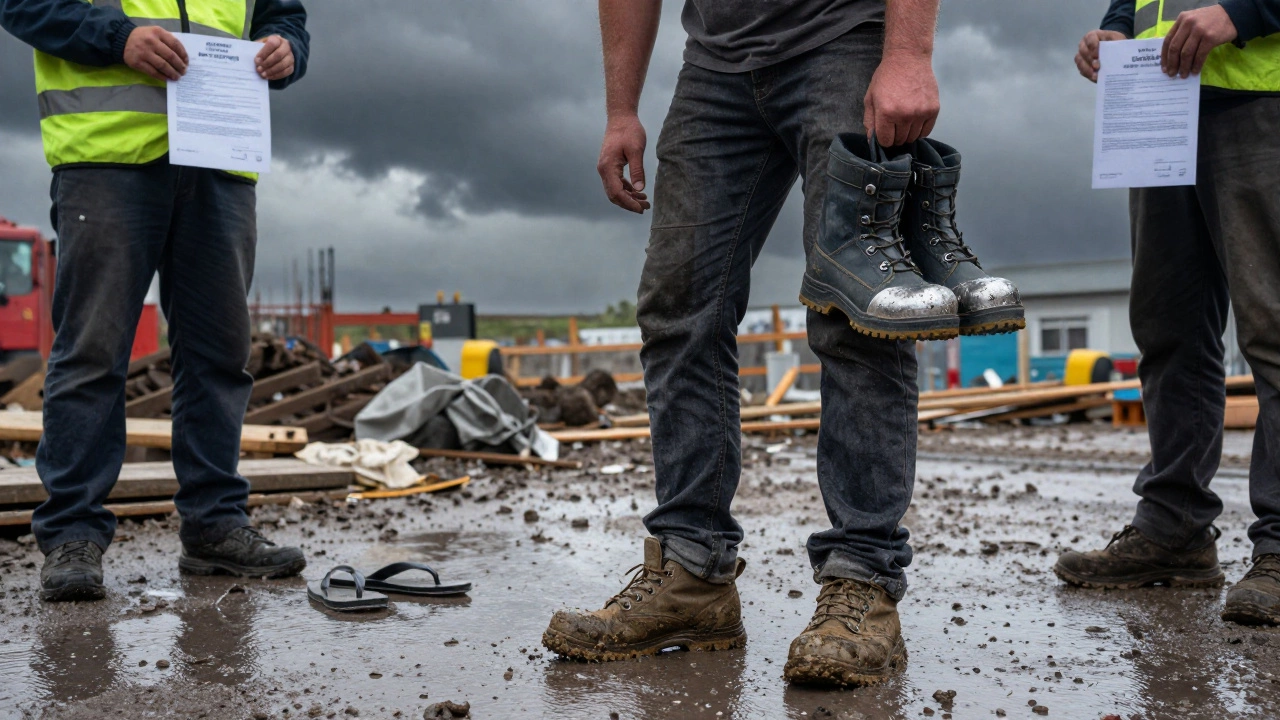
On any job site in Ireland-whether you're laying bricks in Galway, wiring a new build in Cork, or clearing debris after a storm in Donegal-the right footwear isn't just about comfort. It’s about survival. The Irish climate alone makes poor footwear a serious risk: wet ground, muddy fields, slippery cobbles, and sudden downpours turn even the most ordinary worksite into a hazard zone. Yet every week, safety officers across the country see workers still wearing the wrong kind of shoes. And it’s not just about breaking rules. It’s about preventing serious injury.
Flip-Flops and Slippers: The Biggest No-Go
It might seem obvious, but you’d be surprised how often flip-flops, slippers, or canvas sneakers show up on Irish job sites. Some workers think, "It’s just a quick job," or "I’m only here for an hour." But in Ireland, where construction sites often double as wetland crossings after rain, and where mud can swallow a shoe whole, your feet need protection. Flip-flops offer zero ankle support, no slip resistance, and zero protection from falling tools or sharp rebar. A single misstep on a wet scaffold in Limerick could mean a fractured ankle-or worse. There’s no such thing as "just a quick task" when your feet are exposed.
High Heels and Fashion Boots: A Dangerous Misstep
Some tradespeople, especially those working in mixed environments like renovation sites or event build-outs in Dublin or Kilkenny, still wear stylish leather boots or even low-heeled dress shoes. These might look professional, but they’re designed for office floors, not uneven timber decking or muddy trench edges. High heels concentrate pressure on small areas, increasing the risk of sinking into soft ground or twisting on uneven surfaces. In Ireland, where many job sites are built on centuries-old, uneven stone foundations, a heel can easily catch in a gap between cobblestones or old brickwork. The Health and Safety Authority (HSA) has documented multiple cases where workers suffered crushed toes or sprained ankles after wearing fashion-forward footwear on sites in Sligo and Waterford.
Canvas Sneakers and Casual Trainers: The Silent Killer
Brands like Adidas, Nike, or even local Irish favourites like O’Neills casual trainers might feel comfortable, but they’re not built for industrial environments. Canvas material absorbs water like a sponge-something you’ll learn fast during an Irish spring. Once soaked, these shoes lose grip, become heavy, and take days to dry. Worse, they offer no puncture resistance. A dropped nail, a broken piece of metal, or even a sharp stone can pierce through the sole. In rural areas like Kerry or Mayo, where job sites often border farmland or old drainage ditches, the ground is laced with hidden hazards. A pair of standard sneakers won’t save you from a puncture wound that could lead to infection, especially in damp conditions.
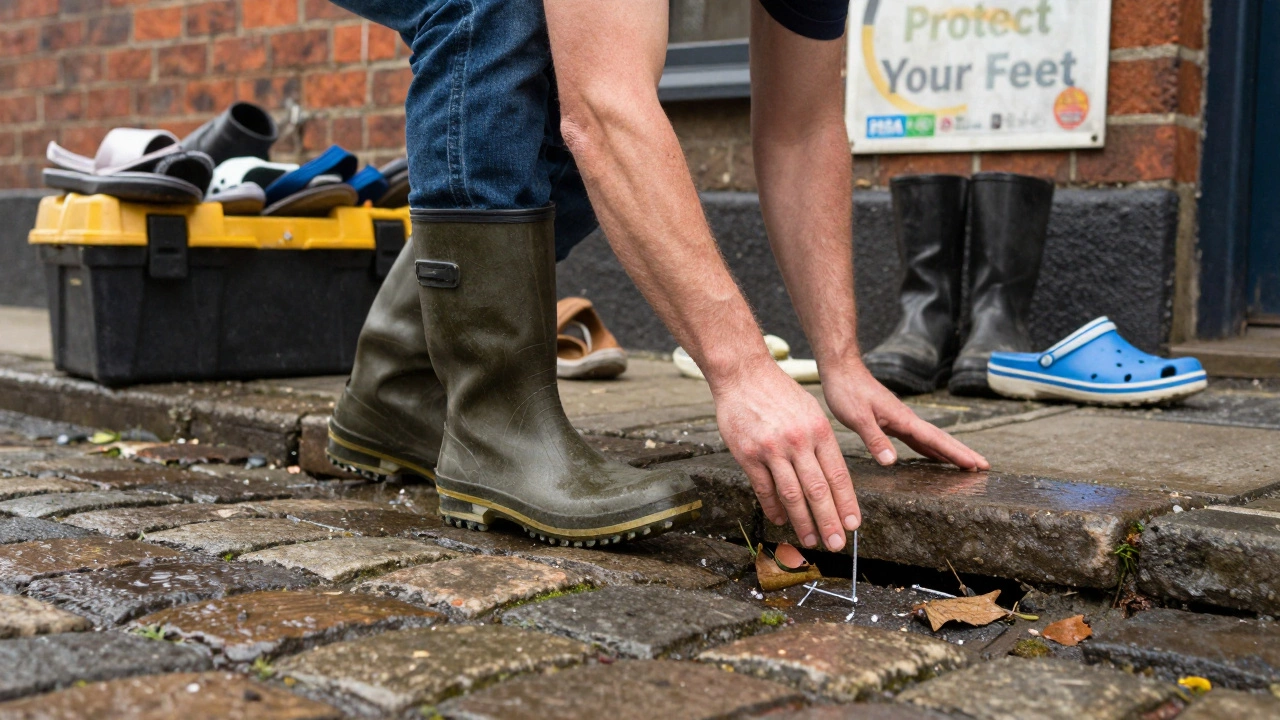
Plastic or Rubber Clogs: Common, But Not Safe
You’ll see these on farms, in some food processing plants, or even on small DIY sites. But clogs-especially cheap plastic ones from discount stores-are not safety footwear. They lack steel toes, compression-resistant soles, and the slip-resistant tread needed for Ireland’s wet conditions. Many clogs have smooth soles designed for indoor use, which means they’re dangerously slippery on steel grating, wet concrete, or oily surfaces common on construction sites. In fact, a 2024 HSA report showed that 18% of foot injuries on Irish job sites involved workers wearing non-compliant clogs. That’s not a fashion choice-it’s a preventable accident waiting to happen.
What Should You Wear Instead?
The answer is simple: certified safety boots that meet EN ISO 20345 standards-the European safety standard adopted in Ireland. Look for these key features:
- Steel toe cap to protect against falling objects
- Slip-resistant sole (marked SRA, SRB, or SRC) for wet and oily surfaces
- Puncture-resistant midsole to stop nails, glass, or metal shards
- Waterproof membrane like Gore-Tex or similar tech to keep feet dry in Irish rain
- Ankle support to reduce twisting on uneven ground
Brands like Blundstone (popular in Ireland for their durability), Dr. Martens Work, Red Wing, and local Irish suppliers like Workwear Direct or Irish Safety Gear offer certified options. Many employers in Ireland now provide these as part of PPE (Personal Protective Equipment) packages, especially on sites registered with the HSA. If your employer doesn’t supply them, ask. It’s your legal right under Irish safety law.
Why This Matters More in Ireland
Ireland’s weather doesn’t wait for you. Rainfall averages over 1,000mm per year in many regions, with the west coast-like Connemara or the Dingle Peninsula-seeing double that. Job sites don’t shut down for rain; they just get slicker. The same boots that work on a dry Texas site will fail in a Dublin alleyway after a storm. Irish construction sites are also older, more fragmented, and often built on reclaimed land or ancient stone foundations. There’s no such thing as a "flat, even surface" here. Your boots need to handle the real terrain-not the one in the manual.
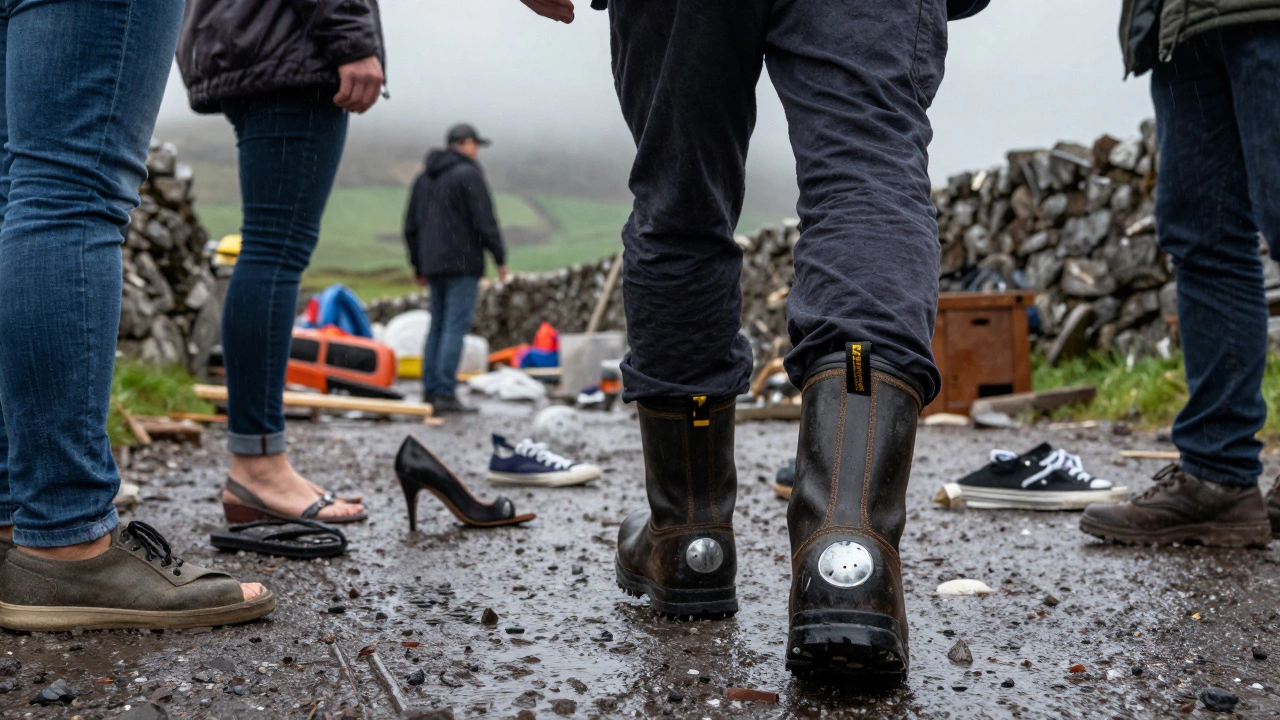
Real Consequences, Real Stories
Two years ago, a labourer in Wexford slipped on a wet metal ladder while wearing standard trainers. He broke his ankle and was off work for six months. His insurance claim was denied because he wasn’t wearing approved safety footwear. Another case in Louth involved a tiler who stepped on a loose nail while wearing rubber boots without puncture resistance. He developed a deep infection that required hospitalisation. These aren’t rare. They’re preventable.
What to Do If You’re Asked to Work in Unsafe Footwear
If your employer asks you to work without proper safety boots-or tries to cut corners by letting you wear "just anything"-you have rights. Under the Safety, Health and Welfare at Work Act 2005, employers in Ireland must provide suitable PPE. You can report this anonymously to the HSA. You can also speak to your union rep. Most construction unions in Ireland, including SIPTU and Unite, have clear guidelines on footwear standards. Don’t be silent. Your feet are your foundation.
Final Rule: When in Doubt, Walk Away
If you show up to a job site and see others wearing flip-flops, slippers, or worn-out sneakers, don’t assume it’s okay. Ask. If you’re told, "It’s fine here," walk away. A site that ignores basic safety rules on footwear is likely cutting corners elsewhere too. In Ireland, where community and safety are deeply tied to pride in work, wearing the right boots isn’t just a rule-it’s a sign of professionalism.
Don’t let a pair of cheap shoes cost you your mobility, your income, or your future. In Ireland’s unpredictable weather and rough terrain, your boots are your first line of defence. Choose them wisely.
Can I wear waterproof hiking boots on a construction site in Ireland?
Waterproof hiking boots are great for trails, but they’re not certified for industrial job sites. They lack steel toes, puncture-resistant soles, and the specific slip ratings (SRA/SRC) required by Irish safety law. If you’re on a construction site, you need boots marked EN ISO 20345. Hiking boots might keep your feet dry, but they won’t protect you from a falling brick or a dropped tool.
Are steel-toe boots uncomfortable in Ireland’s cold weather?
Modern safety boots in Ireland are designed with thermal insulation and moisture-wicking linings. Brands like Blundstone and Dr. Martens Work now offer models with insulated linings that work in freezing conditions-common in Wicklow or Donegal winters. You don’t have to choose between warmth and safety. Look for boots with a "cold-rated" label and check for insulation ratings like -10°C or lower.
Can I get reimbursed for safety boots if my employer doesn’t provide them?
Yes. Under Irish law, employers must provide PPE at no cost to workers. If they refuse, you can claim reimbursement through your union or file a formal complaint with the Health and Safety Authority. Many employers in Ireland now offer a monthly allowance or a voucher system for approved safety gear. If you’re paying out of pocket, you’re being denied your legal right.
Do I need safety boots for small repair jobs, like fixing a fence?
Yes. Even small jobs carry risk. A falling hammer, a slipping ladder, or a hidden nail can cause serious injury. Irish law doesn’t make exceptions for "small" sites. If you’re working on any property-whether it’s a rural shed in Clare or a backyard renovation in Belfast-you need certified safety footwear. The HSA treats all job sites the same: if there’s a risk, there must be protection.
Where can I buy certified safety boots in Ireland?
You can find certified safety boots at major suppliers like Irish Safety Gear (based in Cork), Workwear Direct (Dublin), or local agricultural stores like Tirlán or Liffey Valley. Online, trusted retailers include SafetyGear.ie and WorkBootsIreland.com. Always check for the EN ISO 20345 stamp on the label. Avoid buying from general marketplaces like Amazon or eBay unless you can verify the certification.