When the lights dim at a Galway wedding or the chatter rises at a Dublin cocktail party, what you wear isn’t just about style-it’s about belonging. In Ireland, evening dresses don’t follow global trends blindly. They adapt. They respect the weather, the occasion, and the quiet pride of local design. Right now, in 2026, the dresses that work here aren’t the ones you see on Milan runways-they’re the ones that survive a March rainstorm on the way to a St. Patrick’s gala, that layer well under a wool coat, and that still look elegant when you’re dancing in a stone-walled pub in Kilkenny.
Length Matters More Than You Think
In Ireland, floor-length gowns are rare outside of royal weddings or formal opera nights. The sweet spot? Mid-calf to just above the ankle. Why? Because Irish winters don’t disappear in March. Even in Dublin, where temperatures hover around 6°C, puddles from sudden showers cling to the streets. A dress that pools on wet pavement is a fashion disaster waiting to happen. Designers like Clare O’Leary and Maya Dunne-both Dublin-based-have made this length their signature. Their collections feature draped silhouettes in wool-blend jacquards and fluid crepes that drape elegantly without dragging. You’ll see these styles at the Irish Fashion Awards and in the windows of Brown Thomas on Grafton Street.
Neutrals Are the New Black
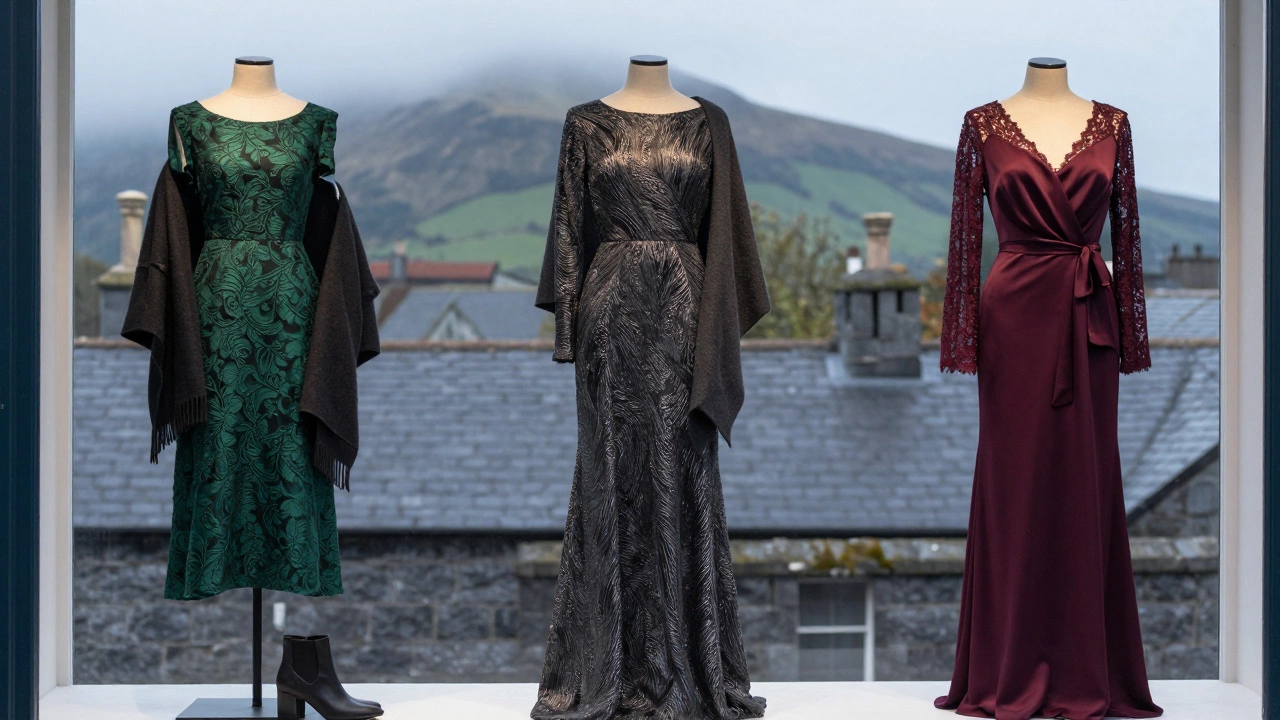
Black is classic, yes-but in Ireland, it’s not the only option. Deep forest green, charcoal grey, and muted burgundy dominate the evening dress scene. These colors don’t just match the country’s landscapes-they match its mood. Think of the peat bogs of County Clare, the slate roofs of Galway, the mist over the Wicklow Mountains. These aren’t just scenery; they’re inspiration. Brands like Stella & Moss and Irish Linen Co. have leaned into this, offering dresses in tones that feel grounded, not stark. A burgundy slip dress from Stella & Moss paired with a cashmere wrap is the go-to look for wedding guests at a countryside estate like Adare Manor.
Sleeves Are the Silent Statement
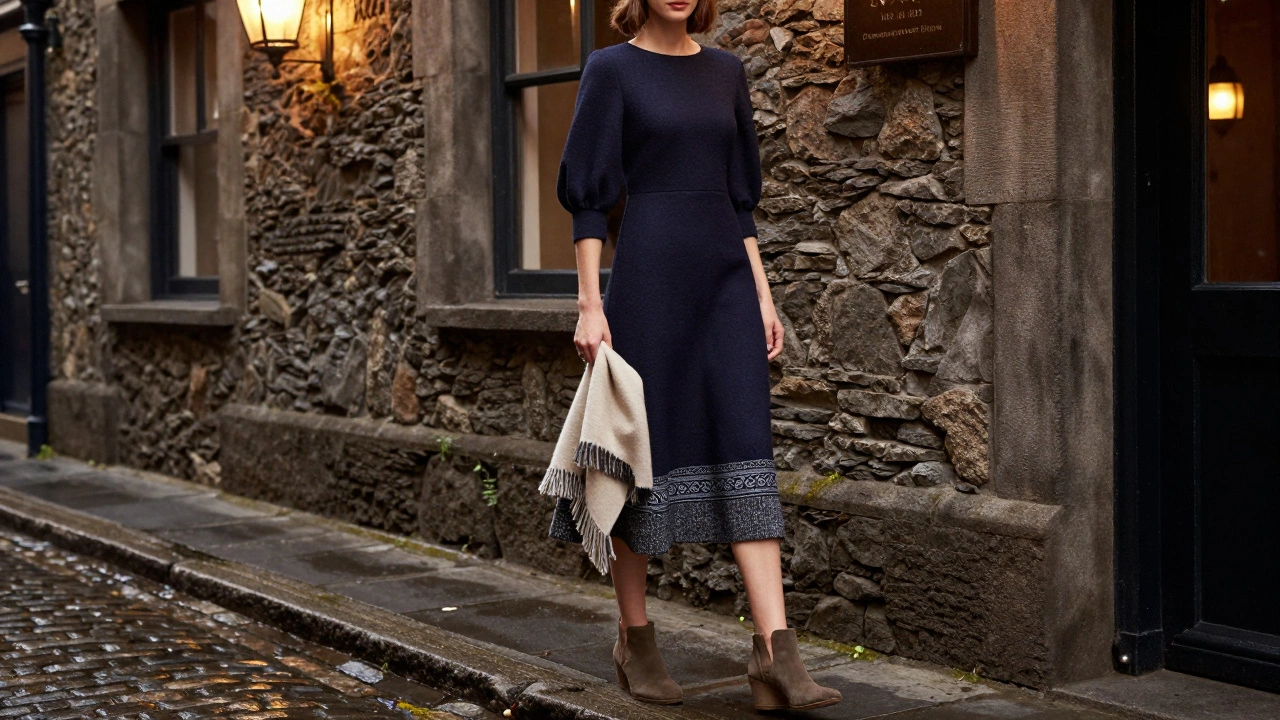
When the wind picks up at an evening event near the coast, bare arms aren’t just chilly-they’re impractical. That’s why cap sleeves, three-quarter bell sleeves, and off-shoulder drapes are everywhere. You’ll find them in collections from Irish Wool Design and Wexford Atelier. One standout design: a navy dress with a gently puffed sleeve that tapers into a fitted bodice-perfect for a spring gala at the Helix in Dublin. The sleeve isn’t just decorative; it’s functional. It keeps you warm, adds structure, and feels more polished than strapless styles in a climate where layers are part of the dress code.
Texture Over Sparkle
sequins? They’re out. In their place: textured weaves, lace overlays, and hand-embroidered floral motifs. Irish designers have moved away from glitz and toward craft. This shift isn’t just aesthetic-it’s cultural. Ireland’s textile heritage runs deep. At the Fleadh Cheoil or the Galway International Arts Festival, you’ll spot women in dresses with subtle embroidery inspired by Celtic knotwork, stitched by artisans in Donegal or Kildare. Donegal Tweed is no longer just for jackets-it’s now woven into evening skirts and bodices. A dress with a tweed panel at the hem, paired with a satin slip, is quietly luxurious. It says you know your history, not just your Instagram feed.
Footwear Is Part of the Dress
You can’t talk about evening dresses in Ireland without talking about shoes. Heels? Yes-but not stilettos. A block heel or low wedge is non-negotiable. Think of the cobbled lanes of Cobh, the uneven stone paths of Kinsale, or the grassy grounds of the National Botanic Gardens during a summer evening reception. A 2-inch heel is the gold standard. Brands like Wexford Footwear and Claddagh Shoes have launched limited-edition evening lines this year, blending Irish leather with minimalist silhouettes. A pair of cognac leather ankle boots with a subtle heel is now as common as a clutch at a Dublin dinner party.
Where to Shop in Ireland
You don’t need to fly to London or Paris to find the right dress. Local boutiques are thriving. In Belfast, McDowell & Co. offers tailored evening pieces with sustainable fabrics. In Cork, the Lanes is a collective of independent designers who rent dresses for events-perfect if you’re a guest at a wedding and don’t want to buy something you’ll only wear once. In Galway, Claddagh Boutique has a curated section of Irish-made evening wear, all under €300. And if you’re shopping online? IrishFashion.ie aggregates local designers, filters by size and occasion, and ships across the island.
What’s Out
Let’s be clear: the big, poofy ballgowns from 2023? Gone. Neon hues? Never here. Overly sheer fabrics? Too risky for unpredictable weather. And anything that requires dry cleaning? You’ll be lucky to find a shop open on a Sunday afternoon in rural Mayo. The new standard is simple: wear it once, wear it well, and wear it comfortably.
Real Irish Evening Dress Scenarios
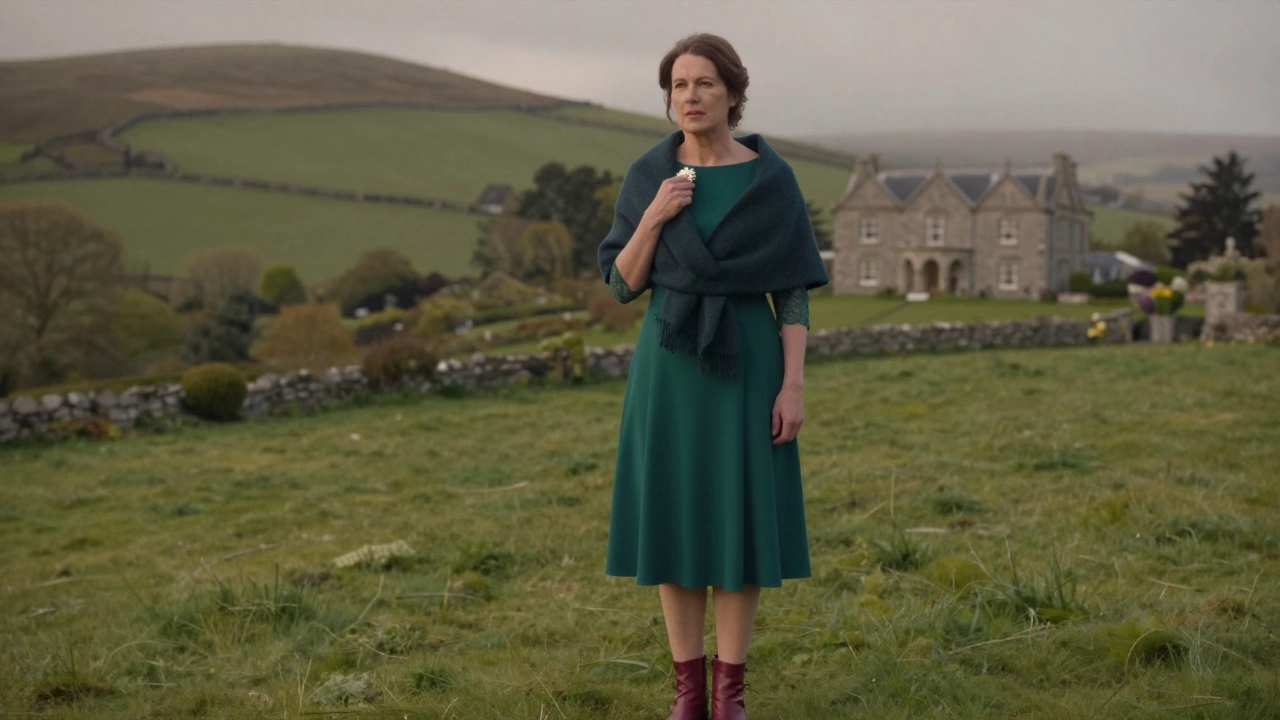
- Spring wedding in County Tipperary: A knee-length emerald dress with lace sleeves, paired with a wool shawl and ankle boots. No veil, no tiara-just a single pearl brooch from the Claddagh Collection.
- Corporate gala in Dublin: A charcoal sheath dress with a high neckline and a subtle metallic thread weave. Worn with a structured blazer for the walk-in, then removed for dancing.
- St. Patrick’s Day dinner in Limerick: A navy wrap dress with hand-stitched shamrock motifs along the hem. Paired with a cashmere wrap and a leather crossbody bag.
The dresses that thrive in Ireland aren’t loud. They’re thoughtful. They’re made for the damp, the cold, the sudden downpour, the late-night pub crawl after the event. They’re made for people who know that fashion isn’t about standing out-it’s about fitting in, with grace.
What’s the best fabric for an evening dress in Ireland’s climate?
Wool blends, tweed, and heavy crepe are ideal. They hold warmth, drape beautifully, and resist wrinkles-even after a long car ride from the countryside. Avoid silk chiffon or thin satin; they’re too delicate for Ireland’s unpredictable weather. Brands like Irish Linen Co. and Donegal Tweed specialize in these fabrics.
Can I wear a long dress to an Irish evening event?
Technically yes-but practically, no. Long dresses are fine for formal events like opera or a black-tie ball in a hotel ballroom. But for most gatherings-weddings, dinners, festivals-a dress that ends mid-calf or just above the ankle is far more practical. You’ll avoid wet hems, muddy shoes, and awkward tripping on cobblestones.
Are Irish designers more expensive than international brands?
Not necessarily. Many Irish designers offer prices between €150-€350, which is often cheaper than high-street brands like Reiss or & Other Stories. Plus, you’re supporting local artisans. A handmade dress from Wexford Atelier costs less than a similar imported piece, and it lasts longer.
What should I wear to a St. Patrick’s Day evening party?
Skip the green sequins. Instead, go for deep navy, burgundy, or charcoal with subtle Celtic embroidery. A well-tailored wrap dress with a shawl is perfect. You’ll look festive without looking like a costume. Many Irish designers now offer limited-edition pieces for St. Patrick’s Day that honor tradition without cliché.
Where can I rent an evening dress in Ireland?
The Lanes in Cork and Claddagh Boutique in Galway both offer rental services. You can rent a dress for €40-€80 for a weekend, with dry cleaning included. It’s a growing trend, especially among younger attendees who want to look elegant without the commitment of buying.