
When the sun finally breaks through the clouds in Ireland, it doesn’t mean you should throw on that heavy wool coat you wore in February. But here’s the thing - summer in Ireland isn’t like summer in Spain or California. The heat doesn’t last. The rain doesn’t take a break. And the wind? It never really sleeps. So choosing the right fabrics isn’t about looking cool under a blazing sun - it’s about staying dry, comfortable, and not looking like you just stepped out of a sauna after a Dublin pub crawl.
Why Fabric Matters More in Ireland Than You Think
In Ireland, summer temperatures rarely climb above 22°C, even in July. But humidity? That’s the real villain. A damp day in Galway feels heavier than a dry 30°C day in Lisbon. And when you’re walking from the Dart to Trinity College, or hiking the Cliffs of Moher, you don’t want your clothes clinging to you like a wet newspaper. That’s why fabric choice isn’t just about fashion - it’s about survival.
Think about it: you’re wearing a dress to a wedding in Kilkenny, or a picnic in Phoenix Park. You want to look put-together, but you also need to handle sudden downpours, cool evenings, and the occasional blast of Atlantic wind. The wrong fabric turns a simple outing into a soggy, sticky, uncomfortable mess.
Fabrics to Avoid in Irish Summers
Here’s what you should leave in the wardrobe - even if it’s on sale at Brown Thomas or Penneys.
- Wool - Yes, even lightweight wool. It absorbs moisture like a sponge and holds onto it. You’ll sweat, it’ll cling, and by the time you get to the pub, you’ll smell like a damp sheep. Wool is for winter hikes in the Wicklow Mountains, not for a stroll along the DART line.
- Velvet - Gorgeous for Christmas parties in Cork, but a nightmare in July. Velvet traps heat, doesn’t breathe, and stains easily when it rains. You’ll regret wearing it to the Galway Arts Festival.
- Synthetic blends (polyester, nylon, acrylic) - These might feel light, but they’re basically plastic bags with sleeves. They don’t absorb sweat. They trap it. And when the sun comes out, you’ll feel like you’re wearing a sauna suit. You’ve probably worn this at a music festival in Sligo and wondered why you felt so gross.
- Thick cotton twill or denim - Denim is fine for cool evenings, but heavy denim jeans or jackets? No. They take forever to dry. And if you get caught in a shower near the Giant’s Causeway, you’ll be stuck in wet fabric for hours.
- Silk - Beautiful, yes. Practical? Not in Ireland. It stains easily, wrinkles like crazy, and turns see-through when damp. You’ll look elegant at brunch in Howth - until the drizzle hits.
What to Wear Instead
Now, what actually works? Look for natural, breathable fabrics that handle moisture and cool down fast.
- Lightweight cotton - The gold standard. Think breathable weaves like voile, batiste, or seersucker. Brands like Scout and Oliver Bonas offer Irish-friendly summer dresses in cotton that won’t cling or overheat.
- Linen - The Irish summer’s best friend. It’s cool, dries fast, and gets softer with every wash. You’ll see locals in Galway and Dingle wearing linen shirts and dresses even on rainy days - because it breathes better than anything else. Just know it wrinkles. Embrace it. It looks intentional.
- Bamboo fabric - A quiet hero. It’s naturally antibacterial, moisture-wicking, and feels silky without being delicate. Brands like People Tree and Boody have great summer dresses made from bamboo that are perfect for Dublin’s unpredictable weather.
- Tencel (lyocell) - Made from wood pulp, it’s sustainable, soft, and absorbs moisture better than cotton. It’s a favorite among eco-conscious shoppers in Cork and Belfast.
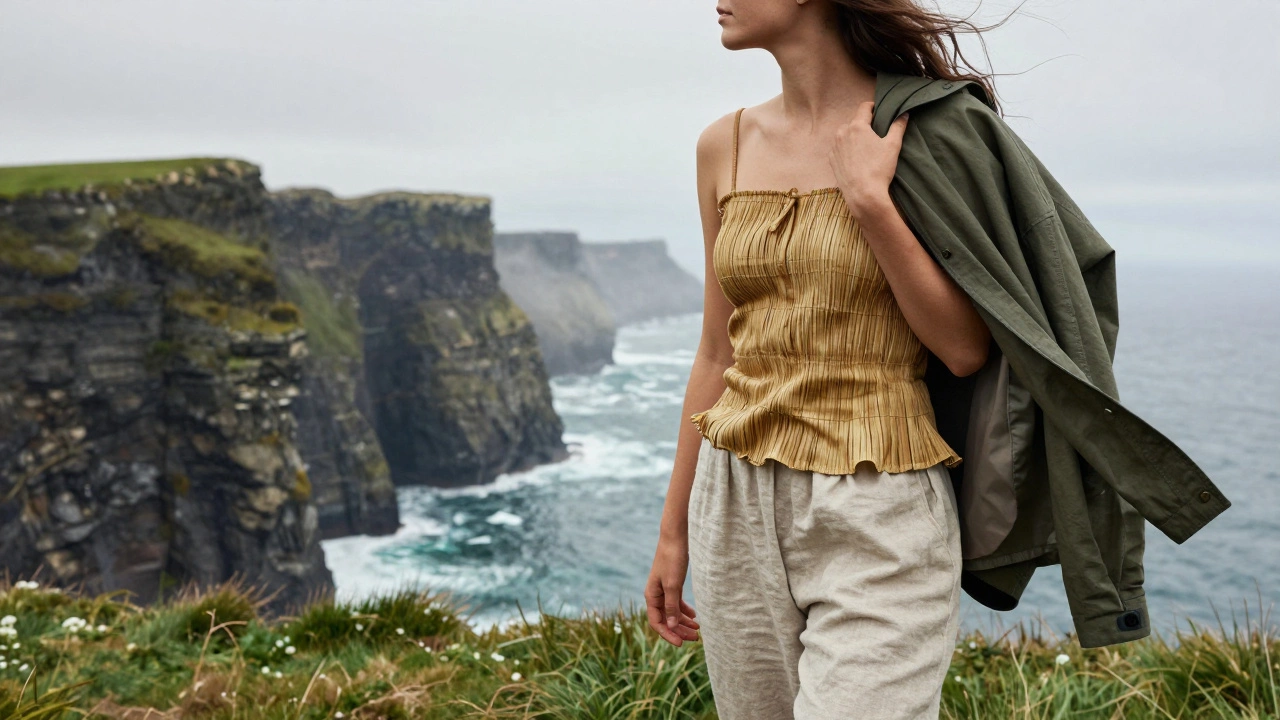
Real-Life Irish Scenarios - What Not to Wear
Let’s get specific.
You’re heading to the Wicklow Mountains for a day hike. You’ve got your boots on, your waterproof jacket packed, and you’re wearing a polyester blend dress because it’s ‘light’. By lunchtime, you’re sweating, your dress is stuck to your back, and the rain starts. You’re miserable. Swap it for a linen shift dress - it’ll dry in minutes, won’t chafe, and looks just as nice with a denim jacket thrown over it.
You’re at the Galway International Oyster Festival. You want to look fancy. A silk blouse? Bad idea. It’ll wrinkle from the sea spray and the humidity. Go for a Tencel-blend top instead. It’s elegant, breathable, and won’t turn transparent when you grab a Guinness at the bar.
You’re on the DART from Dun Laoghaire to Howth. You’re wearing heavy denim shorts and a cotton turtleneck because it’s ‘cozy’. You’re hot, sticky, and your shorts are clinging. Swap the turtleneck for a cotton tee, and the shorts for lightweight linen ones. Instant relief.
Shopping Tips for Irish Summers
Where do you find these fabrics in Ireland?
- Scout - Dublin-based, focuses on breathable, sustainable fabrics. Their summer dresses are made for Irish weather.
- Penneys (Primark) - Surprisingly good for linen blends and lightweight cotton. Check the labels - look for ‘100% cotton’ or ‘linen blend’.
- People Tree - Ethical, organic, and perfect for Dublin’s eco-minded shoppers.
- Local markets - Visit the English Market in Cork or the St. George’s Market in Belfast. You’ll find handmade linen pieces from Irish artisans that last for years.
Pro tip: Always check the fabric label. If it says ‘polyester’, ‘acrylic’, or ‘viscose’ without a natural fiber blend, walk away. You’re not saving money - you’re buying discomfort.

What About Raincoats and Layering?
Even the best fabrics won’t save you if you’re caught in a sudden Irish downpour. That’s why layering matters.
Wear a lightweight cotton or linen dress, and throw on a water-resistant linen jacket - brands like McGee and Claremont make them. Or carry a compact, packable raincoat from Barbour or Regatta. Don’t rely on a single layer. The Irish summer isn’t about one perfect outfit - it’s about smart combinations.
Final Rule: Think Like a Local
Irish people don’t dress for the forecast. They dress for the possibility of everything. One minute it’s sun, the next it’s mist. You need clothes that adapt.
Forget the idea that summer means bare skin and thin fabrics. In Ireland, summer means breathable, quick-drying, low-maintenance fabrics that work whether you’re in a Dublin café, on a ferry to the Aran Islands, or waiting for the bus in Letterkenny.
Choose cotton. Choose linen. Choose bamboo. Avoid the rest. Your skin - and your dignity - will thank you.
Can I wear denim in the Irish summer?
Lightweight denim is fine for cool evenings or casual outings, but avoid heavy, rigid denim for daytime wear. It doesn’t breathe well, takes hours to dry if it gets wet, and can feel suffocating in humid weather. Opt for thin, stretch denim or switch to linen pants instead.
Is polyester ever okay in Ireland’s summer?
Only if it’s blended with at least 50% natural fiber like cotton or linen. Pure polyester traps sweat, creates odor, and feels sticky. You’ll notice it after an hour in the sun - especially if you’re walking around the Phoenix Park or visiting the Rock of Cashel.
What’s the best fabric for a summer wedding in Ireland?
Tencel or lightweight linen. Both drape beautifully, stay cool, and handle humidity well. Avoid silk - it’s too delicate for unpredictable weather. Brands like Scout and People Tree offer wedding-appropriate dresses in these fabrics that look elegant without the fuss.
Do Irish people wear shorts in summer?
Yes, but not the kind you’d wear on a beach. Locals prefer linen or cotton shorts that hit above the knee - practical for walking, cycling, or hopping on the bus. Avoid synthetic athletic shorts; they’re for gyms, not Dublin streets.
Should I buy summer clothes in Ireland or abroad?
Buy locally when you can. Irish brands design for our weather - think breathable fabrics, modest cuts for unpredictable sun, and materials that dry fast. You’ll find better options at Scout, Penneys, or local markets than in generic international chains. Plus, you support Irish designers.
If you’re planning a summer trip to Ireland - whether you’re visiting from abroad or just living here - remember this: the weather doesn’t care about your fashion goals. But smart fabric choices? They’ll make sure you still look good, feel comfortable, and enjoy every sunny (or misty) moment.