EV Range Calculator for Irish Drivers
Results
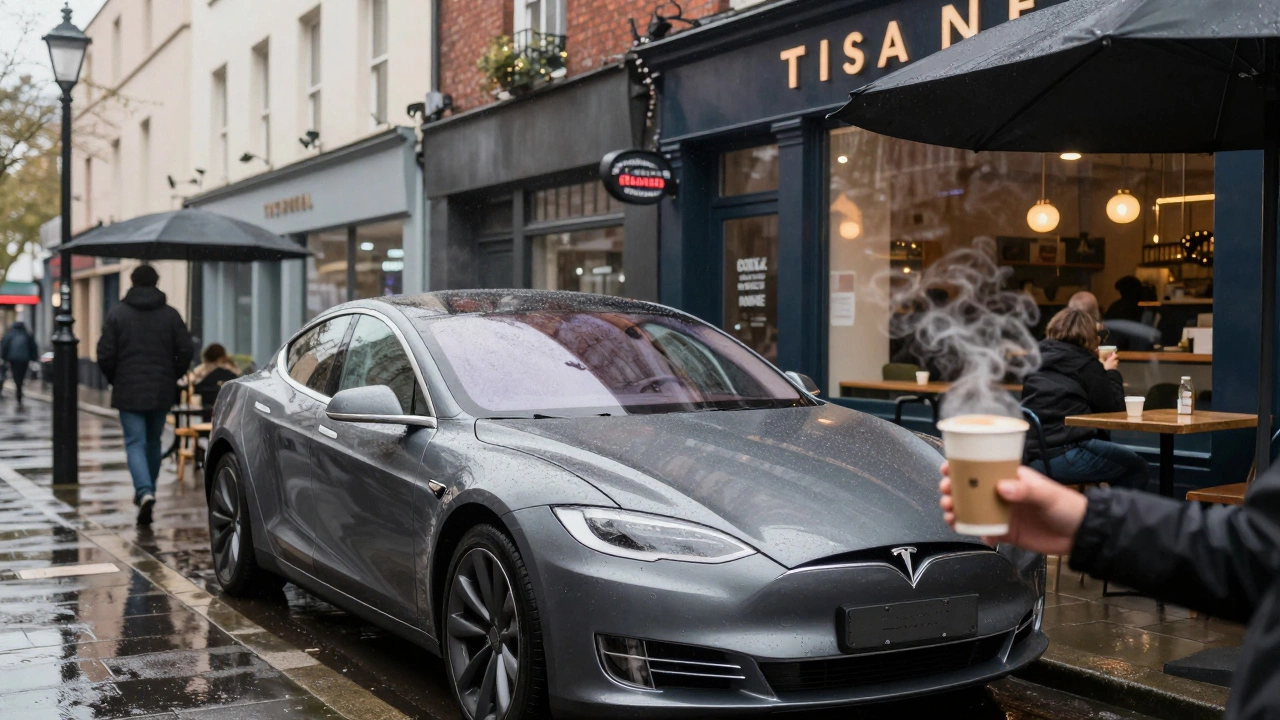
When you see Mark Zuckerberg walking out of a garage in Palo Alto, he’s usually getting into a simple gray Tesla Model S. Not a Bentley. Not a Lamborghini. Just a quiet, unassuming electric sedan - the kind you might spot parked outside a Dublin coffee shop on a rainy Tuesday morning. It’s not about status. It’s about function. And in Ireland, where weather changes faster than a Galway pub playlist and charging stations are still spreading across rural roads, that kind of practicality matters more than ever.
Why a Tesla Model S? It’s Not About the Brand - It’s About the Road
Zuckerberg doesn’t buy cars to impress. He buys them to get from point A to point B without hassle. That’s the same mindset driving thousands of Irish drivers today. In Ireland’s climate - wet, windy, and often dark well before 4 p.m. in winter - reliability beats flash. The Tesla Model S has a range of over 400 km on a single charge. That’s enough to go from Dublin to Cork with room to spare, even if you detour through the Ring of Kerry and stop for a pint in Killarney.
And while some might assume billionaires drive flashy cars, the truth is that many tech leaders, including Zuckerberg, have quietly embraced EVs not because they’re trendy, but because they’re efficient. In Ireland, where government grants cover up to €5,000 off the price of a new electric vehicle, and where the ESB network now has over 1,700 public chargers (including fast chargers at motorway service areas like M1 Navan and M7 Limerick), the math is simple: charging overnight at home costs less than filling a tank of diesel every week.
What About Other Cars He’s Owned?
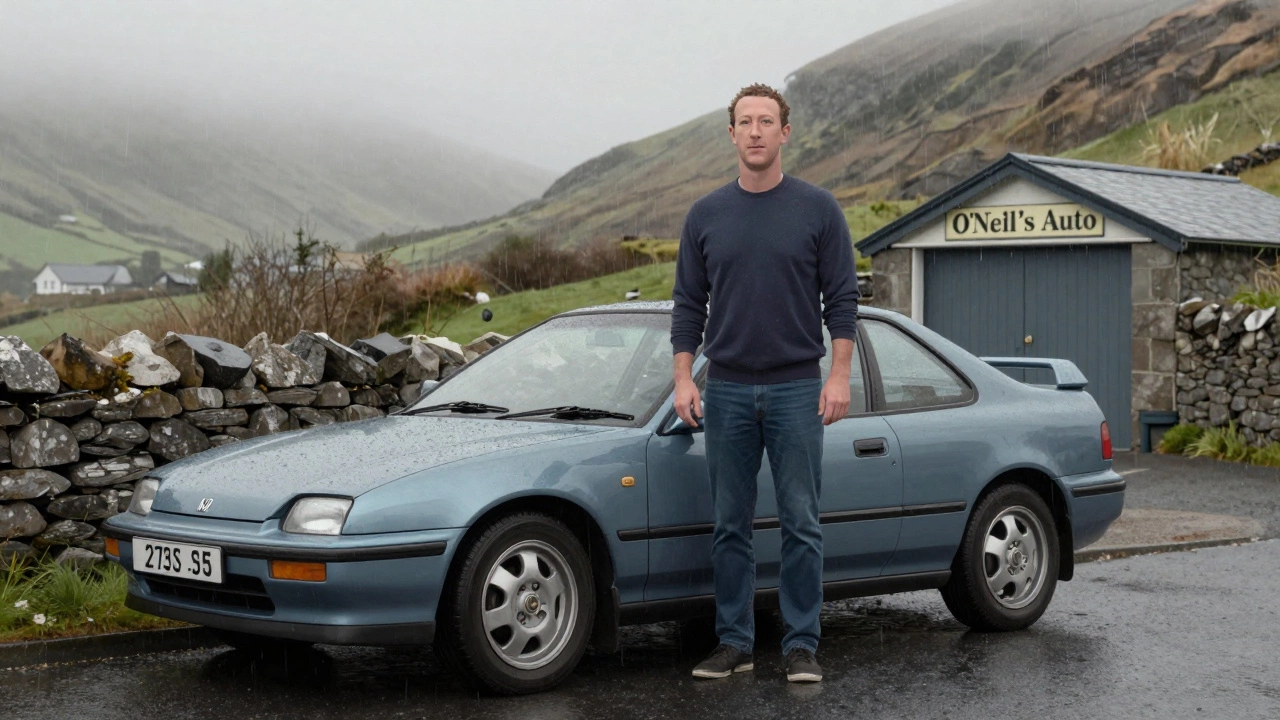
Before the Tesla, Zuckerberg drove a Honda Prelude - a modest, reliable Japanese car from the late 90s. He bought it used, paid under €5,000, and kept it for years. That’s not a billionaire’s cliché. That’s a practical Irishman’s choice. In Donegal or Sligo, where roads are narrow and potholes are a rite of passage, you don’t need a six-figure SUV. You need something that won’t break down on the way to the nearest garage in Ballybofey.
He also briefly owned a Porsche 911, but reportedly sold it after realizing how little he used it. In Ireland, where even the most ambitious weekend drive often ends up being a trip to the supermarket in Bray or a visit to family in Limerick, the idea of owning a sports car just for Sunday joyrides feels… unnecessary. It’s why so many Irish families opt for a Toyota Corolla or a Hyundai i30 - durable, cheap to run, and easy to repair at local garages like O’Neill’s Auto in Waterford or Murphy’s Motors in Galway.
How Irish Drivers Think About Cars - And Why Zuckerberg’s Choice Resonates Here
In Ireland, cars aren’t status symbols. They’re tools. You drive to work. You drive to school. You drive to the local GAA match on a Saturday afternoon. You drive to the coast when the sun finally breaks through. You don’t drive to be seen. You drive to get things done.
That’s why the Tesla Model S fits so well here. It’s quiet enough for early morning commutes along the M50 without waking the neighbors in Dundrum. It’s fast enough to merge onto the M1 without feeling sluggish. And its autopilot feature? It’s a godsend on long stretches of the N25 from Waterford to Wexford, where drivers are tired from the winter fog and the endless rain.
Even the charging habits mirror Irish life. Most owners plug in at home - often using a standard 230V socket, just like you’d charge a phone. You don’t need a fancy garage. You just need a driveway, a garage, or even a shared parking spot in a Dublin apartment block. The government’s Home Charger Grant covers up to €600 toward installation, making it easier than ever for people in Clonmel, Letterkenny, or Tralee to make the switch.
What Should Irish Drivers Learn From Zuckerberg’s Choices?
It’s not about buying the most expensive car. It’s about buying the right one.
- If you commute daily from Kilkenny to Dublin, an EV with 400+ km range makes sense.
- If you live in rural Mayo and rarely drive more than 30 km a day, a smaller EV like the Nissan Leaf or Hyundai Kona Electric is more than enough.
- If you’re worried about charging in winter? Don’t be. Most Irish EV owners charge overnight, and the grid handles it fine - even during Storm Éowyn.
And if you’re still stuck on diesel? Consider this: diesel cars in Ireland face higher motor tax rates, and many urban centers - including Dublin, Cork, and Limerick - are planning low-emission zones by 2026. The longer you wait, the more expensive it gets.
Is the Tesla Model S the Best Car for Ireland?
It’s not the only option - but it’s one of the best.
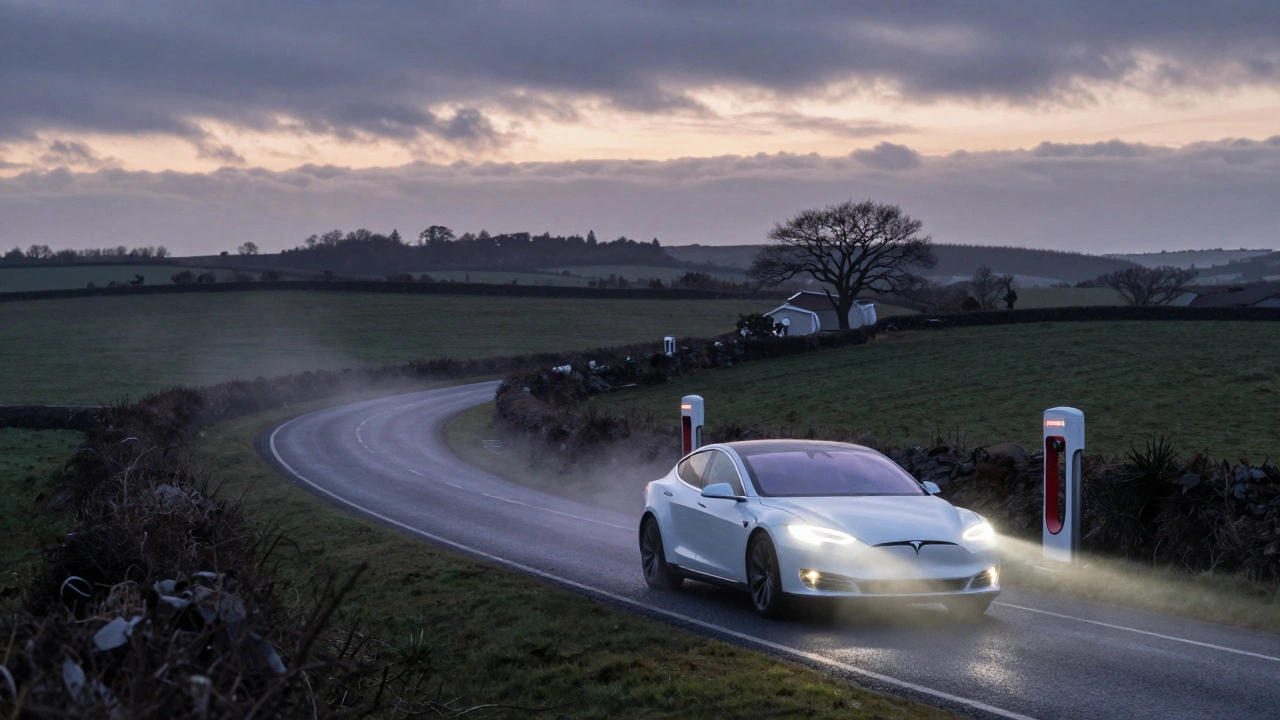
Compared to the BMW i4 or the Audi e-tron, the Model S offers more range, lower maintenance costs (no oil changes, fewer moving parts), and a charging network that’s easier to use. The Tesla app lets you find nearby chargers in real time - even ones tucked away in places like the Fota Island Resort near Cork or the new charging hub at the M7 Thurles service station.
But here’s the truth: if you don’t need 400 km of range, you’re paying extra. The Hyundai Ioniq 6, for example, gives you almost the same range at a lower price. And if you’re on a budget, the MG4 EV - which now has a 5-star Euro NCAP safety rating - costs under €30,000 after grant and delivers solid performance on the N69 through the Wicklow Mountains.
So no, you don’t need a Tesla. But if you want a car that’s built for real Irish conditions - rain, hills, long distances, and low maintenance - then understanding why Zuckerberg chose one is the first step.
What’s Next for Electric Cars in Ireland?
The government aims for 950,000 EVs on Irish roads by 2030. That’s up from just over 100,000 today. New charging hubs are popping up in places like Ennis, Athlone, and Dundalk. Even small towns like Ballina and Carlow now have fast chargers near the local supermarket.
And as more Irish families trade in their old Corollas for EVs, the culture is shifting. You no longer see EVs as “weird green cars.” You see them as quiet, efficient, and - most importantly - normal. Just like a well-worn pair of walking boots in the Burren or a wool sweater in the Aran Islands, the right car doesn’t need to shout. It just needs to work.
Mark Zuckerberg doesn’t drive a Tesla because he’s rich. He drives one because it’s the best tool for the job. And in Ireland, that’s exactly how smart drivers think too.
Does Mark Zuckerberg still drive a Tesla Model S in 2025?
Yes, as of 2025, Mark Zuckerberg continues to drive a gray Tesla Model S. He’s been seen with the same model since 2020, and there’s no public record of him switching to another vehicle. His choice reflects his preference for simplicity, reliability, and low environmental impact - values that align with how many Irish drivers approach their own car purchases.
Are Teslas reliable in Ireland’s weather?
Yes. Tesla vehicles perform well in Ireland’s wet, cool climate. The battery management system keeps the battery warm in winter, and the all-wheel-drive version handles slippery roads better than most traditional sedans. Many Irish Tesla owners report fewer mechanical issues than with gasoline cars - no engine oil, no timing belts, no exhaust systems to rust. The main concern is charging in extreme cold, but even then, most drivers charge overnight at home, where the car stays warm.
How much does it cost to charge a Tesla in Ireland?
At home, using a standard 230V outlet, it costs about €4-€6 to fully charge a Tesla Model S, depending on your electricity plan. With a night rate tariff from providers like Electric Ireland or SSE Airtricity, you can bring that down to as little as €3. Public fast chargers cost more - around €0.40-€0.50 per kWh - so a full charge might run €15-€20. But for most daily drivers, home charging covers 90% of needs.
Is the Tesla Model S too expensive for the average Irish driver?
The Model S starts at around €75,000 in Ireland, which is beyond most budgets. But it’s not the only EV option. For under €30,000 after government grants, you can get a Hyundai Kona Electric, MG4, or Nissan Leaf - all of which offer excellent range and reliability for Irish roads. The key isn’t buying the same car as Zuckerberg - it’s choosing a vehicle that fits your needs, budget, and driving habits.
Are there enough charging stations in rural Ireland?
Charging infrastructure is improving fast. While rural areas like Kerry or Leitrim still have fewer chargers than Dublin, major routes like the N25, M7, and N4 now have charging hubs every 50-80 km. The ESB eCars network has expanded into towns like Enniscorthy, Sligo, and Mullingar. Apps like PlugShare and ESB’s own map show real-time availability. For occasional long trips, planning ahead is still smart - but you’re no longer stranded if you forget to charge.