Vintage Jacket Authenticity Checker
Check if your jacket is authentic using Ireland-specific verification methods. Answer these 5 key questions about your jacket.
When you’re rummaging through a stall in Smithfield Market or digging through a box at Clery’s Vintage in Dublin, it’s easy to fall for a worn leather jacket that looks like it belonged to a 1970s rockstar. But in Ireland’s thriving secondhand scene, not every jacket with frayed seams and faded patches is genuine. With thrifting culture booming-from Galway’s Lost & Found to Cork’s Rebel Vintage-knowing how to spot a real vintage jacket isn’t just about saving money. It’s about respecting history, avoiding fakes, and finding something that actually lasted decades.
Start with the label
The label is your first clue. Real vintage jackets from the 1950s to the 1980s often have tags that look nothing like today’s mass-produced ones. Look for hand-stitched labels, printed in serif fonts, with no barcode (barcodes didn’t exist before the 1970s). Brands like Levi’s, Wrangler, and Carhartt had distinct tag styles: Levi’s 501s from the 1950s had a red tab with only the word ‘LEVI’S’-no logo, no arch. By the late 70s, the arch appeared. If you see a modern-looking tag with a barcode or a hologram, it’s likely a reproduction.
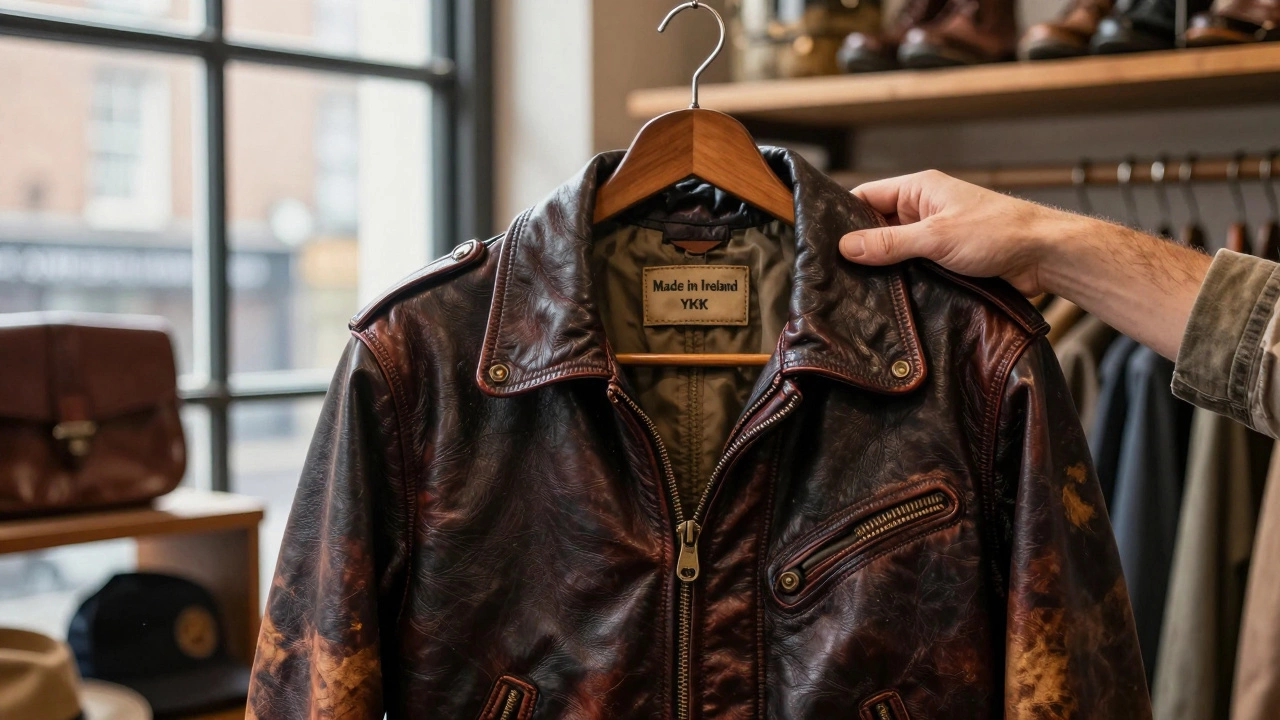
In Ireland, you’ll often find jackets with Irish-made labels, like Claddagh or Claremont from the 1960s. These were made for local markets and rarely exported. A jacket with a ‘Made in Ireland’ tag and a wool blend is almost certainly authentic. Reproductions rarely bother with regional labels like this.
Check the fabric and stitching
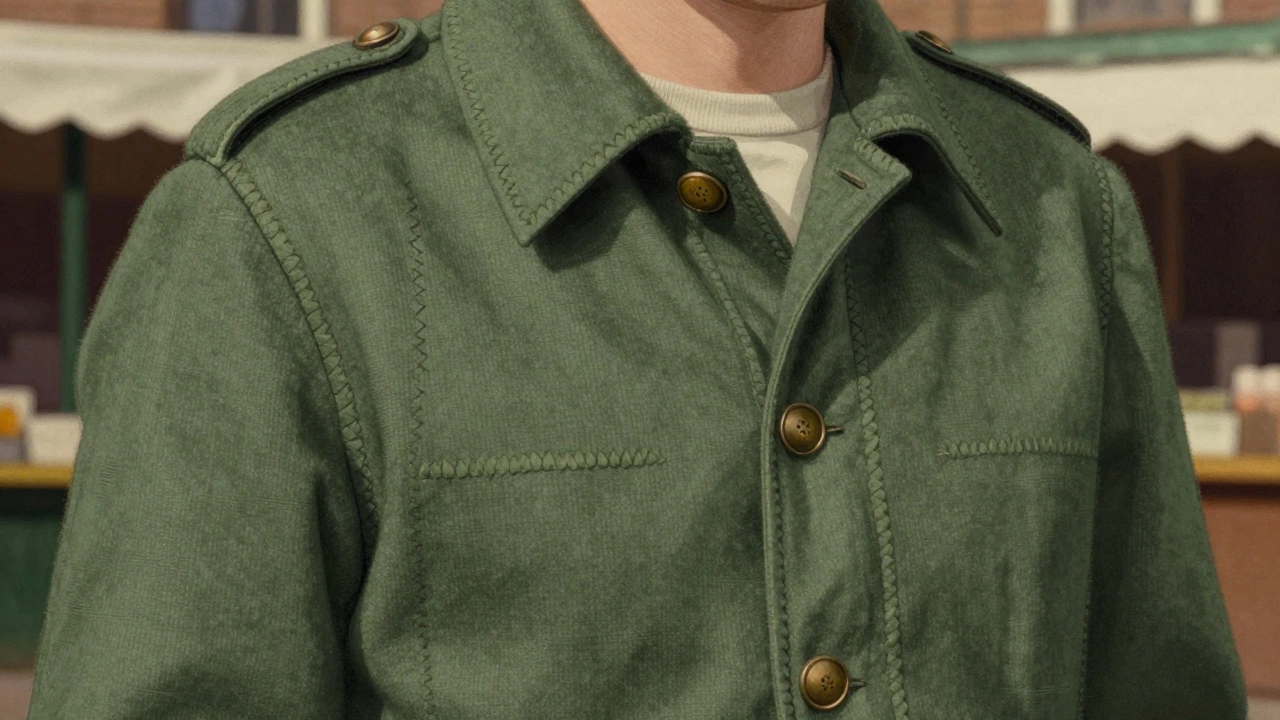
Real vintage jackets were built to last. Look for heavy-duty cotton twill, real leather (not bonded or faux), or wool gabardine-materials that don’t fray easily. Run your fingers along the seams. Authentic jackets have zigzag or lockstitch seams, not uniform machine stitching. The thread should be slightly uneven, with visible knots on the inside. Modern fakes use smooth, perfect stitches because they’re made on automated machines.
Pay attention to the lining. Vintage jackets from the 1950s-70s often had rayon or acetate linings-synthetic fabrics that feel slick and cool. By the 1980s, polyester became common. If the lining is cotton or feels like cheap polyester fleece, it’s probably a modern reissue. In Dublin’s George’s Street Arcade, you’ll see plenty of jackets with synthetic linings being sold as ‘vintage.’ Don’t be fooled.
Look for signs of wear that make sense
Real wear tells a story. A genuine vintage jacket will have natural fading around the elbows, collar, and cuffs-not uniform dye loss. Look for patched elbows, frayed hems, or stitched repairs done by hand. These aren’t flaws-they’re proof it was worn and cared for. A jacket that looks brand new, with perfect buttons and zero fading, is almost always fake.
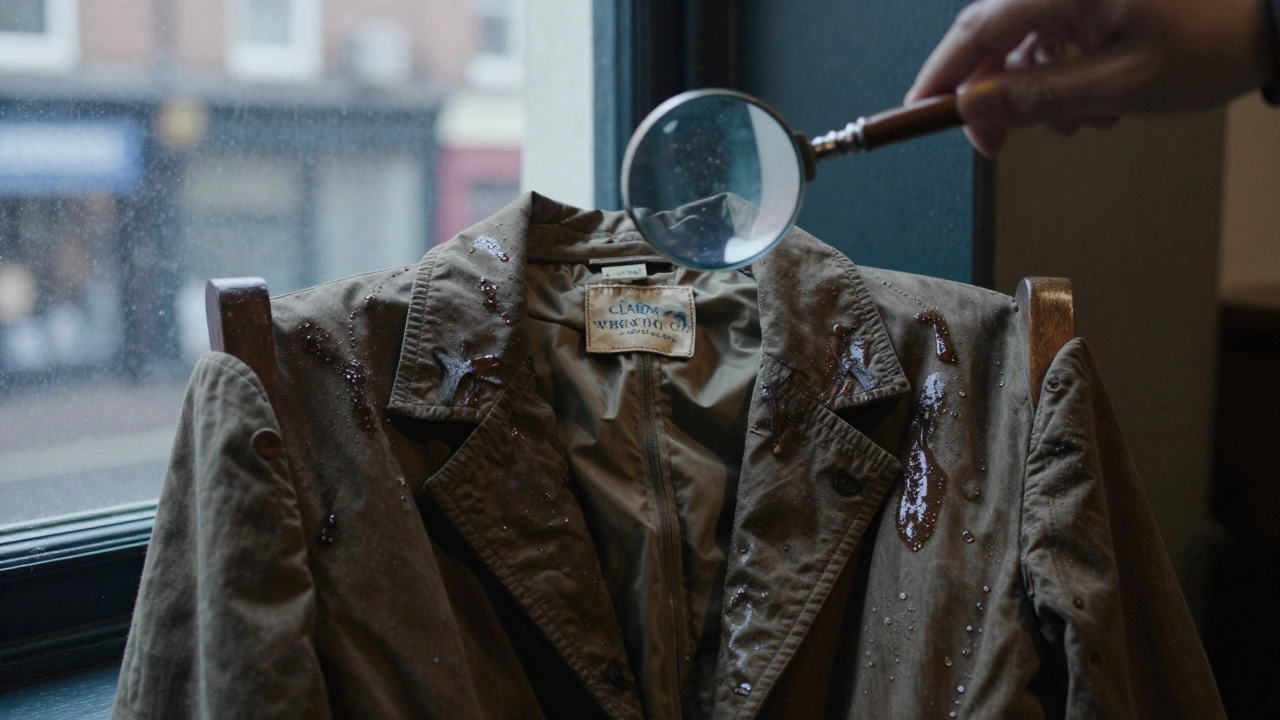
In Ireland, where the weather is damp and windy, authentic jackets show moisture damage along the back and shoulders-faint water stains that have dried into the fabric. You won’t see this on reproductions, because they’re not made to withstand decades of Galway rain or Belfast mist.
Examine the hardware
Zippers, buttons, and rivets are goldmines. Real vintage jackets from the 1940s-80s used metal zippers with YKK (founded in 1934) or Duck brand tags. If the zipper pull is plastic, it’s likely a modern copy. Look for brass or nickel buttons with hand-cast edges. You’ll often find rivets stamped with the brand name, like ‘LEVI’S’ or ‘WRANGLER’ on the back.
Check the inside of the zipper. Real vintage zippers often have small metal tags or threaded stitching at the base. If it’s a smooth, plastic-coated zipper with no markings, it’s a red flag. In Limerick’s Thrift Store on O’Connell Street, sellers often don’t even know what they’re selling. But if you ask about the zipper, and they hesitate, walk away.
Smell and feel the jacket
Old leather smells different. Real vintage leather has a rich, earthy, almost sweet scent-like old books or a damp barn. Faux leather smells like plastic or chemicals. If it smells strongly of mothballs or air freshener, it’s been covered up. That’s a sign the seller is hiding something.
Hold the jacket up to the light. Real wool or cotton will have slight variations in weave. Fake fabrics look too uniform. Vintage denim has indigo dye that fades unevenly, especially around the knees and pockets. If the color looks too even, it’s been washed too many times-or never worn at all.
Research the brand and era
Not all vintage brands are equal. Brands like Barbour (UK), Schott (USA), and Belstaff (UK) made jackets that crossed into Ireland through sailors, soldiers, and farmers. If you find a Belstaff Trialmaster from the 1960s with leather shoulder patches and hand-stitched seams, it’s rare and real. Reproductions often miss the signature quilting on the back.
For Irish-made jackets, look for Claremont (Dublin, 1950s-70s), Wren & Co. (Cork, 1960s), or Connolly Leather (Kilkenny, 1940s-80s). These were made for local markets and rarely sold abroad. A jacket with a ‘Wren & Co. - Cork’ tag is a real find.
Where to buy trusted vintage in Ireland
Not every thrift shop is created equal. Stick to places known for vetting stock:
- Clery’s Vintage (Dublin) - Curated by collectors, every item is tagged with era and origin.
- Lost & Found (Galway) - Specializes in 1950s-80s outerwear; staff can identify Irish-made pieces.
- Rebel Vintage (Cork) - Offers authenticity certificates on select jackets.
- Thrift Store on O’Connell Street (Limerick) - Go early on weekends; the best finds are still in the back boxes.
- Market Days at the Guinness Storehouse - Every third Saturday, local dealers bring authentic Irish vintage pieces.
Online? Avoid eBay sellers who say ‘vintage style’ or ‘inspired by.’ Look for sellers who include close-up photos of labels, measurements, and condition notes. If they can’t prove it’s real, it’s not.
What to do if you’re still unsure
Take it to a local tailor or vintage expert. In Dublin, Pat’s Tailor on South William Street has been repairing vintage jackets since 1972. He’ll tell you in five minutes if it’s real. Bring it in with the price you’re being asked. He’s seen thousands.
Or join the Irish Vintage Fashion Collective on Facebook. Post a clear photo of the label and hardware. You’ll get answers from collectors who’ve been hunting since the 1990s. Real vintage isn’t just about style-it’s about community.
Remember: a real vintage jacket in Ireland isn’t just clothing. It’s a piece of history-worn by fishermen off the Dingle Peninsula, worn by workers in Dublin’s dockyards, worn by rebels at the Galway Arts Festival. If it’s real, it carries stories. And those are worth more than a price tag.