Foot Relief Strategy Finder
Select the symptoms you are experiencing to find the most effective recovery strategies based on the guide.
What are you feeling?
Recommended Actions
Select your symptoms and click the button to see tailored recommendations.
Quick Wins for Immediate Relief
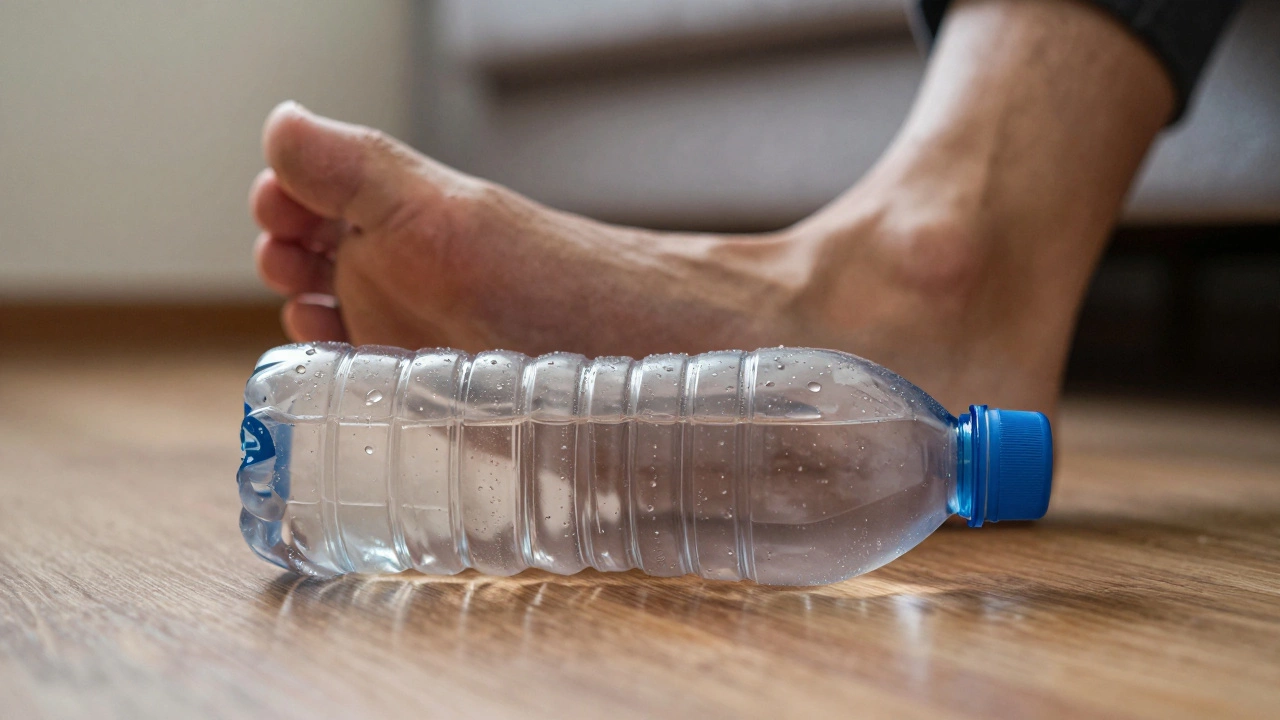
- The Frozen Bottle Roll: Fill a plastic water bottle with water, freeze it, and roll your foot over it for 15 minutes. This targets inflammation directly in the fascia.
- Elevate and Drain: Lie back and prop your feet up against a wall for 10 minutes. This helps drain the fluid that pools in your ankles after a day of standing.
- Contrast Bathing: Switch between warm and cold water. This stimulates blood flow and helps flush out metabolic waste from tired muscles.
- The Tennis Ball Trick: While sitting, roll a tennis ball or a lacrosse ball under your arch to release tight muscle knots.
Why Your Feet Actually Hurt
When you stand for hours, your weight isn't distributed evenly. Most of the pressure lands on your heels and the balls of your feet. Over time, this strains the Plantar Fascia, which is a thick band of tissue that runs across the bottom of your foot and connects your heel to your toes. When this tissue gets overstretched or irritated, you get that sharp, stabbing pain in the morning.
In the Irish climate, we often switch between heavy winter boots and lighter shoes. This constant change in support levels can confuse your foot mechanics. If you're wearing flat-soled shoes-like basic sneakers or cheap boots-your arches collapse with every step, putting immense pressure on your ankles and calves. This isn't just about your feet; it's a chain reaction that can lead to lower back pain and hip stiffness.
Choosing the Right Work Shoes for the Irish Environment
The shoes you wear are the most critical factor in preventing foot pain from standing. In Ireland, we have the added challenge of damp weather and hard surfaces, from concrete warehouse floors to cobblestone streets. You need a shoe that handles moisture but provides internal structural support.
Look for shoes with a wide toe box. Your feet naturally swell throughout the day; if your shoes are too tight, you're essentially squeezing your feet into a vice for eight hours. You also want a "rocker sole" or a slight heel lift. Completely flat shoes are actually worse for your arches than a slight 1-2 cm elevation.
| Feature | Flat Shoes (Avoid) | Ergonomic Work Shoes (Choose) | Impact on Foot |
|---|---|---|---|
| Arch Support | Minimal/None | Contoured/Medical Grade | Prevents arch collapse |
| Cushioning | Thin foam | EVA or Polyurethane | Absorbs shock from hard floors |
| Toe Box | Narrow/Tapered | Wide/Anatomical | Allows natural swelling |
| Upper Material | Non-breathable synthetic | Leather or Mesh | Prevents blisters and moisture build-up |
The Role of Orthotics and Insoles
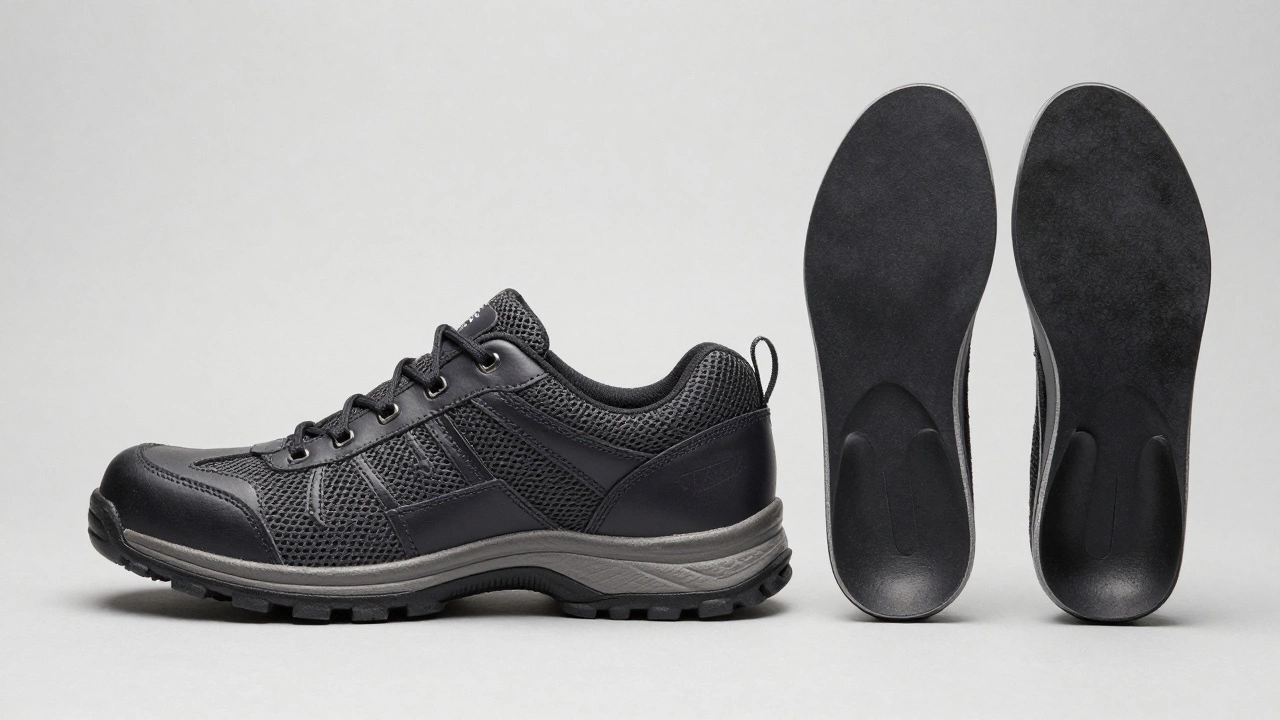
You don't always need to buy brand new shoes. Sometimes, replacing the factory insole with a high-quality Orthotic is enough. A standard foam insole flattens out within weeks. In contrast, a medical-grade orthotic provides a rigid or semi-rigid structure that keeps your foot in a neutral position.
If you're experiencing severe pain, it's worth visiting a podiatrist in your local town. Custom orthotics are designed based on a 3D map of your foot, ensuring that the support hits exactly where your arch needs it. For those on a budget, look for over-the-counter inserts that specifically mention "deep heel cups." This helps stabilize the heel and prevents it from rolling inward (overpronation), which is a common cause of ankle fatigue.
Daily Habits to Save Your Feet
Prevention starts before you even put your shoes on. Simple stretches in the morning can prime your feet for the day. Try the "towel curl": place a small towel on the floor and use your toes to scrunch it toward you. This strengthens the small muscles in the foot that support your arch.
During your shift, avoid standing completely still. Static standing is actually harder on your veins and joints than walking. If you're working at a reception desk or a till, shift your weight from side to side or do a few calf raises every hour. This keeps the blood flowing and prevents that heavy, "leaden" feeling in your legs.
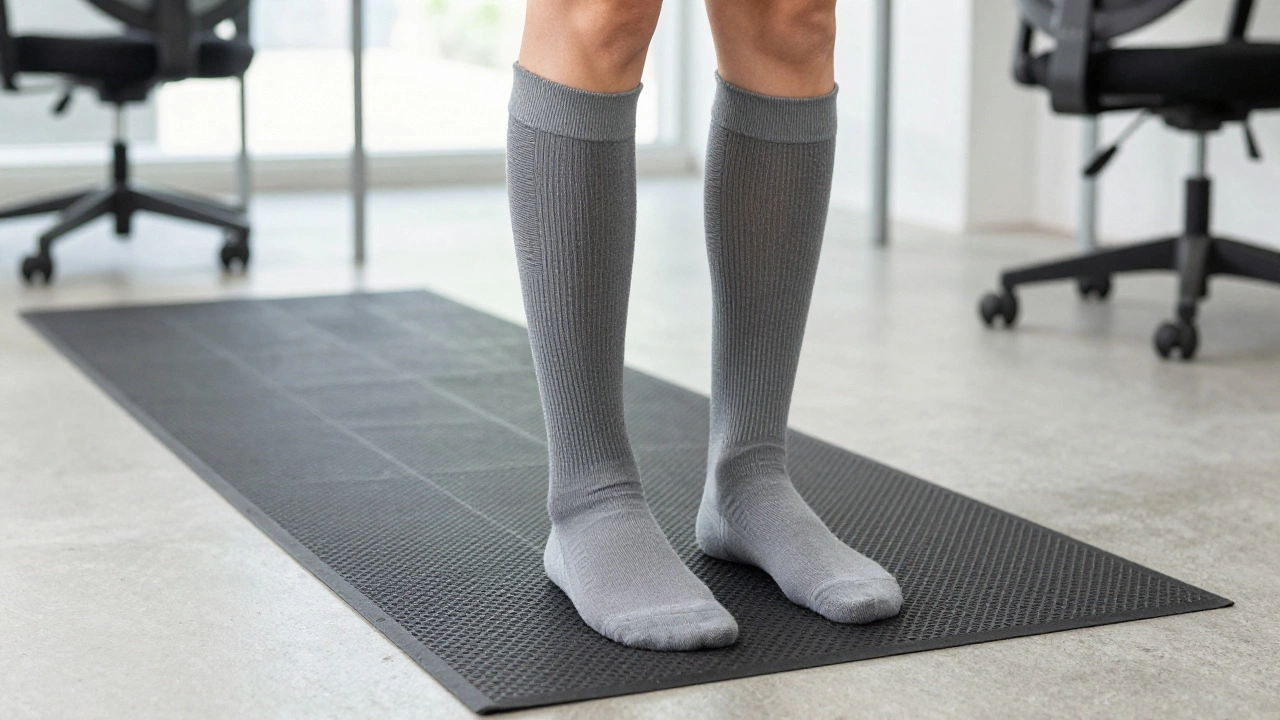
Compression socks are another game-changer, especially for those working long shifts in hospitals or warehouses across the country. These socks apply gentle pressure to your lower legs, which helps the veins push blood back up toward your heart. This reduces swelling and that annoying "heavy leg" sensation at the end of the day.
When to See a Professional
While most foot fatigue can be managed with better shoes and stretching, some pain is a red flag. If you wake up with an intense, sharp pain in your heel that makes your first few steps excruciating, you might have Plantar Fasciitis. This is an inflammation of the fascia that can become chronic if not treated.
Similarly, if you notice persistent tingling or numbness in your toes, you could be dealing with a compressed nerve. In these cases, a quick trip to a healthcare provider is necessary. They can provide targeted treatments like ultrasound therapy or prescribe specific physical therapy exercises that a generic guide can't replace.
Are expensive work shoes always better for foot pain?
Not necessarily. Price doesn't always equal support. The most important factor is how the shoe interacts with your specific arch shape. A cheaper shoe with a great third-party orthotic insert often performs better than an expensive "designer" work shoe that has a flat interior.
How often should I replace my work shoes?
For someone standing all day, the cushioning usually compresses after 500 to 800 miles of walking, or roughly every 6 to 9 months. If you notice the sole is wearing unevenly or the support feels "mushy," it's time for a new pair.
Can I wear compression socks every day?
Yes, provided you choose the correct compression level. For general work fatigue, "mild" or "moderate" compression (15-20 mmHg) is usually sufficient and safe for daily use. Always consult a doctor if you have circulation issues or diabetes.
Do flip-flops or slides help at home after a long day?
Avoid completely flat slides. If your feet are aching, switching from work shoes to another flat shoe doesn't help. Use a recovery slide with a contoured footbed that continues to support your arch while you relax.
Does the type of flooring matter?
Absolutely. Concrete and tile are unforgiving. If your workplace allows it, using an anti-fatigue rubber mat in your primary standing area can reduce the impact on your joints by up to 30%.
Next Steps for Long-Term Foot Health
If you're still in pain after upgrading your shoes, try a tiered approach. First, start with a daily stretching routine for 14 days. If that fails, invest in high-quality inserts. If the pain persists, book an appointment with a podiatrist for a gait analysis. The goal is to move from "managing pain" to "preventing pain," ensuring your feet can handle the demands of your career without compromising your quality of life.