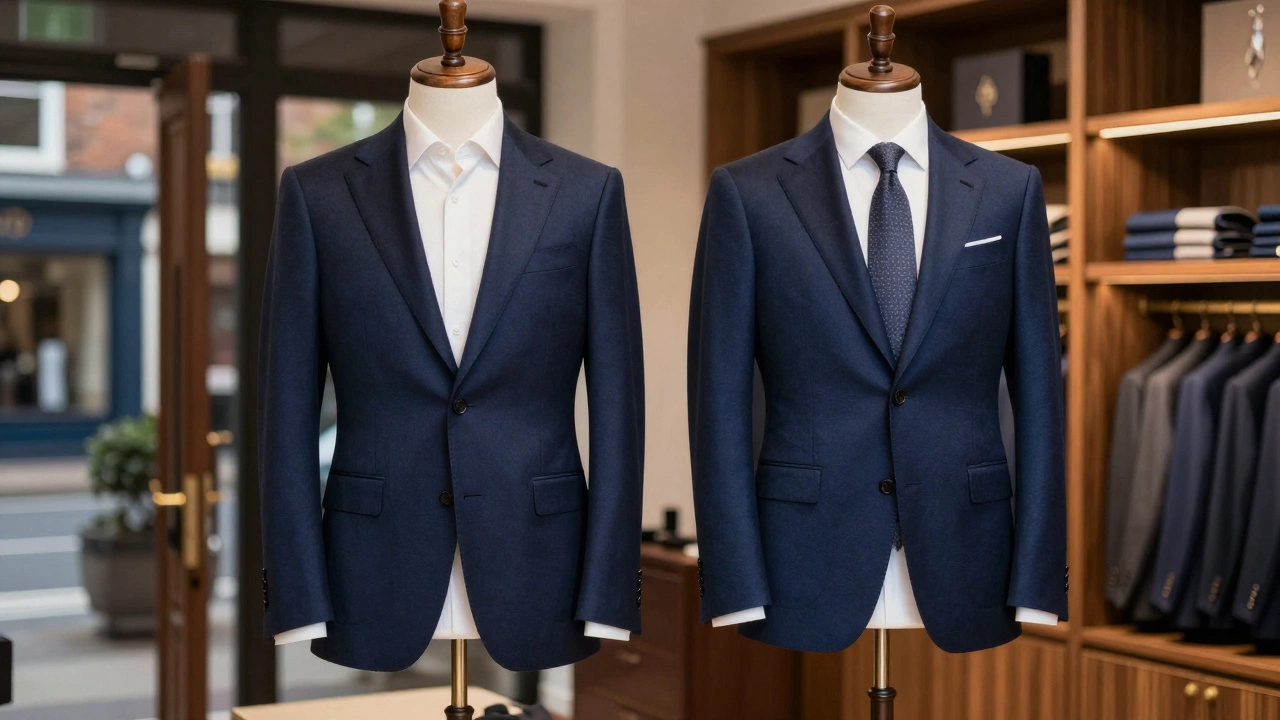
Luxury Suit Quality Checker
Select the features you observe on the suit to determine its quality level.
The Secret is in the Canvas
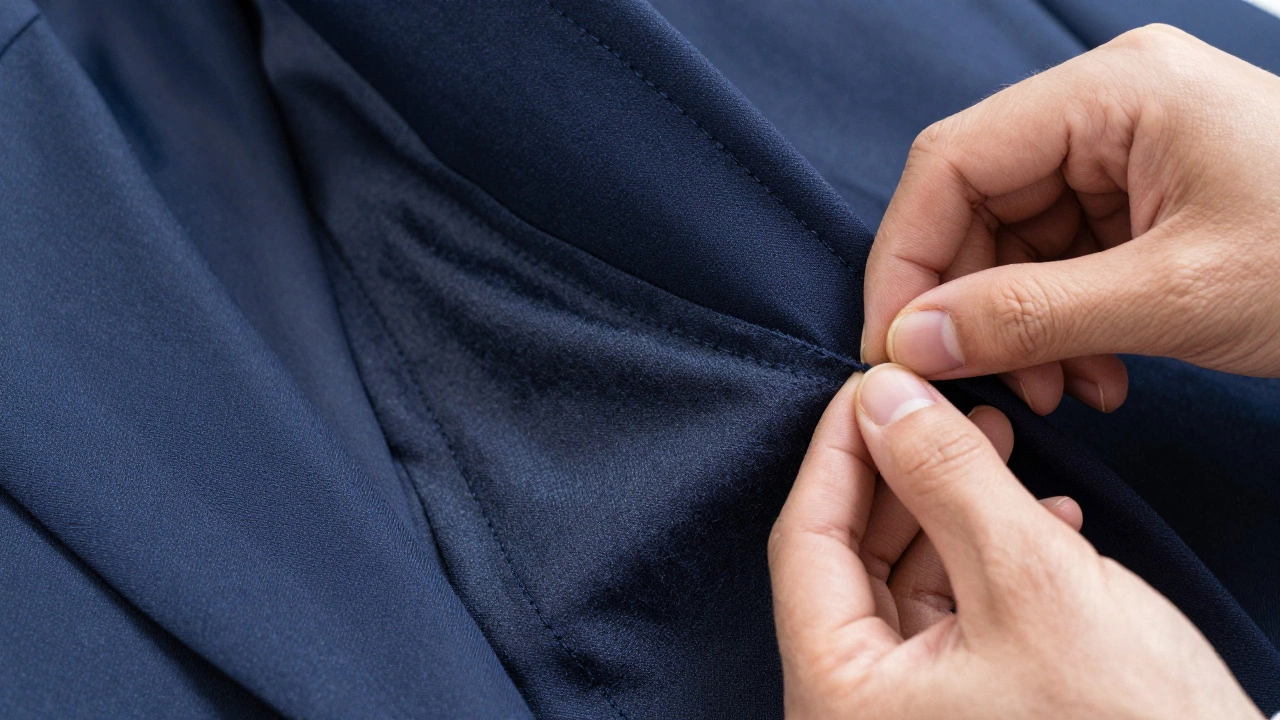
The first thing to check is the chest. Cheap suits use a "fused" construction, which means the internal lining is glued to the outer fabric. It feels stiff, like a piece of cardboard, and over time, those glue lines can bubble-especially in the damp, humid climate we get in Dublin or Cork. A high-end suit uses a Full Canvas construction. This is a layer of horsehair and wool stitched between the fabric layers. Because it's sewn, not glued, the canvas molds to your body over time. If you pinch the fabric near the button, and you can feel a separate layer of fabric sliding independently inside, you've found a quality canvas.
Fabric Quality and the 'Hand'
When you're shopping for luxury, you're essentially paying for the raw materials. Most budget suits use polyester blends that shine under bright lights-a dead giveaway that the suit is cheap. A luxury suit relies on Super Wool, a classification based on the fineness of the wool fibers. While a Super 100s is great for daily office wear, a Super 150s or 180s feels like silk but maintains the structure of wool.
In Ireland, we have to deal with unpredictable weather. A heavy tweed from a mill in Donegal is a perfect example of an expensive, durable fabric that handles the wind and rain far better than a thin Italian blend. Feel the fabric; if it bounces back immediately after you wrinkle it in your hand, it's high-quality. If it stays creased, it's likely a low-grade blend.
| Feature | Budget Suit | Luxury Suit |
|---|---|---|
| Construction | Fused (Glued) | Full Canvas (Stitched) |
| Fabric | Polyester/Wool Blend | 100% Pure Wool / Cashmere |
| Buttons | Plastic | Horn or Mother of Pearl |
| Lining | Polyester | Bemberg or Silk |
| Stitching | Machine-made | Hand-finished details |
The Details That Give It Away
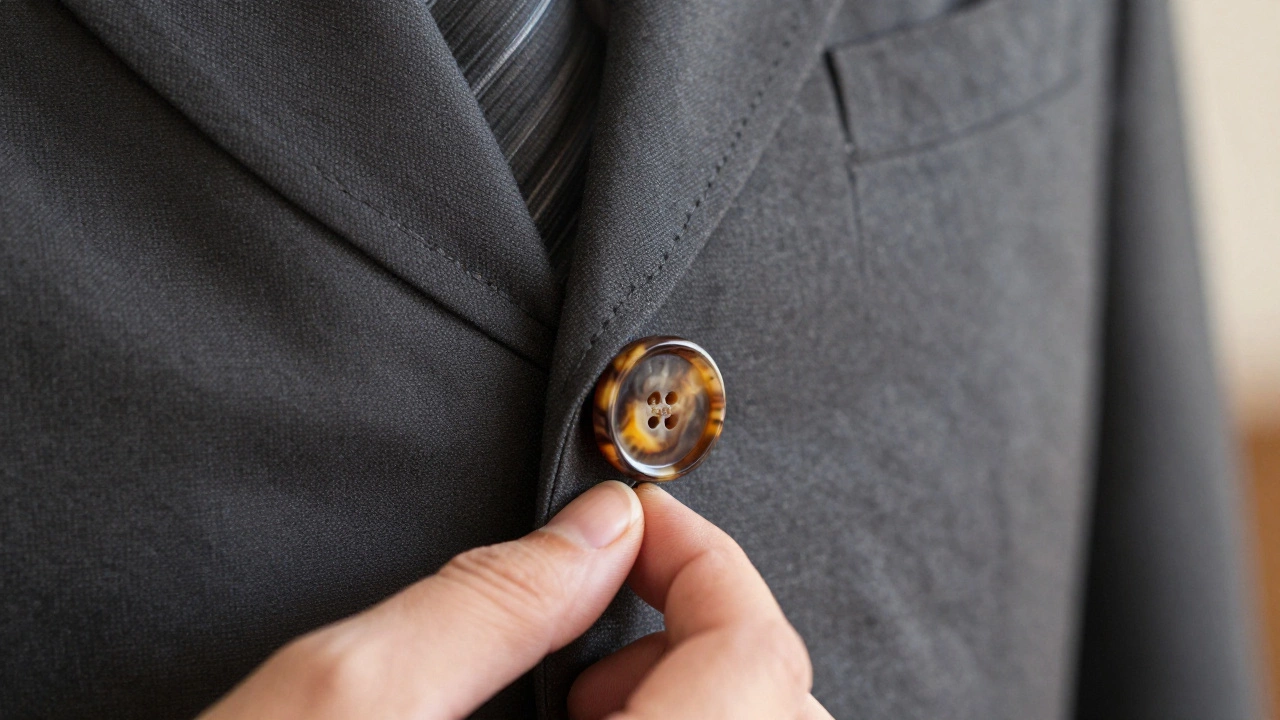
Look at the buttons. If they are shiny, lightweight plastic, the suit is budget. High-end suits use Natural Horn Buttons. These are denser, have unique swirls of color, and feel colder to the touch. Then, look at the buttonholes. On a cheap suit, the holes are punched by a machine and sewn with a tight, robotic stitch. On a luxury garment, you'll see a "hand-worked" buttonhole-it looks slightly more organic and has a distinct raised texture.
Check the shoulders. A cheap suit often has thick, oversized shoulder pads to hide the fact that it doesn't actually fit the wearer. A high-end suit, particularly those following the Neapolitan style popular in modern European fashion, often features a "spalla camicia" or shirt-shoulder. This looks like a natural fold of fabric rather than a rigid block, allowing for much better movement when you're reaching for your coffee or shaking hands at a networking event in the Silicon Docks.
The Lining and Internal Finish
Turn the jacket inside out. In a budget suit, the lining is usually a shiny polyester that traps heat and makes you sweat. Luxury suits use Bemberg, a high-quality cupro fiber that breathes and feels smooth against the skin. It's essentially the gold standard for linings because it doesn't static-cling to your shirt.
Also, look for "pick stitching" along the lapels. These are the tiny, evenly spaced stitches along the edge of the collar. While some mass-market brands fake this with machines, true luxury suits have subtle hand-stitching that keeps the lapel from rolling or losing its shape over years of wear.
The Fit: The Ultimate Tell
You can buy a very expensive fabric, but if the fit is wrong, it looks cheap. A luxury suit is designed to balance the proportions of the human body. The shoulder seam should end exactly where your shoulder ends-no overhang. The trousers should have a clean break or no break at all, depending on your preference, and should never bunch up like an accordion around your ankles.
If you're in Dublin and you're not sure about your fit, visiting a professional tailor for a fitting is the best investment you can make. A €500 suit that has been perfectly tailored to your frame will always look more expensive than a €3,000 suit that is too big in the waist. The "drape" of the fabric-how it hangs from the shoulder to the hip-is what separates the pros from the amateurs.
Where to Spend and Where to Save
If you're building a wardrobe in the Republic of Ireland, you don't need a dozen suits. You need two or three high-quality ones. Start with a navy or charcoal grey. These colors are versatile enough for everything from a funeral in Mayo to a corporate gala at the Convention Centre Dublin.
Don't get fooled by "Italian Fabric" labels. While Italian mills produce some of the best wool in the world, a suit made of Italian fabric but constructed with a fused lining is still a budget suit. Focus on the construction (Canvas) and the material (Pure Wool) rather than the origin of the cloth. If you have the budget, investing in a bespoke piece from a local artisan allows you to choose the weight of the cloth-essential for surviving an Irish winter without looking like you're wearing a blanket.
Is a more expensive suit always better?
Not necessarily. You can pay a premium for a brand name without getting a better canvas or fabric. The real value lies in the construction (full canvas vs. fused) and the quality of the wool. A mid-range suit with a great tailor is often better than a luxury brand suit that doesn't fit.
What is the best fabric for the Irish climate?
For winter and autumn, heavy wools or tweeds (like those from Donegal) are ideal because they are water-resistant and warm. For summer, look for "high-twist" wools or linen-wool blends that breathe but don't crease as badly as pure linen.
How can I tell if a suit is full canvas just by touching it?
Use the "pinch test." Gently pinch the fabric at the bottom of the jacket's front panel, near the vent. If you can feel three distinct layers (the outer fabric, the canvas, and the lining) and the middle layer moves independently, it's canvassed. If it feels like one solid, fused piece, it's glued.
Do I need to dry clean my suit after every wear?
Absolutely not. Over-cleaning with chemicals ruins the natural oils in high-quality wool. Instead, use a garment brush to remove dust and hang it on a wide wooden hanger to let the wrinkles drop out naturally. Only dry clean once or twice a year, or when it's visibly stained.
What is the difference between bespoke and made-to-measure?
Made-to-measure takes a pre-existing pattern and adjusts it to your measurements. Bespoke creates a brand new pattern from scratch based on your exact body shape, including your posture and shoulder slope. Bespoke is more expensive and takes longer, but the fit is significantly superior.